Top Electric Water Pump Manufacturers in China
China’s pump industry serves agriculture, buildings, municipal utilities, and industrial plants. For international buyers, choosing an electric water pump manufacturer involves more than comparing prices. Flow rate, head, materials, motor efficiency, and operating conditions all affect performance. Small differences matter. A pump selected for the wrong duty may waste energy or wear faster than expected.
The U.S. Department of Energy’s Improving Pumping System Performance: A Sourcebook for Industry reports that pumping systems can account for 25–50% of energy use in some industrial facilities. This range depends on the facility and its processes, so it is not a universal benchmark. Still, it highlights why efficiency claims deserve scrutiny. Ask suppliers for test conditions, performance curves, and documentation tied to the specific model—not just broad catalogue figures.
This guide to the top electric water pump manufacturers in China introduces companies serving different applications and buyer needs. It considers product range, manufacturing capability, quality-management evidence, customization, and export support. These factors can help distinguish a factory with relevant engineering experience from a seller offering a broad but shallow catalogue. Yet rankings have limits: public information may not reveal current production capacity, component sourcing, or after-sales performance. Use the shortlist as a starting point, then verify certifications, sample results, references, and warranty terms directly. No single manufacturer is best for every project. The right choice depends on the water, duty cycle, installation, and service conditions the pump must handle.
Electric Water Pumps in China: Main Types, Applications, Flow, and Head
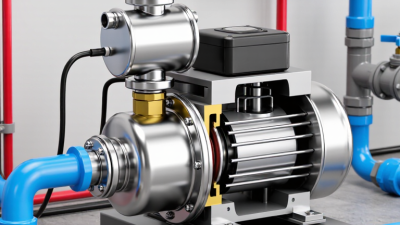
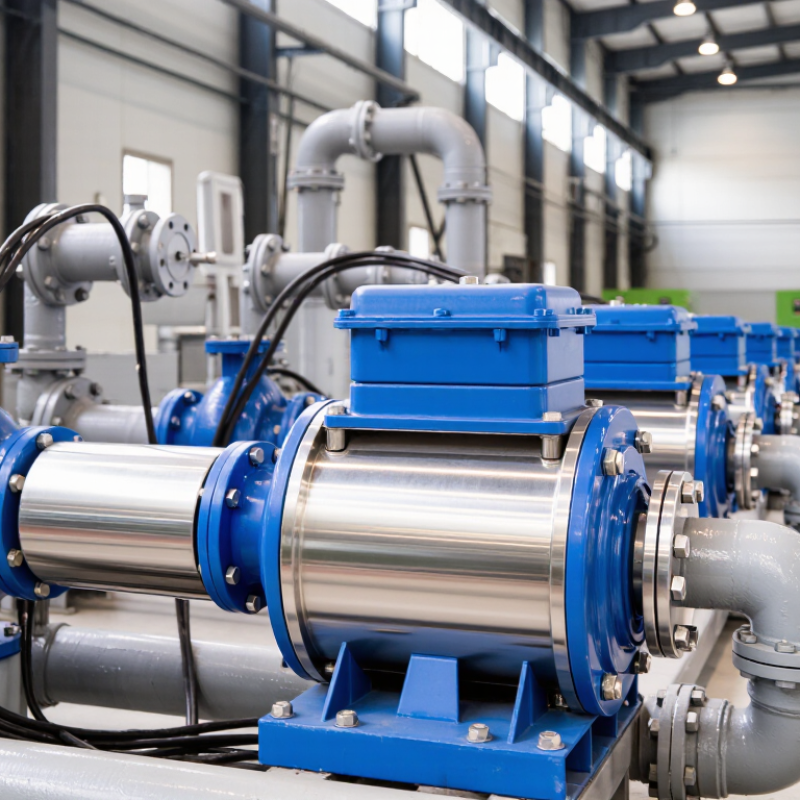
Electric water pumps in China include centrifugal, submersible, booster, and circulation models. Each serves a different water-moving task. Centrifugal pumps are common in irrigation and building supply, where steady flow matters. Submersible units work inside wells, sumps, and drainage pits. Booster pumps raise pressure in buildings, while circulation pumps keep water moving through heating loops.
Flow rate describes the volume delivered over time; head describes the energy available to move water against elevation and resistance. They are linked. A pump may deliver less flow as required head increases. For selection, compare the system’s operating point with the pump curve, not just the largest figures on a product sheet. Small details matter. Pipe length, bends, filters, and elevation all affect performance. A pump serving a rooftop tank, for example, must overcome both the height and friction losses in the pipework. Check the intended liquid, temperature, voltage, and duty cycle too. I would verify these details with measured site conditions, since estimates can miss a troublesome bend or a changing water level. There is no perfect shortcut.
Pump Performance Testing Under GB/T 3216-2016 and ISO 9906:2012
For electric water pump manufacturers in China, hydraulic testing is a practical way to verify advertised performance. GB/T 3216-2016 and ISO 9906:2012 provide acceptance-test methods and tolerance grades for rotodynamic pumps. The agreed standard and grade should appear in the test plan, since acceptance limits can differ. Numbers need context.
A typical test records flow, head, input power, and rotational speed at several operating points. Technicians stabilize the water loop, check for leaks, and use calibrated instruments. A pressure tapping placed too close to a bend can distort readings. Small details matter. Repeating measurements helps reveal unstable results, while recording water temperature and test conditions makes later comparisons more useful.
A clear report should show measured values against the specified duty point, instrument details, and any deviations from the procedure. If results sit near a tolerance limit, the test may need review rather than a quick pass. No test is flawless: vibration, air in the line, or a changing supply can affect readings. These standards support disciplined comparison, but careful setup and honest reporting still determine how much confidence buyers can place in the data.
Top Electric Water Pump Manufacturers in China - Pump Performance Testing Under GB/T 3216-2016 and ISO 9906:2012
Data note: The performance figures below are illustrative, non-brand engineering examples—not results from a named manufacturer or certified laboratory test. Wire-to-water efficiency is calculated from the listed flow, head, and electrical input; it is not the pump-only efficiency based on measured shaft power.
Representative electric water pump performance test data
| Test point |
Flow rate (m³/h) |
Total head (m) |
Electrical input (kW) |
Calculated wire-to-water efficiency |
Test interpretation |
| Low-flow point |
10 |
32 |
1.18 |
74.0% |
Compare measured head and input with the guaranteed values at this flow. |
| Duty point |
20 |
27 |
1.95 |
75.4% |
Assess against the specified duty point and acceptance grade. |
| High-flow point |
30 |
18 |
2.10 |
70.1% |
Check performance and motor input at the specified high-flow condition. |
Standards and reporting details
| Item |
Relevant information |
| GB/T 3216-2016 |
Rotodynamic pumps—Hydraulic performance acceptance tests—Grades 1, 2 and 3. |
| ISO 9906:2012 |
Rotodynamic pumps—Hydraulic performance acceptance tests—Grades 1, 2 and 3. |
| Acceptance assessment |
Acceptance depends on the contractually selected grade, guaranteed values, test procedure, and applicable tolerances; the standard and grade should be stated in the test report. |
| Efficiency calculation used above |
Wire-to-water efficiency = ρgQH ÷ electrical input, where water density is approximated as 1,000 kg/m³, g as 9.80665 m/s², and flow is converted to m³/s. |
Leading Chinese Electric Water Pump Manufacturers by Product Segment
Chinese electric water pump manufacturers serve distinct product segments rather than one uniform market. Domestic suppliers commonly produce clean-water boosters for apartments, compact circulation pumps for heating systems, and submersible pumps for drainage. Their designs differ in measurable ways: a booster needs stable pressure, while a drainage pump must handle water containing sediment. Buyers should compare flow rate, total head, motor efficiency, and materials against the actual operating conditions.
Industrial and agricultural segments require different checks. Process pumps may need corrosion-resistant wetted parts and continuous-duty motors. Irrigation pumps are judged by delivery volume, lift, and performance under changing water levels. The International Energy Agency’s 2011 report on electric motor-driven systems estimates these systems use 43–46% of global electricity. That figure covers many applications, not water pumps alone, but it highlights why efficiency data matters. A product page without a tested duty-point curve leaves an important gap.
Tips: Request a performance curve, efficiency rating, and test conditions for the exact model. Check whether the quoted flow and head can be achieved at the same operating point. For submersible units, confirm solids passage and cable protection. Small details matter. I would also verify service access and spare-part availability; these are easy to overlook when comparing prices.
Motor Efficiency Grades Under China’s GB 18613-2020 Standard
GB 18613-2020 sets energy-efficiency requirements for three-phase asynchronous motors, including those used in many electric water pumps. It defines three efficiency grades: Grade 1 is the most efficient, while Grade 3 sets the minimum allowable level. Required efficiency varies with motor power and pole count, so compare like-for-like nameplate specifications. A higher motor grade does not, by itself, prove that the complete pump delivers more water per unit of electricity.
The International Energy Agency’s 2011 report, Energy-Efficiency Policy Opportunities for Electric Motor-Driven Systems, estimates that motor-driven systems used 43–46% of global electricity. That figure covers many applications, not pumps alone, but it shows why motor efficiency matters. Still, a grade label is not the whole story. A poorly matched pump, throttled flow, or undersized piping can waste energy even with an efficient motor. Check the test conditions and rated operating point, not only the headline grade.
Tips: Request the motor’s efficiency grade, rated power, pole count, and test documentation. Compare pump flow and head at your actual duty point; a neat label cannot replace operating data.
How to Compare Chinese Pump Manufacturers by Efficiency, Materials, and Service
Comparing Chinese electric water pump manufacturers starts with the pump’s actual operating point, not its highest advertised efficiency. Request performance curves showing flow, head, and power consumption across the expected range. Numbers need context. A pump running far from its best-efficiency point may waste energy or wear unevenly, even when its rated figures look strong.
Check the materials that contact the liquid, including the casing, impeller, shaft, and seals. Cast iron may suit many clean-water systems, while stainless steel can be preferable where corrosion is a concern. Fit matters. Ask for material grades and test records, then compare them with your water chemistry and temperature. A neat specification sheet cannot replace that check.
Service deserves the same scrutiny as price. Ask how quickly technical staff respond, which spare parts are stocked, and whether installation guidance is available. Request a sample inspection or a video of the factory’s quality checks when practical. One comparison can still miss something: site conditions often change after selection. Record assumptions, such as daily run time and pipe losses, so quotations can be judged on equal terms.