
Our Blog
Check out our innovative pump solutions and industry insights to see what's new in the pumping industry. Stay up to date with the latest trends and news in the world of pumping technology by following our pumping technology blog.
- Home
- Blog
What Is the Best 1HP Water Pump in 2026?
Choosing the best 1hp water pump in 2026 is not just about comparing motor ratings. A one-horsepower label cannot tell you how much water a pump will deliver at your required height. You also need to consider flow rate, total head, pipe diameter, suction lift, and the water source. A pump moving water from a shallow tank has a different job from one feeding an elevated storage tank. The details matter.
Pump engineer Igor J. Karassik’s practical guidance can be paraphrased this way: “Choose for the system’s real duty point, not horsepower alone.” That is a useful check when product listings promise impressive flow rates without explaining the conditions behind them. Look for a performance curve, not just a large number on the box. Check whether the pump is self-priming, what materials touch the water, and whether its power supply matches your setup. Small print counts.
There is no single best model for every home, farm, or workshop. A quiet pump may suit a household well, while a rugged cast-iron unit may better handle frequent use. Even then, installation can change the result. A narrow pipe, a leaking joint, or a dry intake can undermine a capable pump. It is easy to overlook that. This guide compares 1hp water pump options by practical performance, intended use, reliability, and value, so you can narrow the field without treating horsepower as the whole answer.
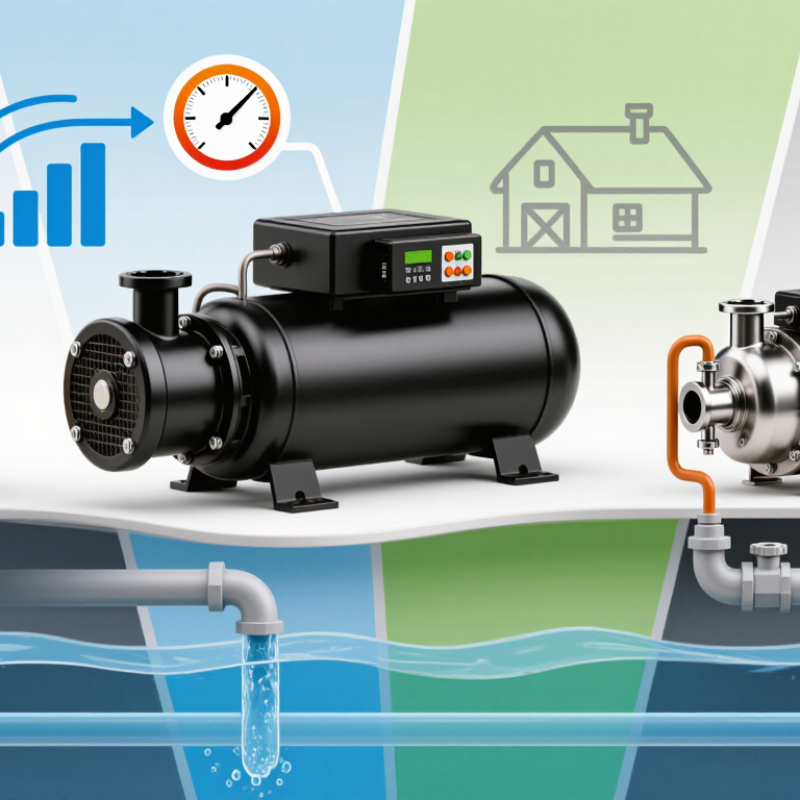
Define 1 HP as 746 W of Motor Output, Not Hydraulic Power
What Is the Best 1HP Water Pump in 2026?
A 1 HP motor rating means about 746 watts of mechanical output at the motor shaft. It does not mean 746 watts reach the water. The distinction is easy to miss. Electrical input is usually higher because motors lose energy as heat, while the pump also loses energy through friction and turbulence.
Hydraulic power is the energy actually transferred to moving water. It depends on both flow rate and lift, also called head. A pump may move plenty of water at low head, then deliver much less when pushing it uphill or through long, narrow pipes. Small distinction. Big consequence. For a practical estimate, hydraulic power can be calculated from water density, gravity, flow rate, and head; the result will be below the motor’s shaft output.
When comparing 1 HP pumps, check the performance curve, not just the number on the label. Look for the flow rate at your required head, and confirm whether the listed wattage means electrical input or motor output. Also check voltage, duty rating, and pipe size. A “1 HP” label alone cannot tell you whether a pump fits your setup. It is tempting to choose the model with the biggest flow figure, but that figure may apply only at very low head. I would verify the exact operating point before buying.
Match Required Flow and Total Dynamic Head to the Pump Curve
What Is the Best 1HP Water Pump in 2026?
Choose by duty point, not horsepower alone. A 1HP rating cannot tell you the delivered flow without the required head. Add vertical lift, pipe friction, fittings, and any outlet pressure requirement to estimate total dynamic head (TDH). Then find the flow you need and locate that flow on the pump curve. The matching head must meet or exceed your TDH.
Small error, big drop.
For example, a pump lifting water 20 feet through a long, narrow pipe may deliver less than expected because friction adds resistance. The U.S. Department of Energy’s Improving Pumping System Performance sourcebook reports that pumping systems can account for 25–50% of energy use in some industrial operations. That range is not a household-pump estimate, but it highlights why matching the pump to its duty matters. Check the curve near your required flow and head, not just the maximum-flow or maximum-head figures. Those extremes usually cannot happen together.
Tips:
Measure the water level while pumping, not only at rest. Include elbows, valves, and filters in your friction estimate. Compare the curve with your real operating point; pipe assumptions can be imperfect, so allow a practical margin and recheck after installation. If the curve does not show your target duty clearly, ask for the pump’s performance data before choosing.
Compare Duty-Point Performance Using ANSI/HI 14.6 Test Data
A “best” 1 HP water pump is the one that meets your required flow and head without wasting power. Motor horsepower alone cannot identify it. Compare certified test results at your actual duty point, not just maximum flow or shutoff head. ANSI/HI 14.6-2022 sets procedures for rotodynamic pump hydraulic performance acceptance tests, including measurements used to assess flow, head, and power. Ask for the test curve and the measured values nearest your operating point. That matters.
Check efficiency and input power at the required flow and head, then review the permitted test tolerances. A small mismatch can change the ranking, especially when pumps operate away from their best-efficiency region. The U.S. Department of Energy’s Improving Pumping System Performance sourcebook reports that pumping systems can use 25–50% of energy in some industrial facilities. That broad range is not a prediction for a 1 HP unit, but it shows why measured performance matters. Also verify the proposed operating point against the system curve and available suction conditions. A test sheet cannot model every pipe bend, air pocket, or changing water level. My hesitation: even a careful comparison can look more exact than field conditions really are.
Check NPSH, Motor Efficiency, and Enclosure Protection Ratings
A 1HP rating alone cannot identify the best water pump. Match the pump curve to your required flow and total head, then check the installation conditions. NPSH deserves close attention. The available NPSH at the pump inlet should exceed the pump’s required NPSH, with a practical margin. Long, narrow suction pipes, clogged strainers, and warm water can reduce that margin. The result may be cavitation: a rough, rattling sound and damage to the impeller.
Motor efficiency affects running costs, especially when the pump operates for many hours. Compare efficiency data at the load you expect, not just the motor’s headline rating. A pump rarely runs at one perfect point in real installations. Measure the pipe route and estimate demand carefully; I would not trust a rough guess from the old pump alone. Small details matter.
Check the enclosure protection rating against the pump’s location. A sheltered, dry utility room has different needs from a damp pit exposed to splashes. Read the rating’s stated protection rather than assuming every sealed-looking housing is waterproof. Also consider ventilation, ambient temperature, and access for inspection. An efficient motor can still overheat if airflow is blocked. I have seen selection decisions focus on horsepower while overlooking suction lift and enclosure conditions. That is an easy mistake, and worth questioning before purchase.
What Is the Best 1 HP Water Pump in 2026?
Compare calculated hydraulic output at different pump-efficiency levels. A 1 HP rated shaft output equals approximately 0.746 kW; the values below are estimates calculated from that rating, not measurements of specific pumps.
How to assess a pump: Check the pump’s flow and head at your operating point, and verify that available NPSH exceeds required NPSH with the manufacturer’s recommended margin. Confirm motor efficiency from its rated data. An IP enclosure rating describes protection against dust and water ingress; it does not indicate pumping performance.
For Drinking Water, Verify NSF/ANSI/CAN 61 Compliance
A 1HP rating tells you the motor size, not whether water is safe to drink. For a potable-water installation, request documentation showing the exact pump model is certified to NSF/ANSI/CAN 61. Check the certification scope and the water-contact components. The standard evaluates health effects of materials and components in contact with drinking water. It does not rate flow, pressure, or pathogen removal. Check the certifier’s public listing, not just a seller’s compliance claim. Details matter.
The stakes are practical. The WHO/UNICEF Joint Monitoring Programme’s 2023 report estimated that 2.2 billion people lacked safely managed drinking water in 2022. That global figure does not measure pump failures, but it shows that access and water safety are different questions. A pump can move clear water while unsuitable seals, coatings, or metals introduce contaminants. Ask whether the certified configuration matches the unit you are buying. A substituted seal may change which materials touch the water.
At installation, inspect labels and connections, then ask a qualified water professional to verify intended use and local requirements. NSF/ANSI/CAN 61 certification alone does not certify the entire plumbing system or guarantee source-water quality. Also compare the pump’s flow curve with household demand; horsepower alone is a blunt buying metric. Paperwork can be annoying. Still, verified certification scope is more useful than a confident product-page claim.
What Is the Best 1HP Water Pump in 2026? - For Drinking Water, Verify NSF/ANSI/CAN 61 Compliance
| Pump type | Typical application | Key advantages | Main limitations | Drinking-water checks | What to verify before buying |
|---|---|---|---|---|---|
| Shallow-well jet pump | Drawing water from a shallow well; the pump is installed above ground. | Accessible for inspection and servicing; commonly paired with a pressure tank. | Suction lift and site conditions limit practical well depth; it must be primed where required. | Confirm that the pump’s wetted parts and applicable assembly are certified for potable-water contact. | Well depth, required pressure, pump curve, priming instructions, and pressure-tank compatibility. |
| Deep-well jet pump system | Certain deeper wells using a jet-and-ejector arrangement; the exact setup depends on well depth and design. | Can serve some wells beyond the practical range of a shallow-well arrangement. | More installation variables; performance depends on the ejector, piping, and well conditions. | Check certification for all water-contact components, including any separate ejector or fittings. | Ejector configuration, setting depth, total dynamic head, flow at operating pressure, and installer requirements. |
| Submersible well pump | Pumping from a drilled well, with the pump installed below the water level. | Pushes water upward from within the well; avoids above-ground suction-lift limitations. | Removal and servicing may require lifting the pump and drop pipe; correct sizing is essential. | Verify potable-water certification for the pump, cable or drop-pipe components where applicable, and connected materials. | Well diameter, water level, depth, required flow and pressure, motor voltage, and control-box requirements. |
| Centrifugal or booster pump | Increasing pressure or moving water in a system with an adequate water supply; suitability depends on the pump design. | May suit pressure-boosting or transfer duties when its rated operating range matches the system. | Not every model is designed for wells, potable water, continuous operation, or the required pressure. | Do not assume a general-purpose pump is safe for drinking water; verify the exact model and configuration. | Inlet conditions, pressure-control method, flow at the required head, duty cycle, and potable-water listing. |
| 1 HP rating | One mechanical horsepower is approximately 0.746 kW. It describes motor output, not a guaranteed flow rate or pressure. | Actual water delivery depends on the pump curve, total dynamic head, pipework, water source, and system controls. | Compare rated flow at your required head—not horsepower alone—and confirm the electrical supply and starting requirements. | ||
Buying guidance: There is no universally best 1 HP pump without the well depth, required flow, and system pressure. For drinking water, verify that the exact model and relevant water-contact components are certified to NSF/ANSI/CAN 61 by checking the certifier’s current listing. NSF/ANSI/CAN 61 addresses health effects of drinking-water system components; it does not by itself determine pump performance. NSF/ANSI 372 is a separate lead-content standard and is not a substitute for NSF/ANSI/CAN 61.
Related Posts
-
1 HP Well Pump Tips for Optimal Performance and Maintenance?
-
Essential Guide to Choosing the Perfect Well Water Pump for Your Home Needs
-
2026 How to Choose the Best Submersible Well Pump for Your Needs?
-

2025 How to Choose the Best Submersible Well Pump for Your Water Needs
-

2026 Top Mini Water Pump Trends for Global Buyers?
-

Top Pump Manufacturers in 2026 What Buyers Need to Know