
Our Blog
Check out our innovative pump solutions and industry insights to see what's new in the pumping industry. Stay up to date with the latest trends and news in the world of pumping technology by following our pumping technology blog.
- Home
- Blog
How to Choose the Right Inline Water Pump?
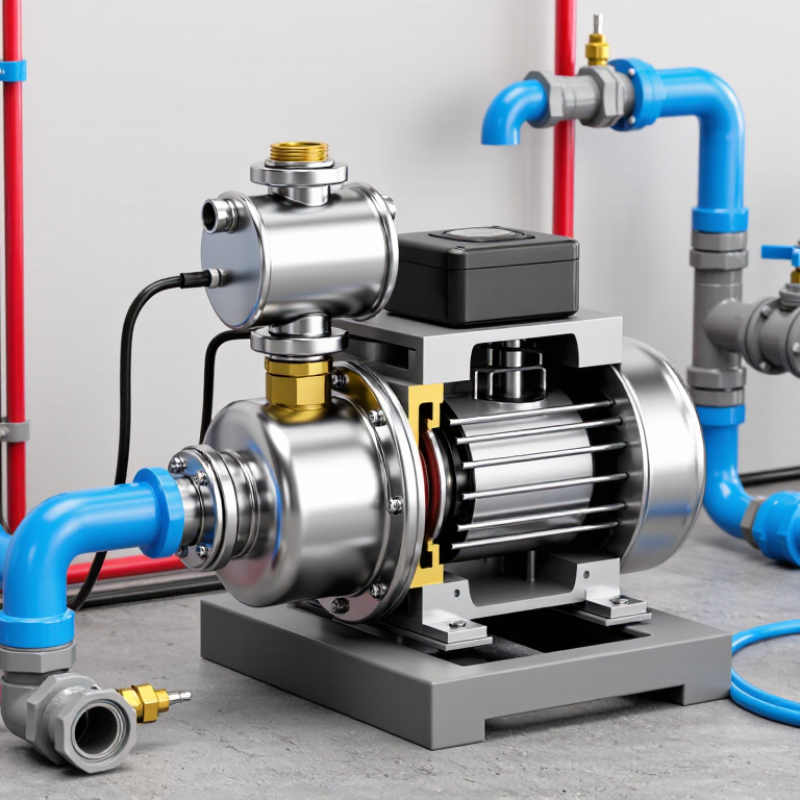
Choosing the right inline water pump is rarely about selecting the highest flow rate. It is about matching the pump to a real system, with real pipe resistance, water temperature, and operating hours. A pump that looks powerful on paper may struggle when installed below a tank or behind several elbows. In practical plumbing and circulation projects, I check the required flow, total head, connection size, and available power before comparing models. Small details matter. A narrow filter, dirty impeller, or undersized cable can change performance dramatically.
This guide explains how to evaluate an inline water pump with a technician’s perspective and a buyer’s caution. It considers pump curves, continuous-duty ratings, motor protection, noise, materials, maintenance access, and manufacturer support. For clean water, a compact stainless-steel body may suit a domestic circulation loop. For warmer water, seals and temperature limits deserve closer attention. Be skeptical. Verify test conditions, certification details, warranty terms, and replacement-part availability. Field experience shows that many installations fail because the pump was chosen for maximum flow, not actual pressure demand. It happens often. Even experienced buyers can overlook seasonal changes, air in the line, or voltage fluctuations. A reliable decision leaves room for uncertainty, confirms the manufacturer’s data, and respects local installation requirements. The best pump is not always the largest. It is the one that delivers stable performance without unnecessary energy use or premature wear.
Define the Duty Point: Match Flow (Q) and Head (H) Under ISO 9906
How to Choose the Right Inline Water Pump?
Define the duty point before comparing pump models. Flow rate, Q, is the water volume required per hour. Head, H, is the energy needed to overcome elevation, pressure, and pipe friction. Measure these values at the actual operating condition, not at the pump’s maximum rating. A 12 m³/h requirement at 18 m head is a clearer target than “a powerful pump.”
Build the system curve from real pipe lengths, elbows, valves, filters, and elevation changes. Then locate the intersection between this curve and the pump curve. ISO 9906:2012 provides acceptance grades and measurement tolerances for verified flow and head performance. That matters during commissioning, when a small error can leave the pump outside its intended duty point. Hydraulic Institute guidance also stresses adequate NPSH margin, especially where water temperature or suction conditions may change. Watch cavitation signs: crackling noise, vibration, and unstable pressure.
Field checks often reveal an uncomfortable detail: the calculated duty point is not always the operating point. A partly closed valve, clogged strainer, or undersized return line can shift it quickly. The U.S. Department of Energy’s Improving Pumping System Performance sourcebook reports that optimized pumping systems can often reduce energy use by 20% to 50%. Do not chase the highest flow. Select a pump that operates near its efficient region, while leaving a practical adjustment margin. The margin may be too generous. Recheck it.
How to Choose the Right Inline Water Pump?
Define the Duty Point: Match Flow (Q) and Head (H) Under ISO 9906
The operating duty point is where the pump head curve intersects the system head curve. In this example, the estimated operating point is approximately 40 m³/h at 38 m. Select a pump whose tested performance remains close to this point, then verify flow and head using the measurement and acceptance principles of ISO 9906.
Size by the Pump Curve: Apply Affinity Laws Q∝N and H∝N²
How to Choose the Right Inline Water Pump?
Choosing an inline water pump starts with the pump curve, not the pipe connection size. The curve shows how flow changes as resistance increases. Check your required flow, total dynamic head, and the operating point where both values meet. A pump that looks powerful on paper may deliver too little water after elbows, valves, filters, and elevation are included. Measure where possible.
Speed changes make the affinity laws useful. For the same impeller diameter and fluid, flow changes approximately in proportion to speed: Q ∝ N. Head changes with the square of speed: H ∝ N². If a pump runs at 80% speed, expect about 80% of its original flow and 64% of its original head. Power demand may fall to roughly 51%, following N³, although real systems vary. The curve still matters.
Do not treat these equations as exact promises. They work best for similar operating conditions, clean water, and moderate speed changes. Water temperature, viscosity, air pockets, and suction restrictions can shift performance. A practical check includes pressure readings before and after installation, plus motor current and noise. One shortcut is tempting: select by maximum flow alone. That shortcut fails. Recheck the duty point after installation, because real pipe resistance often differs from the design estimate.
Verify NPSH: Keep Available NPSH Above Required NPSH to Prevent Cavitation
How to Choose the Right Inline Water Pump?
Verify NPSH: Keep Available NPSH Above Required NPSH to Prevent Cavitation
NPSH is a critical check when selecting an inline water pump. Available NPSH, or NPSHa, describes the pressure reaching the pump suction. Required NPSH, or NPSHr, comes from the pump performance data. Keep NPSHa higher than NPSHr at the actual operating flow. A small difference can disappear when water temperature rises, filters become dirty, or suction piping adds resistance.
Measure conditions carefully. Record the water temperature, tank level, installation elevation, pipe length, valve position, and expected flow rate. Warm water has higher vapor pressure, which reduces NPSHa. Long, narrow suction lines can also create harmful pressure losses. Compare your calculated NPSHa with the manufacturer’s NPSHr curve at the selected speed. Add a practical safety margin for changing conditions, but do not assume one margin fits every system.
Tips: Check absolute pressure, not gauge pressure. Inspect the suction strainer regularly. Listen for crackling sounds, vibration, or unstable flow. These may indicate cavitation. In field work, I have seen pumps selected from flow alone, then fail to deliver quietly. That shortcut is tempting. It is also risky. Recheck NPSH after installation, because real piping often differs from the drawing.
Compare Efficiency: Calculate Hydraulic Power with P=ρgQH and Check IE Classes
Choosing an inline water pump starts with the real duty point, not the largest flow number in a catalog. Measure the required flow rate Q and total head H, including pipe friction, fittings, valves, and elevation. Hydraulic power follows P = ρgQH. Use water density ρ near 1,000 kg/m³ and gravitational acceleration g near 9.81 m/s². Keep Q in cubic meters per second and H in meters. The result is watts.
A quick example helps. A flow of 0.006 m³/s against 18 meters of head needs about 1,060 watts of hydraulic power. This is not the motor rating. Divide hydraulic power by pump efficiency and motor efficiency to estimate electrical input. If pump efficiency is 72% and motor efficiency is 90%, input demand approaches 1,640 watts. Real readings may differ. Poor alignment, air in the line, or a dirty strainer can increase consumption.
Check the motor’s IE class separately. IE3 and IE4 motors generally reduce electrical losses, but the higher class does not guarantee the lowest system cost. Confirm the motor operates near its rated load and matches the local supply. Also compare efficiency at your actual duty point, not only the best efficiency point. In field tests, a small pressure gauge before and after the pump often reveals unexpected losses. I have seen calculations fail because pressure units were mixed or flow was estimated casually. Recheck them. A pump selected with extra head may throttle flow and waste energy, while an undersized pump may run continuously near its limit.
Choose Materials and Controls: Align Corrosion Ratings with ISO 5199 Standards
Choosing an inline water pump begins with the liquid, not the motor size. Record pH, chloride concentration, temperature, suspended solids, and cleaning chemicals. These details determine whether stainless steel, coated carbon steel, or a higher alloy is suitable.
Corrosion rarely appears evenly. Field inspections often find pitting around threaded joints, shaft seals, and drain plugs. Match the pump’s material and corrosion rating to the actual operating environment. ISO 5199 provides useful requirements for centrifugal pump construction, inspection, testing, and documentation. However, it should not replace a project-specific material review. Ask for material certificates, pressure-test records, and performance data. Small omissions can become expensive failures.
Controls must protect both the pump and the surrounding system. A variable-frequency drive can reduce water hammer, but incorrect ramp settings may still stress seals. Include overload protection, dry-run detection, high-temperature alarms, and a clear emergency stop. Confirm the control panel’s enclosure rating for humidity, washdown, and installation location. Keep cable glands tight.
Test the pump under normal and worst-case conditions. Listen for cavitation, check vibration, and compare actual flow with the duty point. Do not trust a perfect startup. Chemistry can change during seasonal operation, and a material choice that works in clean water may fail near a dosing point. I would rather revise the selection early than defend an avoidable corrosion problem later.
| Water Service | Typical Water Chemistry | Recommended Wetted Materials | Indicative Corrosion Resistance | Material Selection Rationale | Preferred Control Method | Key Monitoring Point | ISO 5199 Alignment Check |
|---|---|---|---|---|---|---|---|
| Clean treated water | Low suspended solids; normally near-neutral pH; low chloride concentration | Cast iron or ductile iron casing with suitable coating; stainless-steel shaft; mechanical seal selected for the water temperature | Medium | Economical for closed-loop heating, cooling, and general water circulation when chloride and oxygen levels are controlled | Variable-frequency drive (VFD) using differential-pressure or constant-pressure control | Pressure, flow, motor current, bearing temperature, and seal leakage | Confirm pump duty point, pressure-containing casing, shaft sealing, vibration limits, balancing, testing, and documentation according to the applicable ISO 5199 edition and project specification |
| Potable water | Disinfected water; possible residual chlorine; low to moderate chloride level | Stainless steel wetted components, commonly austenitic stainless steel; use certified elastomers and coatings where required | High | Stainless steel generally provides better resistance to treated-water corrosion than unprotected carbon steel or cast iron; final grade depends on chloride, temperature, and water chemistry | VFD with pressure transducer; soft start and low-flow protection | Chloride concentration, pH, temperature, pressure transducer accuracy, and stagnation periods | Verify material certificates, hydrostatic testing, shaft alignment, mechanical-seal performance, and operating-point verification; potable-water approval is a separate regulatory requirement from ISO 5199 |
| Open cooling-water system | Oxygenated water; variable hardness; possible biological activity and suspended solids | Coated ductile iron or cast iron casing; stainless-steel shaft; corrosion-resistant impeller material; replaceable wear components where applicable | Medium | Coatings and controlled water treatment help limit general corrosion, erosion, and fouling; material choice must reflect biocide and chemical exposure | VFD with temperature, differential-pressure, or flow feedback | Water treatment dosage, conductivity, corrosion products, vibration, and strainer differential pressure | Check hydraulic stability, allowable vibration, rotor balance, casing integrity, seal arrangement, and test requirements against the specified ISO 5199 design class |
| Seawater or high-chloride water | High chloride concentration; high electrical conductivity; strong risk of pitting and crevice corrosion | Duplex or super-duplex stainless steel, titanium, or other material specifically qualified for the chloride level and temperature | High* | Standard austenitic stainless steels can suffer chloride-induced pitting and stress-corrosion cracking; higher-alloy materials provide improved resistance but require engineering verification | VFD with controlled ramp rates, dry-run protection, and minimum-flow protection | Chloride level, temperature, dissolved oxygen, galvanic couples, crevice areas, and coating condition | ISO 5199 does not by itself approve a material for seawater; specify corrosion allowance, material traceability, weld procedure controls, pressure tests, and project-specific corrosion requirements |
| Glycol-water mixture | Water mixed with inhibited ethylene glycol or propylene glycol; viscosity increases as temperature falls | Materials compatible with the inhibitor package, glycol concentration, and temperature; stainless-steel shaft and compatible elastomers | Medium | Corrosion behavior depends strongly on inhibitor condition, contamination, concentration, and fluid temperature; viscosity affects pump head and motor power | VFD with temperature-compensated pressure or flow control | Glycol concentration, reserve alkalinity, pH, viscosity, leakage, and motor load | Validate rated flow, head, power, NPSH margin, seal compatibility, temperature limits, and performance testing with the actual fluid properties |
| Demineralized or low-conductivity water | Low ionic content; potentially aggressive to some metallic materials; chemistry can change after air exposure | Material selection based on resistivity, dissolved gases, temperature, and contamination risk; stainless steel is often considered, but grade selection remains application-specific | Medium* | Very pure water is not automatically non-corrosive; galvanic effects, oxygen content, and process contamination can influence attack rates | VFD with stable pressure control and minimum-flow protection | Resistivity or conductivity, dissolved oxygen, pH, temperature, and metallic-ion contamination | Document the fluid properties and material rationale; verify casing pressure integrity, shaft and seal compatibility, balance, vibration, and factory testing in accordance with the project’s ISO 5199 requirements |
| Water containing abrasives | Sand, silt, or other suspended mineral particles; erosion risk increases with velocity | Wear-resistant or replaceable wetted components; hardened or upgraded impeller and wear-ring materials where suitable; abrasion-resistant coatings may be considered | Low to Medium* | Corrosion resistance alone does not address particle erosion; clearances, velocity, solids concentration, and particle hardness must be evaluated together | VFD with ramp control, high-vibration trip, and minimum-flow protection | Solids concentration, particle size, vibration, pump efficiency, wear clearance, and seal leakage | Confirm hydraulic design, rotor balance, wear allowances, vibration acceptance, inspection access, and performance testing; ISO 5199 compliance does not replace an erosion assessment |
| Warm water service | Elevated temperature; corrosion rate and scaling tendency may increase with temperature | Temperature-rated casing, shaft, seal faces, elastomers, gaskets, and coatings; stainless steel may be selected when chemistry requires it | Medium* | Temperature changes material strength, seal life, vapor pressure, and corrosion behavior; all wetted and sealing materials must be temperature-rated | VFD with temperature feedback, ramp control, and cavitation or low-suction-pressure protection | Fluid temperature, suction pressure, NPSH available, seal temperature, and scaling | Verify design temperature, pressure rating, hydrostatic test conditions, thermal growth, shaft alignment, seal performance, and NPSH margin within the specified ISO 5199 requirements |
| Important selection note: The resistance levels above are comparative engineering guidance, not universal material ratings. Actual corrosion performance depends on pH, chloride concentration, temperature, dissolved oxygen, velocity, microbiological activity, chemical treatment, galvanic contact, and exposure time. ISO 5199 primarily addresses centrifugal pump technical requirements such as design, materials, inspection, testing, and documentation; it does not provide a single corrosion-rating table for every water application. Final material selection should be confirmed by a corrosion engineer and the pump manufacturer using the complete water analysis. | |||||||
Related Posts
-
Top 10 Inline Water Pumps You Need for Efficient Supply?
-
2026 Top Inline Water Pumps for Global Buyers
-

Why is Water Motor Essential for Efficient Energy Production?
-
Why Choose an Inline Water Pump for Your Home or Business?
-
China Top 10 Types of Borehole Pumps for Global Buyers
-
Why is a Bore Pump Essential for Your Water Supply Needs?