

Top Pump Manufacturers for Global Buyers?
Choosing among the top pump manufacturers is not simply a matter of comparing price lists. Buyers must match pump type, materials, capacity, and service support to the actual duty point. A pump that looks right on paper can still waste energy or struggle with abrasive fluid. Small details matter: seal design, spare-parts access, and the response time of a local service team.
The market is substantial. Grand View Research estimated the global industrial pumps market at about $67.4 billion in 2023 and projected continued growth through 2030. The U.S. Department of Energy reports that pumping systems account for nearly 20% of global electricity demand. These figures make efficiency and lifecycle cost important screening criteria, not marketing extras. Hydraulic Institute executive director Michael Michaud has emphasized evaluating pumps as part of complete systems; paraphrased, his point is: assess the system, not just the machine. Buyers should verify this principle against their own operating conditions.
This guide compares manufacturers through practical questions: Do published curves fit the required flow and head? Are materials suitable for the fluid and temperature? Can the supplier provide commissioning help and replacement parts where the equipment will operate? Global reach can be useful. It is not enough. Some specifications remain hard to compare across brands, and a neat catalog rarely reveals every maintenance constraint. That uncertainty deserves attention. The right shortlist depends on documented performance, credible references, and clear after-sales commitments—not brand recognition alone.
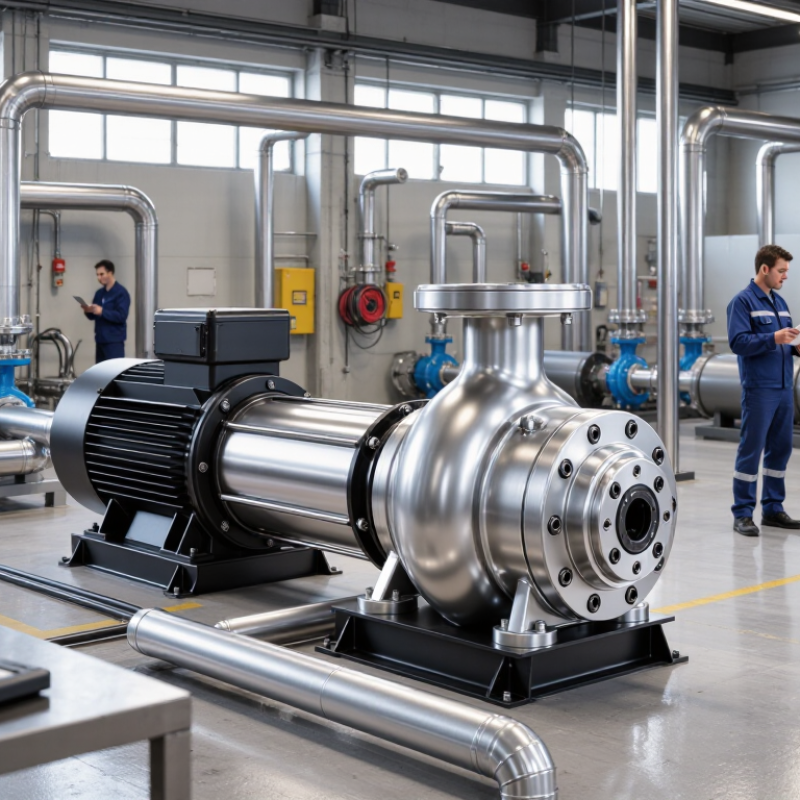
Pump Types and Duties: Centrifugal, Positive-Displacement, and Submersible Designs
Pump selection starts with duty, not catalog size. Flow, total dynamic head, fluid viscosity, solids, temperature, and operating hours shape the choice. Small details matter. A centrifugal pump suits steady, high-flow service with relatively clean, low-viscosity fluids. Its performance can fall sharply when it runs far from its best-efficiency point. The U.S. Department of Energy’s Improving Pumping System Performance: A Sourcebook for Industry reports that pumping systems use nearly 20% of global electricity. That figure makes correct sizing and control more than a purchasing detail.
Positive-displacement pumps move a defined volume per cycle, making them useful for viscous fluids, dosing, or duties that need consistent flow as pressure changes. They need suitable pressure protection; blocked discharge can create hazardous pressure. Submersible pumps operate below the liquid surface, often handling drainage, wastewater, or deep-well service without a long suction lift. Check solids passage, seal design, and motor cooling against the actual fluid and installation. A wet pit with stringy debris is not the same duty as a clean-water sump. Selection tables help, but real operating data are better. I would verify the duty point against measured flow and pressure; assumptions on a specification sheet can be wrong. DOE’s report also emphasizes system-level assessment, because throttling, pipe losses, and oversized equipment can waste energy even when the pump itself is efficient.
Top Pump Manufacturers for Global Buyers? - Pump Types and Duties: Centrifugal, Positive-Displacement, and Submersible Designs
| Pump type | Typical operating principle | Common duties | Typical flow and pressure characteristics | Suitable fluids | Key selection considerations |
|---|---|---|---|---|---|
| End-suction centrifugal | A rotating impeller adds velocity to the liquid; the casing converts much of that velocity into pressure. | Water supply, irrigation, cooling-water circulation, building services, and general process transfer. | Usually suited to medium or high flow at low-to-moderate pressure. Flow varies with system resistance and operating point. | Clean or lightly contaminated, low-viscosity liquids compatible with the pump materials. | Check required flow and total dynamic head, suction conditions, efficiency near the duty point, and the need for priming. |
| Multistage centrifugal | Several impellers arranged in series add pressure in successive stages. | Boiler-feed service, reverse osmosis, high-rise water supply, pressure boosting, and high-head transfer. | Designed to develop higher head than a comparable single-stage pump; available flow depends on the specific design. | Typically clean, low-viscosity liquids; solids and abrasive particles may require special design features. | Confirm stage count, pressure rating, water temperature, seal arrangement, and whether the required flow is within the stable operating range. |
| Rotary positive-displacement: gear or screw | Rotating elements carry a nearly fixed volume of liquid from the inlet to the discharge on each cycle. | Oil transfer, lubrication systems, fuel handling, and metering or transfer of viscous process liquids. | Flow is generally proportional to speed and less dependent on discharge pressure than centrifugal-pump flow. Pressure capability varies by design. | Oils, fuels, polymers, and other clean or mildly contaminated viscous liquids, depending on clearances and materials. | Check viscosity across the temperature range, allowable solids, speed, internal slip, and pressure-relief protection. A relief path is essential because discharge must not be blocked. |
| Reciprocating positive-displacement: piston or plunger | A reciprocating element displaces a measured volume during each stroke. | High-pressure cleaning, hydraulic and process dosing, pressure testing, and controlled chemical injection. | Can provide high pressure and accurately controlled flow; flow is typically pulsating unless dampening equipment is used. | Clean liquids or compatible process chemicals; particle tolerance depends on valve and cylinder design. | Evaluate pressure, stroke rate, pulsation, valve maintenance, leakage control, and the need for a pulsation dampener. |
| Diaphragm positive-displacement | A flexible diaphragm moves liquid through check valves while separating the fluid from the drive mechanism. | Chemical dosing, corrosive-liquid transfer, wastewater treatment, and applications where leak containment matters. | Flow is often low to moderate and may be pulsating. Pressure and flow depend strongly on the diaphragm and drive design. | Many corrosive, abrasive, or shear-sensitive fluids when wetted materials are correctly selected. | Verify chemical compatibility, solids handling, diaphragm life, dosing accuracy, and the maximum permitted discharge pressure. |
| Submersible centrifugal | A sealed motor and pump operate below the liquid level; the hydraulic section is commonly centrifugal. | Groundwater wells, drainage, stormwater, sumps, and wastewater transfer. | Performance depends on the impeller and number of stages. Submerged installation can avoid suction-lift and priming issues. | Water and wastewater; solids capability depends on impeller type, passage size, and pump construction. | Check immersion depth, motor cooling, solids passage, cable and seal protection, start frequency, and access for maintenance. |
| Submersible sewage or solids-handling pump | A submerged pump, often centrifugal, uses a solids-handling impeller or cutter arrangement to move wastewater. | Sewage lift stations, municipal wastewater, commercial drainage, and raw-water or slurry duties within the design limits. | Selected for the required flow and system head; solids handling and clogging resistance are central to duty selection. | Wastewater containing suspended solids; allowable solids size and fiber content vary by impeller design. | Confirm solids passage, fiber content, ragging risk, wet-well conditions, motor protection, and access for inspection and cleaning. |
Note: Operating ranges are design-dependent, not universal ratings. Final selection should be based on the manufacturer’s performance curve, the system duty point, liquid properties, materials compatibility, and applicable safety requirements. “Submersible” describes an installation arrangement; a submersible pump may use centrifugal or positive-displacement hydraulics.
Related Posts
-
Who Are the Top 10 Pump Manufacturers in the World?
-
10 Tips for Choosing Pump Manufacturers Worldwide
-
Top 10 Water Pumps for Global Buyers
-
Understanding the Innovations of Pump Manufacturers in Modern Industrial Applications
-
2025 How to Choose the Right Motor Pump for Your Needs
-

2026 Best Industrial Water Pump Options for Global Buyers?