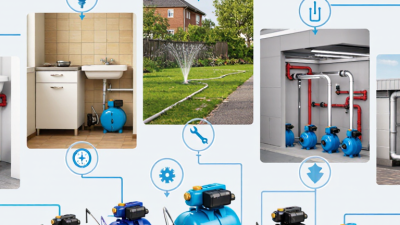
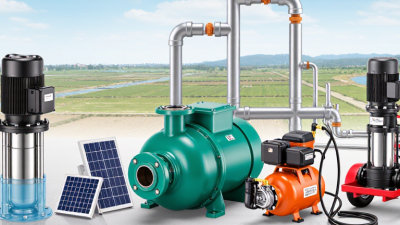
Top 10 Inline Water Pump Manufacturers in China?
Choosing an inline water pump manufacturer in China involves more than comparing catalog prices. These pumps fit directly into a pipeline, helping circulate water in building services, industrial systems, and heating or cooling networks. A compact body can save installation space, but performance still depends on the duty point, fluid conditions, and system design.
This guide introduces ten manufacturers worth evaluating and explains what buyers can check before requesting a quotation. Look for clear pump curves, material specifications, motor details, and documented quality-control procedures. Ask whether the quoted model matches your required flow rate and head, rather than relying on a broad product description. Factory audits, sample testing, spare-parts availability, and response times can also reveal how well a supplier supports projects after shipment.
Details matter.
A polished website is not proof of consistent production, and a low price may leave important service costs unclear. Rankings can vary with product range, export experience, and the needs of a particular project. Treat this list as a starting point, not a final endorsement. Verify current specifications directly with each manufacturer, and confirm that the selected inline water pump suits your operating conditions. Some comparisons may remain imperfect because public data is uneven. That uncertainty is worth acknowledging before making a purchasing decision.
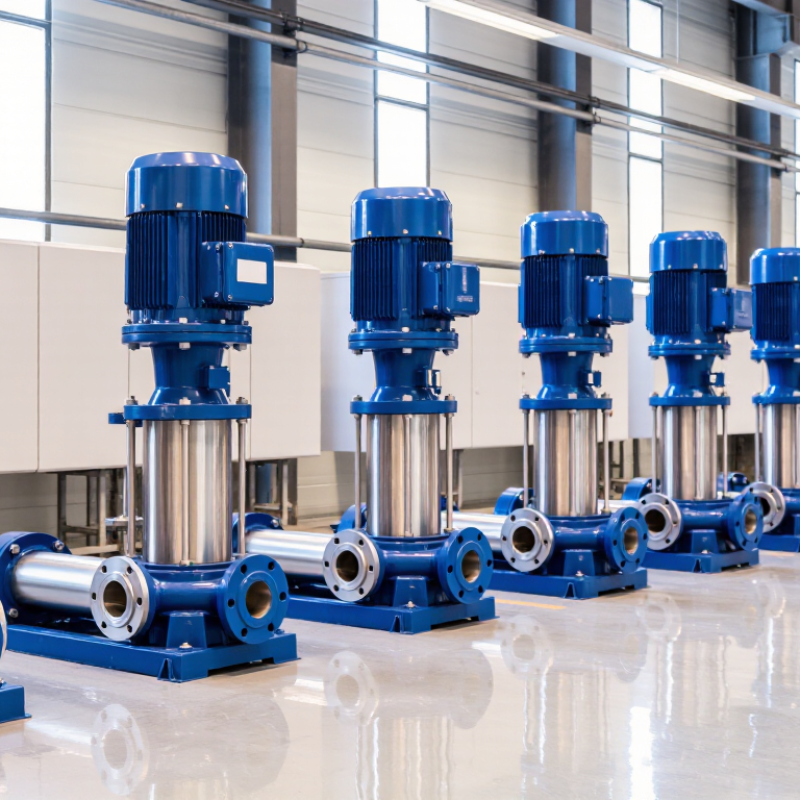
Inline Water Pumps Explained: Flow (m³/h), Head (m), and Motor Power (kW)
Inline water pumps are selected by matching flow, head, and motor power—not by pipe size alone. Flow, measured in cubic metres per hour, describes how much water moves. Head, measured in metres, represents the energy needed to overcome elevation, friction, and pressure losses. A pump delivering 10 m³/h at 20 m head may suit a modest circulation loop, but long, narrow pipes can raise the required head substantially. Small details matter.
A useful estimate is hydraulic power (kW) = 0.002725 × flow (m³/h) × head (m). At 10 m³/h and 20 m, that equals about 0.55 kW before losses. If pump efficiency is 65%, input power is roughly 0.84 kW; a suitable motor must also handle operating conditions and starting demands. The U.S. Department of Energy’s Improving Pumping System Performance: A Sourcebook for Industry reports that pumping systems account for nearly 20% of global electricity demand. Efficiency deserves attention. Compare manufacturer performance curves at the intended duty point, and check whether the quoted flow and head occur together. A nameplate maximum can be misleading. Real installations rarely match a clean calculation perfectly, so verify pipe losses and control settings before final selection.
Hydraulic Performance Testing: ISO 9906:2012 Acceptance Grades 1–3
Top 10 Inline Water Pump Manufacturers in China?
Hydraulic Performance Testing: ISO 9906:2012 Acceptance Grades 1–3
When comparing inline water pump manufacturers, request hydraulic test evidence, not just a printed performance curve. ISO 9906:2012 defines acceptance criteria for testing flow, head, and efficiency. Grades 1, 2, and 3 represent different acceptance levels; the agreed grade affects how closely test results must match declared values. Confirm the grade and test conditions before comparing quotations.
A useful report records several operating points, including flow rate, discharge pressure, input power, and rotational speed. Check that the test setup uses calibrated instruments and steady water conditions. Small changes in speed or impeller diameter can shift the results. A polished curve helps, but it cannot guarantee identical performance in every building. Pipe losses, control settings, and installation details matter. Laboratory results are valuable, but they are not the whole story.
Tips: Ask for the signed test report, measured readings, stated acceptance grade, and instrument calibration details. Check whether the tested pump matches the offered model. One detail is easy to miss: the duty point you need should fall within the tested range. If a report leaves gaps, ask for clarification rather than assuming the figures are comparable.
ISO 9906:2012 Hydraulic Performance Acceptance Grades
The chart compares tolerance magnitudes for flow rate, head, input power, and efficiency across Grades 1–3. Flow-rate and head tolerances are shown as ± values; input-power allowances are positive, while efficiency tolerances represent permitted shortfalls. These are acceptance limits, not pump performance measurements.
Top 10 Chinese Inline Pump Manufacturers: Products and Applications
China’s inline pump market includes manufacturers serving building services, water treatment, and light industry. Their product ranges often cover single-stage circulation pumps, multistage pressure-boosting models, and variable-speed units. A ranking can offer a starting point, but product fit matters more than position.
In commercial buildings, inline pumps circulate chilled or hot water through compact mechanical rooms. Heating systems need stable flow and quiet operation. Water-treatment lines may require stainless-steel wetted parts, while general utility systems often use cast-iron housings. Small details count. Check the pump curve against the actual flow and head, not just the motor rating. Ask about seal materials, operating temperature, and available test records.
The ten leading suppliers may differ in factory scale, customization, and after-sales support. Some focus on standard HVAC models; others handle higher-pressure industrial duties. A catalogue can look convincing. Still, installation conditions are easy to underestimate: pipe diameter, fluid quality, and control strategy all affect performance. Request dimensional drawings and confirm connection sizes before ordering. I would also compare energy use at the expected operating point, because maximum efficiency figures alone can mislead.
Comparing Pump Curves, Efficiency (η), Materials, and Motor Classes
A useful comparison of China’s inline water-pump manufacturers starts with the duty point, not the catalogue headline. The U.S. Department of Energy’s Improving Pumping System Performance sourcebook estimates that pumping systems consume nearly 20% of global electricity. That figure makes efficiency more than a laboratory detail. Compare each pump curve at the required flow and head, then check how close that point sits to the best-efficiency point. Ask for test conditions and tolerances, too. A curve without them is hard to verify. Small print matters.
Efficiency figures need context. A pump’s hydraulic efficiency is not the same as its motor’s efficiency class. IEC 60034-30-1 defines motor classes such as IE3 and IE4; request the motor nameplate data and confirm the supplied configuration. Materials should match the fluid and operating environment: cast iron may suit clean water service, while stainless steel can be appropriate where corrosion resistance is important. Check shaft seals and wetted components, not just the casing. I would not treat a published curve as gospel; piping, control settings, and installation can shift real-world performance. Compare sound test records, material schedules, and motor classes side by side. The comparison is less tidy than a ranked list.
Selection Checks: Duty Point, NPSH, Voltage, and Applicable Standards
When comparing inline water pump manufacturers in China, start with the duty point, not the largest flow or head shown in a catalog. Match the required flow and total head to the pump curve, then check where that point sits. A point near the preferred operating region usually reduces noise, vibration, and excess energy use. Small details matter. Record fluid temperature, density, and operating hours; these can change the selection. A tidy curve is not proof, though. Ask for test conditions and clarify whether the stated performance includes motor or system losses.
Check available NPSH against the pump’s required NPSH at the actual flow, with a project-appropriate margin. A suction pipe with elbows close to the inlet can make a calculated margin less reassuring. Voltage, phase, and frequency must match the site supply, and the motor’s rated current should suit the protection settings. For exported equipment, confirm applicable electrical and pump-performance standards with the project engineer, including the required editions and local codes. Do not assume one certificate covers every market. Sometimes supplier documents leave gaps; note them and request clarification before comparing quotations.