7 Best Inline Water Pumps for Home and Industry
Choosing the right inline water pump is rarely as simple as matching pipe size and motor power. A quiet booster pump under a kitchen sink faces different demands from a stainless-steel unit circulating hot water through a factory. Flow rate, head pressure, temperature, water quality, noise, installation space, and duty cycle all matter. Small details matter.
This guide examines seven inline water pump options for home and industrial use. Each selection is considered through practical conditions, including a weak shower line, a long irrigation run, and continuous circulation beside heated process equipment. We also consider materials, seals, control systems, maintenance access, and electrical efficiency. A pump that performs well in one system may waste energy or fail early in another.
Rotating-equipment authority Heinz P. Bloch offers a useful principle: “Select the pump for the system, not the system for the pump.” That advice remains relevant when comparing an inline water pump with a conventional booster or centrifugal design. The strongest model on paper is not always the best installation choice. Sometimes, a cheaper pump delivers better results because its operating point matches the pipe network.
This review is not perfect. Manufacturer data can differ from field performance, and household plumbing is often less predictable than published diagrams suggest. We therefore highlight both advantages and compromises. Expect clear comparisons, realistic use cases, and practical checks before purchase. Measure twice. Install once.
Inline Pump Fundamentals: Flow Rate, Head, NPSH, and Hydraulic Efficiency
Choosing among the 7 best inline water pumps requires more than comparing motor size. Flow rate describes delivered volume, usually in litres per minute or gallons per minute. Head describes pressure potential, including elevation, pipe friction, valves, and fittings. A pump moving 100 L/min at 20 metres of head may perform poorly if the system resistance reaches 25 metres.
The Hydraulic Institute identifies the pump operating point as the intersection of the pump curve and system curve. This detail is often missed. Oversizing can create throttling, noise, and unnecessary energy use. The International Energy Agency reports that electric motor systems consume roughly half of global electricity, making hydraulic efficiency a practical operating concern. Efficiency is calculated from water power divided by electrical input. Small losses become expensive during continuous industrial service.
NPSH deserves careful inspection. Net Positive Suction Head Available must exceed the pump’s required NPSH, or vapor bubbles may form near the impeller. The Hydraulic Institute standard ANSI/HI 9.6.1 recommends evaluating margin across operating conditions, not only at the design point. Water temperature, altitude, clogged strainers, and undersized suction piping can reduce NPSHA. Field measurements sometimes disagree with catalogue assumptions. That is where selection needs rethinking. A pump may meet the advertised flow yet still cavitate during summer operation or low-tank conditions.
Seven Home Inline Pumps Compared by GPM, Noise, Energy Use, and IP Ratings
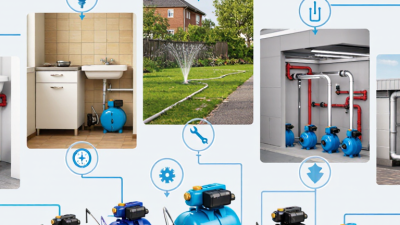
Choosing among seven inline water pumps requires more than comparing price or maximum head. Published residential specifications commonly show useful flow rates from 5 to 30 gallons per minute, while compact circulation models often use 20 to 150 watts. Higher GPM can shorten tank-filling time, but it may increase pipe noise and electricity use. Measure the actual demand first.
Noise matters in kitchens, bedrooms, and plant rooms. A practical target is below 50 dB(A), although manufacturers may test under different conditions. The U.S. Department of Energy’s Pumping System Assessment Tool reports that system improvements can reduce pumping energy by 20% to 50%. That saving depends on correct pipe sizing, fewer sharp bends, and avoiding oversized pumps. Bigger is not automatically better.
Energy labels should be checked beside rated flow, not alone. A pump using 60 watts at 10 GPM may outperform a 100-watt unit at the same duty point. The Hydraulic Institute recommends evaluating pumps near their best efficiency point, where vibration and wear are usually lower. For damp locations, IEC 60529 IP ratings provide useful protection guidance: IP44 resists splashing, while IP65 offers stronger dust protection and water-jet resistance. Still, an IP rating is not permission for submersion. I would question any comparison using only laboratory noise figures. Installation brackets, air in the line, and nighttime pressure changes can make a quiet pump sound surprisingly harsh.
Seven Industrial Inline Pumps Rated by Duty Cycle, IE3/IE4 Motors, and NPSH
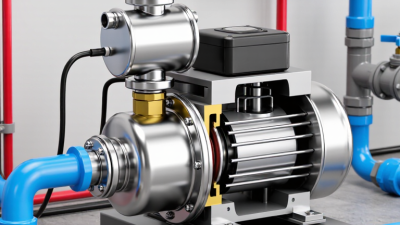
The seven best inline water pumps depend on duty cycle, pressure, temperature, and available suction head. A compact single-stage pump fits light domestic circulation. A heavy-duty single-stage unit handles continuous plant service. Vertical multistage pumps suit high-rise water systems. Horizontal multistage pumps deliver stronger pressure for process lines. Low-NPSH designs protect systems with limited suction conditions. High-temperature inline pumps serve heating loops. Variable-speed pumps reduce energy use when demand changes.
Duty cycle deserves careful attention. Intermittent pumps may overheat during long production shifts. Continuous-duty designs need robust bearings, suitable seals, and adequate cooling. IE3 motors provide efficient operation, while IE4 motors can reduce losses further under steady loads. However, efficiency depends on correct sizing. An oversized pump may consume more electricity despite its efficient motor. NPSH available should exceed NPSH required, with a practical safety margin. I would not trust catalogue figures alone. Site measurements matter.
Tips: Check flow at peak demand, not average demand. Confirm water temperature and pipe diameter. Leave room for maintenance access. Listen for rattling or unstable pressure; these may indicate cavitation. A small mistake here becomes expensive. Also, review operating records after installation. Real performance can differ from the design sheet, sometimes more than expected.
Installation Standards: ANSI Flanges, 60 Hz Power, and IP55 Protection
Choosing among the 7 best inline water pumps for home and industry requires more than comparing flow rates. Installation standards often decide reliability. ANSI flange dimensions should match ASME B16.5 pressure classes, bolt patterns, and nominal pipe sizes. A small mismatch can create uneven gasket compression. Leaks may appear after vibration begins.
Power compatibility matters just as much. The U.S. Energy Information Administration reports that industrial facilities use electricity heavily for motor-driven equipment, while the International Energy Agency estimates motor systems consume about 53% of global electricity. A 60 Hz pump motor must match the site supply, voltage, phase, and starter system. Frequency changes affect speed, head, and flow. Do not trust the nameplate alone. Measure the incoming power.
IP55 protection adds practical reassurance. Under IEC 60529, the first “5” limits harmful dust entry, while the second “5” protects against water jets. It is not waterproof. Place the motor above flood-prone floors, use drip loops, and keep cable glands tight. I have seen otherwise suitable pumps fail because condensation was ignored. That detail is easy to miss.
Pressure losses also deserve attention. Oversized pumps can waste energy and cause noisy throttling. Undersized pumps may never reach the required duty point. Select the pump from the actual system curve, not a catalog headline. Recheck flange alignment after piping is supported. Small errors become expensive lessons.
Lifecycle Value: Energy Costs, Seal Materials, Service Intervals, and Warranty Terms
Selecting the seven best inline water pumps requires more than comparing purchase prices. Energy often dominates lifecycle cost. The U.S. Department of Energy reports that pumping systems can consume 25–50% of industrial electricity in some facilities. A 10-kilowatt pump running 4,000 hours annually uses 40,000 kilowatt-hours. At $0.12 per kilowatt-hour, that equals $4,800 each year. Demand charges are not included.
Europump and the Hydraulic Institute’s lifecycle-cost guidance commonly places energy near 40% of total pump ownership cost. Therefore, verify the pump curve at the actual duty point. Oversizing causes throttling losses, noise, and unnecessary seal stress. Smaller is not always better. Efficiency changes sharply near the wrong operating range. Field measurements can expose that mistake.
Seal material and service intervals also affect value. EPDM suits many water applications, while FKM or PTFE may better tolerate heat or aggressive chemicals. Confirm compatibility with temperature, additives, and cleaning agents. A low-cost seal can become an expensive failure. Inspect leakage, vibration, bearing temperature, and motor current rather than trusting a fixed calendar alone. Warranty terms deserve equal scrutiny. Ask whether coverage includes labor, seals, dry-running damage, and corrosion. Many warranties exclude incorrect installation or incompatible fluids. A long warranty can still be thin. The best comparison records energy use, replacement parts, service hours, and downtime over several years, although real operating data is often incomplete.