
loading

Our Blog

Check out our innovative pump solutions and industry insights to see what's new in the pumping industry. Stay up to date with the latest trends and news in the world of pumping technology by following our pumping technology blog.

Top 10 Water Pumps for Global Buyers

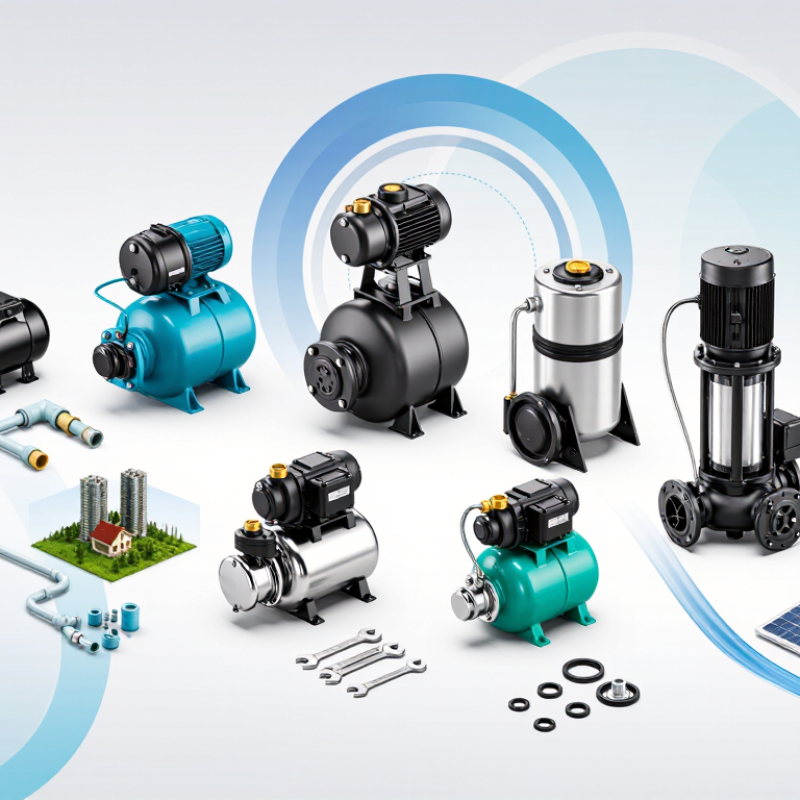
Choosing the right pump can feel simple until water quality, voltage, pressure, and installation space enter the picture. This guide examines the top 10 water pumps for global buyers, using practical criteria rather than attractive marketing claims. Each model is considered for flow rate, head height, power efficiency, materials, maintenance access, and supplier reliability.

Real projects rarely match catalogue conditions. A pump moving clean water in a showroom may struggle with sand, heat, or frequent starts. Fit matters. Buyers should compare the pump curve with actual pipe length, elevation, outlet size, and daily demand. A quiet household booster pump cannot replace a rugged agricultural unit, just as a powerful industrial pump may waste energy in a small building.

The selection also considers common international requirements, including electrical compatibility, documented performance, corrosion resistance, and available replacement parts. Experienced installers know that seals, impellers, cables, and service support often decide long-term value. A lower purchase price can become expensive after one unavailable component stops the system.

No list is flawless. Regional water conditions and local installation rules can change the final choice. Therefore, this overview offers a dependable starting point, not a substitute for site assessment or qualified technical advice. Readers will find clear comparisons, practical use cases, and cautions for different markets. The goal is straightforward: help global buyers choose water pumps that perform reliably beyond the first test.
Top 10 Water Pumps for Global Buyers

Understanding Water Pump Types and Their Main Applications

Top 10 Water Pumps for Global Buyers

Understanding Water Pump Types and Their Main Applications

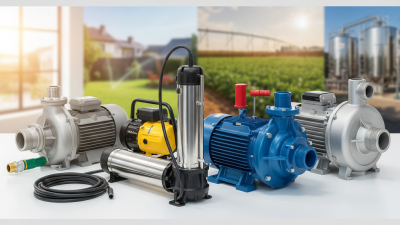
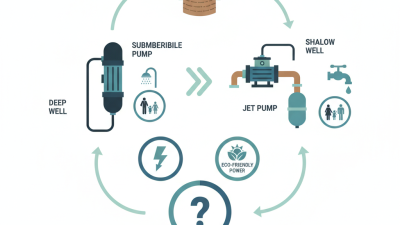
Choosing a water pump begins with the application, not the catalogue. A practical shortlist includes centrifugal, multistage, submersible, borehole, self-priming, axial-flow, mixed-flow, positive-displacement, diaphragm, and solar-powered pumps. Centrifugal models suit clean-water transfer, irrigation, and building services. Multistage pumps deliver higher pressure for boilers, reverse-osmosis pretreatment, and tall buildings. Submersible and borehole pumps work below ground, where surface suction becomes unreliable. They need careful cable sealing and protection from dry running.

Axial-flow and mixed-flow pumps move large volumes through canals, drainage stations, and flood-control systems. Positive-displacement pumps handle viscous fluids or precise dosing, while diaphragm designs tolerate air entrainment and light solids. Solar-powered units can support remote livestock watering and small irrigation schemes. The United Nations World Water Development Report 2024 states that agriculture accounts for about 70% of global freshwater withdrawals. That figure makes irrigation efficiency a purchasing priority, not a minor technical detail.

Energy use also deserves attention. The U.S. Department of Energy notes that pumping systems can represent roughly 25% of industrial electricity consumption. Buyers should compare duty point, efficiency curve, motor rating, maintenance access, and local spare-part availability. A larger pump is not automatically safer. Oversizing may cause throttling, vibration, and wasted power. A perfect selection does not exist. Field water quality, seasonal demand, and installation mistakes can defeat an excellent specification. Trial measurements after commissioning often reveal more than a sales sheet.

Top 10 Water Pumps for Global Buyers

Understanding Water Pump Types and Their Main Applications

The chart compares representative maximum head capabilities for ten widely used water pump types. Head values are typical engineering ranges rather than fixed limits; actual performance depends on pump size, speed, fluid properties, pipe resistance, and operating conditions. Centrifugal pumps are widely used for water supply and irrigation, while positive-displacement pumps are preferred for high-pressure, metering, or viscous-fluid applications.

Key Performance Factors for Comparing Water Pumps Worldwide

Top 10 Water Pumps for Global Buyers

Key Performance Factors for Comparing Water Pumps Worldwide

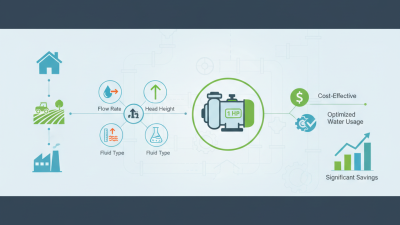
Comparing water pumps requires more than reading maximum flow figures. Check flow rate and total head under real operating conditions, including pipe length, bends, valves, and elevation. A pump rated at 100 litres per minute may deliver much less at six metres of head. Efficiency also matters, especially where electricity costs are high. Look for stable performance across the expected duty range, not only the best laboratory point. Noise matters.

Global buyers should verify voltage, frequency, motor protection, and local installation requirements. Materials must match the water quality. Stainless steel can help with corrosion, while reinforced polymers may reduce weight and cost. For wells, irrigation, drainage, or building supply, the duty cycle differs greatly. Continuous operation demands better cooling and service access. Ingress protection is important in wet environments, but it does not replace correct installation. A common mistake is selecting by purchase price alone. Lifecycle cost can change the ranking.

Tips: Measure twice. Record actual flow, head, water temperature, and daily running hours before comparing models. Ask suppliers for performance curves, test conditions, spare-part availability, and maintenance intervals. Independent certification can support reliability, but certification requirements vary by country. A practical review should also consider transport damage, installation skills, and emergency repair time. No comparison is perfect; field conditions often expose assumptions missed during planning.

Top 10 Water Pumps for Global Buyers - Key Performance Factors for Comparing Water Pumps Worldwide

Rank Pump Type Typical Flow Rate
(m³/h)
Typical Head
(m)
Motor/Input Power
(kW)
Typical Hydraulic
Efficiency
Maximum Liquid
Temperature
Suitable Water Conditions Common Applications Key Buying Considerations
1 End-Suction Centrifugal Pump 5–500 10–100 0.75–250 60–85% Up to 90°C Clean or lightly contaminated water; limited solids tolerance Water transfer, irrigation, pressure boosting, cooling systems Check duty point, suction conditions, seal material, motor voltage and frequency
2 Vertical Multistage Centrifugal Pump 1–300 30–400 0.75–250 65–88% Up to 120°C Clean water and low-viscosity liquids with minimal solids High-rise buildings, boiler feed, reverse-osmosis systems, industrial process water Compare stage count, NPSH requirement, pressure rating and energy efficiency
3 Submersible Drainage Pump 5–500 5–80 0.4–100 45–75% Up to 40°C Dirty water; selected models handle solids approximately 10–100 mm Construction sites, basements, stormwater, wastewater pits Verify solids passage, float-switch control, cable length, IP68 protection and portability
4 Borehole Submersible Pump 0.5–250 20–500 0.37–250 55–82% Up to 30°C Groundwater with low sand content; commonly designed for 4–12 inch wells Domestic water supply, livestock systems, irrigation and municipal wells Match pump diameter, well yield, static water level, cable type and sand tolerance
5 Self-Priming Centrifugal Pump 5–300 5–80 0.75–110 50–80% Up to 90°C Clean to moderately dirty water; some models handle suspended solids Irrigation, tank transfer, dewatering and applications with intermittent air entry Confirm maximum suction lift, priming time, check-valve arrangement and dry-run protection
6 Split-Case Centrifugal Pump 100–5,000 15–160 7.5–1,000 75–92% Up to 100°C Clean or treated water with controlled solids content Municipal waterworks, district cooling, fire protection and large irrigation systems Evaluate footprint, alignment, bearing maintenance, redundancy and lifecycle energy cost
7 Axial-Flow or Mixed-Flow Pump 500–10,000+ 2–40 5.5–1,000 70–90% Up to 40°C Large volumes of relatively clean or screened water Flood control, drainage stations, irrigation canals and cooling-water circulation Prioritize flow stability, submergence, hydraulic losses, debris control and installation method
8 Solar-Powered Submersible Pump 0.1–50 10–250 0.1–30 35–75% Up to 35°C Clean groundwater or surface water with appropriate filtration Remote water supply, livestock watering, irrigation and off-grid installations Size the pump with solar irradiance, seasonal demand, storage tank capacity and controller compatibility
9 Diaphragm Positive-Displacement Pump 0.01–50 10–200 0.1–100 30–70% Up to 90°C Contaminated water, slurries and liquids containing suspended solids Chemical dosing, wastewater treatment, sludge transfer and abrasive liquids Check diaphragm material, pulsation control, air supply or drive type and chemical compatibility
10 Progressive Cavity Pump 0.1–300 10–150 0.75–250 50–80% Up to 150°C Viscous water-based liquids, sludge, wastewater and liquids with solids Sludge dewatering, wastewater treatment, food processing and industrial transfer Compare rotor and stator materials, solids concentration, speed control and dry-run protection
Data note: The figures above are representative engineering ranges for commonly used pump configurations. Actual performance depends on the pump curve, operating point, liquid properties, installation conditions, motor efficiency, voltage, frequency, altitude and applicable regional standards.

Global Standards, Power Requirements, and Installation Conditions

Top 10 Water Pumps for Global Buyers: Global Standards, Power Requirements, and Installation Conditions

Choosing among the top ten water pump types requires more than comparing flow rates. Field engineers should verify ISO 9906 performance data, IEC 60034 motor requirements, and IEC 60529 enclosure ratings. These standards help buyers compare testing accuracy, motor safety, and protection against dust or water. The International Energy Agency reports that electric motor systems consume about 53% of global electricity. Pump efficiency therefore affects operating costs significantly.

Power Requirements Power conditions vary sharply between markets. A pump designed for 380–415 V, three-phase power may fail on a 220–240 V single-phase supply. Frequency also matters: many regions use 50 Hz, while others use 60 Hz. Check starting current, control-panel compatibility, cable size, and generator capacity before ordering. Small details matter. A 20% voltage drop can cause overheating and unstable starting.

Installation conditions can change the correct pump choice. The United Nations World Water Development Report states that agriculture accounts for roughly 70% of global freshwater withdrawals. Irrigation pumps often face muddy water, long suction lines, and seasonal level changes. Measure total dynamic head, pipe friction, suction lift, and available NPSH on site. Keep the pump close to the water source when practical. Poor alignment creates vibration. In my experience, specifications often look perfect on paper, yet dust, heat, and weak foundations reduce real performance. A checklist helps, but it can still miss local conditions.

Top 10 Water Pumps for Different Buyer Needs and Environments

Choosing among the top 10 water pumps depends on the job, not popularity. For household supply, a compact booster pump can stabilize showers and kitchen taps. For wells, select a model rated for the required lift and suction depth. Garden users often need moderate flow, simple controls, and easy winter storage. Construction sites demand stronger drainage pumps for muddy water, gravel, and sudden rainfall. Agricultural buyers may prefer efficient irrigation pumps with steady pressure across long pipe runs.

Different environments create different risks. A stainless-steel pump suits damp coastal areas, while corrosion-resistant materials matter more around salty water. For basements, automatic float switches can prevent dry running and flooding. Remote farms need low-maintenance designs and accessible replacement parts. Solar-compatible pumps help where grid power is unreliable, but output can fall on cloudy days. Real sites are less tidy. Dust, voltage changes, and blocked filters often reduce performance faster than specifications suggest.

Tips: Measure vertical lift, pipe length, and daily water volume before comparing models. Check the liquid temperature and particle size. Leave safety margin in flow capacity, but avoid buying an oversized pump that wastes electricity. Listen for unusual vibration during testing. It may indicate poor alignment or trapped air. Keep a record of maintenance dates, even if the pump seems trouble-free. One practical detail is easy to miss: confirm the inlet and outlet sizes before installation. Costly adapters can turn a good choice into an awkward one.

Practical Buying Criteria for Selecting the Right Water Pump

Top 10 Water Pumps for Global Buyers
Practical Buying Criteria for Selecting the Right Water Pump

Choosing a water pump starts with the duty point, not the advertised power rating. Measure required flow, total head, suction lift, and operating hours. A pump that moves 100 liters per minute may struggle at higher elevations or through narrow pipes. Check the fluid carefully, including temperature, sediment, acidity, and salt content. Construction materials must match these conditions. For global projects, confirm voltage, frequency, motor protection, efficiency data, and applicable safety certifications. Installation space matters too. A compact pump can simplify maintenance in a crowded plant room.

Tips: Ask for a performance curve, not only a catalog image. Compare efficiency near your actual operating point. Inspect seals, bearings, cable quality, and available replacement parts. Request a factory test report when reliability is critical. Calculate lifetime cost, including electricity, service labor, transport, and downtime. The cheapest purchase can become expensive after one failed season.

Field experience shows that noise, vibration, and repeated starts often reveal poor selection. Use a pressure gauge during commissioning and record flow readings. Protect the intake with suitable screening, but avoid excessive restriction. Automatic controls should match the pump’s starting current and operating cycle. Local technicians should understand the installation and service procedure. No checklist is flawless. I have seen technically correct pumps perform poorly because pipes were undersized or air entered the suction line. Review the site conditions again before placing the order.