
Our Blog
Check out our innovative pump solutions and industry insights to see what's new in the pumping industry. Stay up to date with the latest trends and news in the world of pumping technology by following our pumping technology blog.
- Home
- Blog
7 Tips for Choosing the Right Borehole Pumps?
Choosing the right borehole pumps is rarely a simple matter of comparing prices. A pump that performs well on one property may struggle badly on another. Bore depth, water yield, static water level, pipe length, and daily demand all influence the decision. A quiet motor cannot compensate for poor sizing.
This guide presents seven practical tips for selecting equipment with greater confidence. The advice draws on common installation experience, manufacturer data, and basic groundwater assessment. Before choosing a pump, measure the borehole’s depth and recovery rate. A measured water level is more useful than a guess based on an old invoice. The water should also be checked for sand, iron, acidity, or other conditions that may damage internal parts. Small particles can wear an impeller surprisingly quickly.
Manufacturer performance curves deserve close attention. They show how much water a pump can deliver at different lifting heights. You should compare those figures with real pipe losses, not just the headline flow rate. Motor protection, cable quality, control boxes, and service access also affect long-term reliability. For drinking-water systems, confirm that suitable materials and applicable local requirements are addressed.
Professional advice helps, but it should remain transparent. Ask why a model is recommended, and request written specifications. Even experienced buyers can overlook seasonal water-level changes. That is worth remembering. No selection guide fits every site perfectly. These seven tips provide a dependable starting point, while careful testing and qualified installation turn specifications into reliable daily water supply.
Understand Borehole Pump Types and Their Operating Principles
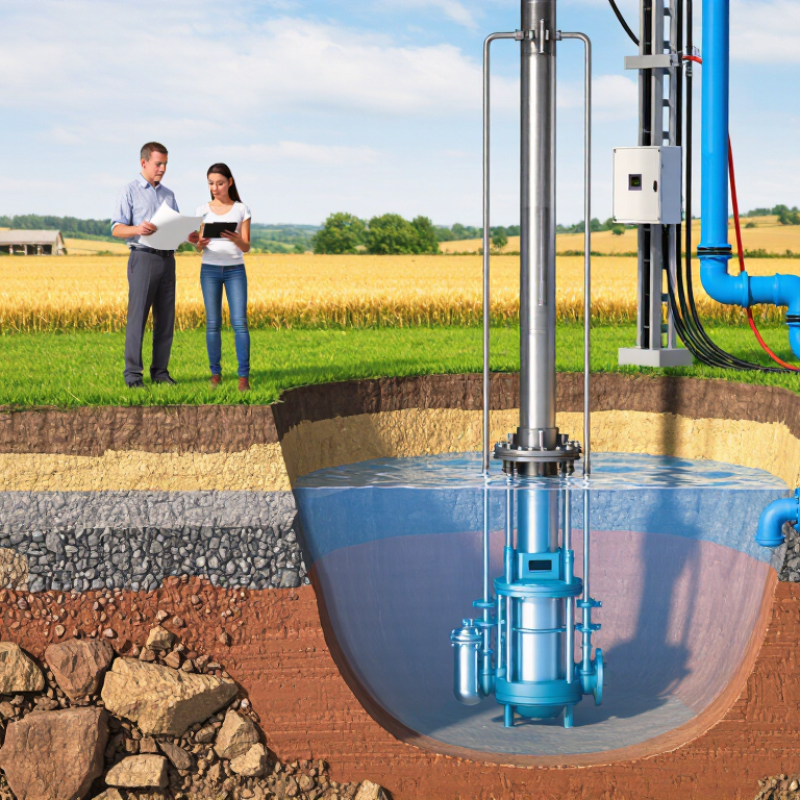
Choosing the right borehole pump starts with understanding how each type moves water. Submersible centrifugal pumps sit below the water level and use rotating impellers to increase pressure. They suit deep wells and steady demand. Surface jet pumps create suction, but lift limits make them unreliable in deeper boreholes. Positive displacement pumps deliver a fixed volume per cycle and can handle lower flow requirements, although they may need stronger maintenance routines.
Groundwater conditions make the decision less theoretical. The UN World Water Development Report 2022 states that groundwater supplies nearly 50% of global drinking water and about 40% of irrigated agriculture. Measure static water level, seasonal drawdown, borehole diameter, and sand content before selecting equipment. Calculate total dynamic head, including elevation, pipe friction, and required outlet pressure. A pump that matches flow but ignores head can overheat or underperform. It happens more often than specifications suggest.
Check the performance curve under ISO 9906 testing conditions where possible. The operating point should sit near the pump’s efficient range, not at its maximum. U.S. Geological Survey data indicates groundwater represents about 30% of the world’s readily accessible freshwater, so long-term protection matters. Use a screened intake, avoid excessive pumping, and install dry-run protection. A smaller pump may be safer. Yet, that choice can fail if future demand is ignored. Record actual flow and voltage after installation, then review the result during the dry season.
Assess Borehole Depth, Diameter, and Water-Level Conditions
Choosing the Right Borehole Pump
Borehole depth is only one part of the decision. Measure the static water level before pumping begins. Then record the dynamic level while water is being withdrawn. The difference shows drawdown. A pump must remain below the lowest expected operating level. However, it should stay above the sediment zone. This balance prevents dry running and reduces grit damage.
Borehole diameter controls the pump’s physical fit and cooling space. Measure the internal casing diameter, not the drilling tool size. A narrow casing may restrict flow around the motor. That can cause overheating. Check the pump diameter, cable route, and required clearance together. I have seen installations fail because the casing measurement was taken from an old drilling record. Verify it on site when possible.
Water-level conditions can change with seasons, nearby irrigation, and extended pumping. Test the borehole for recovery, yield, sand content, and pressure losses. The selected pump should match the required flow and total head, including pipe friction and elevation. Use a calibrated water-level meter and keep dated readings. A neat calculation can still be wrong. Recheck field data before ordering equipment. Allowing a small safety margin is sensible, but excessive capacity may increase drawdown and energy use. Practical experience often reveals details that a specification sheet misses.
Calculate Required Flow Rate and Total Pumping Head
7 Tips for Choosing the Right Borehole Pumps
Calculate Required Flow Rate and Total Pumping Head
Choosing a borehole pump starts with two practical figures: required flow rate and total pumping head. Flow rate should match real demand, not an optimistic guess. List every outlet, irrigation zone, tank, and appliance using water. Then estimate which outlets may operate together during peak use.
A small house might need 25 litres per minute, while a larger property may require 60 litres per minute or more. Add a modest allowance for future demand, but avoid excessive oversizing. An oversized pump can cycle frequently, waste energy, and lower equipment life. Keep records from previous water-use tests when available. They often reveal habits that calculations miss.
Total pumping head includes static lift, drawdown, pipe friction, and required delivery pressure. Measure the resting water level and the pumping water level separately. The difference is drawdown. For example, a 45-metre lift, 8 metres of drawdown, 12 metres of pipe loss, and 25 metres of pressure requirement create approximately 90 metres of total head. Use actual pipe length, diameter, fittings, and elevation changes. A neat spreadsheet can still mislead. I have seen installations fail because the water level was measured only once. Select a pump that delivers the target flow at this calculated head, then verify its performance during a controlled test. Consult a qualified water professional where measurements remain uncertain.
Choose Suitable Materials for Water Quality and Ground Conditions
7 Tips for Choosing the Right Borehole Pumps?
Choose Suitable Materials for Water Quality and Ground Conditions
A borehole pump must match the water, not just the required flow rate. Test pH, hardness, salinity, iron, manganese, and suspended sand before selecting materials. Clear water can still contain aggressive minerals. A basic visual inspection is not enough. Use a laboratory report when the borehole serves a home, farm, or commercial site.
Stainless steel components often suit clean water and resist many forms of corrosion. However, highly saline water may require stronger corrosion protection. Abrasive sand can damage impellers, diffusers, and seals within months. In that case, select wear-resistant components and install suitable filtration where possible. Do not assume a larger pump will solve the problem. It may increase turbulence and pull more sediment into the system.
Ground conditions matter just as much. Measure borehole depth, casing diameter, static water level, and seasonal drawdown. Rocky formations may produce fine particles after drilling, while unstable formations can introduce grit repeatedly. The pump should fit the casing without restricting cooling flow. Confirm its operating curve against the real lifting height and pipe friction. A qualified installer should check cable protection, grounding, and alignment on site.
Small mistakes become expensive.
I have seen pump choices based only on horsepower. That approach is convenient, but incomplete. Water chemistry can change, and sediment levels may rise after heavy rain. Leave room for monitoring and future maintenance. A practical choice is not always the cheapest one; it is the one that remains dependable under changing borehole conditions.
7 Tips for Choosing the Right Borehole Pumps
Choose Suitable Materials for Water Quality and Ground Conditions
Typical screening ratings from 1 to 5 are shown for common pump materials. Higher scores indicate better general suitability for the stated water or ground condition. Final selection should be verified using water analysis, chloride levels, pH, sand concentration, temperature, and the manufacturer’s corrosion and wear data.
Compare Energy Efficiency, Maintenance Needs, and Installation Costs
7 Tips for Choosing the Right Borehole Pumps
Compare Energy Efficiency, Maintenance Needs, and Installation Costs
Tip 1: Check the borehole’s tested yield before choosing pump capacity. An oversized pump wastes energy and can cause dry running. Ask for measured flow data, not a hopeful estimate.
Tip 2: Compare efficiency at your real operating point. Laboratory ratings can look impressive but may not match site conditions. Tip 3: Examine cable length, voltage drop, and starting current. These details affect electricity bills. Small details matter.
Tip 4: Choose accessible components and clear service procedures. Ask how often seals, filters, and electrical connections need inspection. Keep records of pressure, flow, vibration, and power use. Rising energy consumption may reveal wear early.
Tip 5: Include protective controls, such as dry-run and overload protection. I once saw an efficient pump fail because a blocked intake was ignored. That mistake was preventable.
Tip 6: Calculate installation costs beyond the pump itself. Include pipework, lifting equipment, control panels, trenching, testing, and commissioning. A low purchase price can become expensive later.
Tip 7: Confirm maintenance support before buying. Local technicians may reduce downtime, but availability should be verified. Ask for itemized quotations and realistic service intervals. A qualified installer should check borehole conditions, electrical safety, and system performance. I would still allow a contingency budget, because site conditions are rarely perfect.
7 Tips for Choosing the Right Borehole Pumps: Compare Energy Efficiency, Maintenance Needs, and Installation Costs
| Tip | Selection Dimension | What to Check | Typical Reference Data | Effect on Cost and Reliability | Recommended Action |
|---|---|---|---|---|---|
| 1 | Match the Pump to the Required Flow and Head | Confirm the required flow rate, static water level, pumping water level, pipe length, elevation difference, and friction losses. Select a duty point near the middle of the pump's efficient operating range. | Domestic water systems commonly require approximately 2–10 m³/h. Total dynamic head may range from 30–150 m, depending on borehole depth and site layout. | An oversized pump can increase energy use, pressure, and equipment wear. An undersized pump may fail to meet demand and operate continuously. | Prepare a duty-point calculation before comparing pump models. Do not select a pump based on borehole depth alone. |
| 2 | Compare Hydraulic and Motor Efficiency | Review pump efficiency, motor efficiency, power factor, and the combined wire-to-water efficiency at the actual operating point. | A well-selected submersible pumping system may achieve approximately 45–70% combined wire-to-water efficiency. Actual performance depends on flow, head, motor size, voltage, and pipe losses. | Every 10% improvement in total efficiency can reduce electricity consumption for the same delivered water volume by roughly 10%, although the actual saving depends on operating conditions. | Compare performance curves and calculate energy use in kWh per m³, rather than comparing motor horsepower only. |
| 3 | Check Energy Consumption and Control Options | Evaluate fixed-speed versus variable-frequency operation, starting current, voltage stability, dry-run protection, overload protection, and pressure control. | A variable-frequency drive can reduce speed during periods of lower demand. Pump affinity laws indicate that power can decrease approximately with the cube of speed, but savings depend on the system curve and control strategy. | Variable-speed equipment usually costs more initially but may reduce throttling losses, pressure surges, and energy consumption in variable-demand systems. | Use variable-speed control where demand changes significantly. For steady demand, a correctly sized fixed-speed system may have a lower lifecycle cost. |
| 4 | Assess Water Quality and Materials | Test for sand, suspended solids, acidity, salinity, iron, manganese, and other substances that may cause abrasion, corrosion, or scaling. | Sand concentrations above approximately 25–50 mg/L can accelerate wear in many pumping systems. The acceptable level depends on pump construction and the manufacturer's stated limit. | Abrasive or corrosive water can shorten impeller, diffuser, seal, and casing life, increasing repair frequency and replacement costs. | Select corrosion-resistant materials and install suitable filtration or a sand separator when water testing indicates a risk. |
| 5 | Estimate Installation and Electrical Costs | Include pump setting depth, riser pipe, cable length, control panel, protection devices, lifting equipment, trenching, discharge piping, valves, commissioning, and local labor. | Installation cost is highly site-dependent. Cable voltage drop should generally be kept within the limits required by local electrical standards and the equipment instructions; longer cable runs may require a larger conductor. | A low purchase price may be outweighed by difficult access, deep installation, oversized electrical components, or future removal requirements. | Request a complete installed-cost quotation with separate line items for equipment, labor, electrical work, civil work, testing, and commissioning. |
| 6 | Compare Maintenance Access and Expected Service Life | Check whether the pump can be removed without major excavation, whether spare parts are available, and whether the system includes accessible valves, gauges, and electrical diagnostics. | Preventive inspection intervals commonly range from 6–12 months, while service life may vary from approximately 5–15 years depending on water quality, duty cycle, installation quality, and maintenance. | Easy access and readily available wear parts can reduce downtime and labor costs. Poor installation or neglected protection can cause premature motor or cable failure. | Select a design with documented service procedures, local technical support, and a realistic spare-parts plan. |
| 7 | Review Total Cost of Ownership and Safety | Compare purchase price, installation, electricity, routine maintenance, expected repairs, water-treatment needs, downtime, and eventual replacement. Verify grounding, overload protection, and dry-run protection. | For frequently used systems, electricity can represent the largest operating expense. Annual energy use can be estimated as: Power input (kW) × operating hours per year. | A pump with a higher initial price may be less expensive over its life if it delivers water efficiently, operates reliably, and avoids costly failures. | Use a 5–10 year lifecycle-cost comparison and choose the option with the best balance of efficiency, reliability, safety, and maintainability. |
Reference values are general engineering ranges for preliminary comparison only. Final pump selection should be based on a site-specific borehole test, water-quality analysis, hydraulic calculation, electrical assessment, and applicable local standards.
Related Posts
-
How to Choose the Best Borehole Pumps for Your Needs?
-
China Top 10 Types of Borehole Pumps for Global Buyers
-
Top 5 Benefits of Upgrading Your Well Pumps for Improved Water Quality and Efficiency
-

2025 Top 5 Well Pumps for Efficient Water Supply Solutions
-
How to Choose the Best Well Pumps for Your Needs?
-
What Is a Well Pump and How Does It Work?