
loading

Our Blog

Check out our innovative pump solutions and industry insights to see what's new in the pumping industry. Stay up to date with the latest trends and news in the world of pumping technology by following our pumping technology blog.

2026 Best 2 Inch Submersible Pumps for Global Buyers?

Choosing the 2026 best 2 submersible pump requires more than comparing motor power or catalog prices. Global buyers must match flow rate, total head, discharge size, voltage, and water conditions. A compact 2-inch submersible pump may remove water from construction pits, wells, tanks, or flooded basements. Yet performance can change sharply when the hose becomes longer or rises higher.

Pump application engineer Michael J. Church explains, “A small pump succeeds when its operating point matches the real site, not the showroom promise.” That principle deserves attention. Buyers should examine tested flow curves, maximum head, cable length, seal design, thermal protection, and solids handling. Stainless steel or reinforced cast housings can improve durability, but material choice still depends on water chemistry. Sand, silt, and corrosive liquids expose weak designs quickly.

Global purchasing adds practical concerns. Confirm the correct voltage and frequency before ordering. Check plug standards, spare-parts access, warranty terms, and local service support. Certifications should be verifiable, not simply printed on a brochure. Some suppliers advertise impressive flow figures without explaining the testing conditions. That is a warning sign.

The strongest choice may not be the fastest model. It may be the quieter unit with stable output, reliable float control, and replaceable seals. Field conditions are messy. Specifications can be incomplete. This guide compares leading 2 submersible pump options for 2026, while recognizing that “best” depends on the buyer’s water, workload, budget, and maintenance reality.
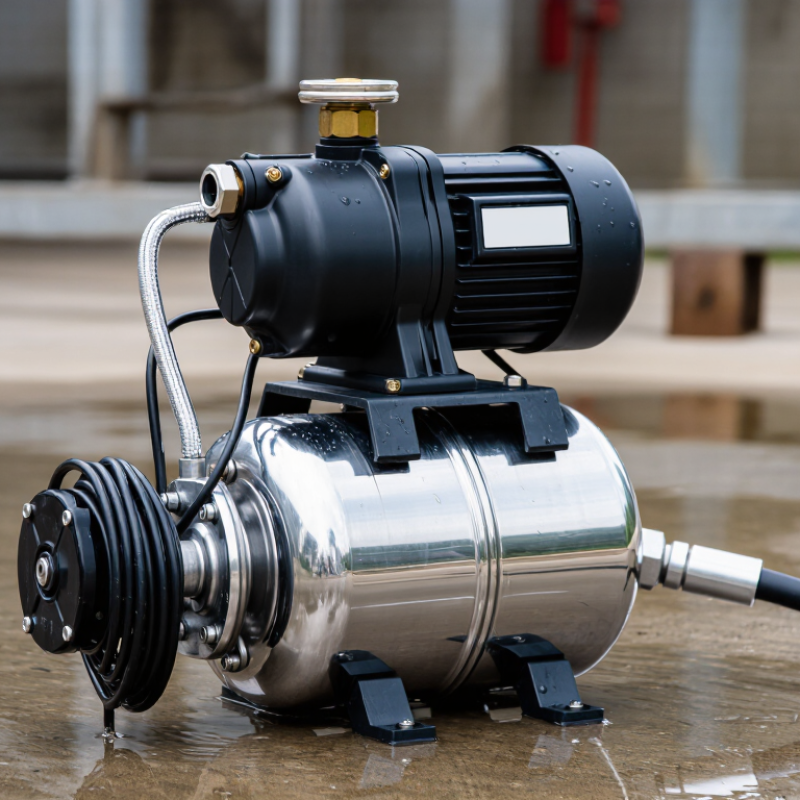
2026 Best 2 Inch Submersible Pumps for Global Buyers?

What Are 2-Inch Submersible Pumps and How Do They Work?

A 2-inch submersible pump is a compact electric pump designed to operate below the water surface. “2-inch” usually describes the discharge connection, measuring about 50.8 millimeters. It does not always describe the pump body or the maximum solid size. This detail matters when selecting drainage equipment.

Inside the sealed housing, an electric motor rotates an impeller. The impeller accelerates water and creates pressure, pushing it through the discharge pipe. A screen limits debris entry, while a float switch can start or stop the pump as water rises. Submergence also helps cool the motor. However, shallow water can cause overheating or repeated cycling. That weakness is easy to overlook.

The U.S. Department of Energy reports that pumping systems may consume 25% to 50% of industrial electricity, depending on facility conditions. Therefore, buyers should compare flow, total head, efficiency, cable length, and duty cycle—not connection size alone. ISO 9906 provides testing principles for rotodynamic pump performance, helping users assess declared flow and head more reliably. Field technicians also check voltage stability and pipe friction before installation. A pump rated at 30 cubic meters per hour may deliver far less through a long, narrow hose. The specification sheet can mislead. Fresh measurements are better.

Key Specifications for Comparing 2-Inch Submersible Pumps

2026 Best 2 Inch Submersible Pumps for Global Buyers?

Key Specifications for Comparing 2-Inch Submersible Pumps

A “2-inch” pump usually refers to the discharge outlet, not its pumping capacity. Compare flow rate, head height, and duty cycle together. A unit delivering 30 m³/h at 8 metres may deliver far less at 20 metres. Check the performance curve, not only the catalog headline.

Measure twice. Guessing causes costly mismatches.

For drainage, confirm the maximum solids diameter and impeller design. Muddy water needs different protection than clear water. Check motor power, rated voltage, frequency, starting current, and cable length. Global buyers should verify local electrical certification and IP68 protection. Stainless steel or coated cast iron can improve corrosion resistance, but neither material solves poor installation. A float switch helps, although it can fail in tangled debris.

Efficiency deserves serious attention. The U.S. Department of Energy reports that pumping systems can consume 25–50% of industrial facility electricity. IEA analysis also places electric motor systems near half of global electricity use. These figures make efficiency more than a marketing detail. Compare input power at the required operating point, not at zero load. Hydraulic Institute guidance supports using standardized pump curves and test methods. Still, published efficiency may not reflect field conditions. Pipe friction, voltage variation, and frequent starts can change results. That part is often underestimated. Expect a small safety margin, but avoid oversized motors. An oversized pump may waste energy and cycle badly.

Best 2-Inch Submersible Pump Types for Different Global Applications

2026 Best 2 Inch Submersible Pumps for Global Buyers?

Best 2-Inch Submersible Pump Types for Different Global Applications

A 2-inch submersible pump should match the water, depth, and required discharge distance. Clean-water models suit wells, rainwater tanks, and temporary drainage. They usually offer stable flow with lower clogging risk. For construction sites, drainage pumps must handle sand, mud, and small stones. Hardened impellers can improve service life, but performance depends on regular cleaning.

Sewage and wastewater applications require vortex or cutter-style designs. Vortex pumps reduce blockage around fibrous waste. Cutter pumps break down soft solids before discharge. They need careful maintenance and correctly sized control systems. In agriculture, high-head models can support irrigation from ponds or storage pits. However, excessive pressure may waste energy and damage smaller pipes.

Look beyond flow rate.

Check total head, cable length, seal quality, and motor cooling. Local voltage standards also matter for global buyers. A float switch helps prevent dry running, although it cannot replace proper supervision. One common mistake is choosing a pump from pipe size alone. A two-inch outlet does not guarantee suitable pressure or capacity. Field conditions change, and even careful sizing can miss seasonal sediment or unexpected friction. Review installation records after operation, then adjust the selection for the next project.

2026 Best 2 Inch Submersible Pumps for Global Buyers? - Best 2-Inch Submersible Pump Types for Different Global Applications
This comparison covers common 2-inch discharge submersible pump configurations for international purchasing and project planning. Performance figures are typical selection ranges rather than guarantees; the actual duty point depends on pump design, cable length, liquid properties, installation depth, and local electrical conditions.

Pump Type Best-Suited Application Typical Flow Range Typical Head Range Typical Motor Power Liquid and Solids Capability Common Electrical Options Key Selection Advantages
General-Duty Drainage Pump Basements, construction pits, utility chambers, rainwater removal, and clean or lightly contaminated water. 20–60 m³/h
(88–264 US gpm)
8–25 m
(26–82 ft)
1.5–5.5 kW Usually handles soft solids up to approximately 6–10 mm, depending on the impeller and inlet design. Single-phase 110–240 V or three-phase 220–480 V; 50 or 60 Hz versions are common. Versatile, widely available, and suitable for routine dewatering where high solids loading is not expected.
Heavy-Duty Dewatering Pump Quarries, mines, tunnels, civil-engineering sites, flooded excavations, and abrasive surface water. 25–75 m³/h
(110–330 US gpm)
15–40 m
(49–131 ft)
3–11 kW Designed for muddy water and moderate suspended solids; abrasion-resistant materials may be specified for mineral-bearing water. Most commonly three-phase 220–480 V; higher-voltage configurations may be available for long cable runs. Higher hydraulic performance, stronger cooling arrangements, and better suitability for continuous or demanding site work.
Vortex Sewage Pump Domestic sewage, wastewater sumps, commercial drainage, septic-transfer systems, and fluids containing fibrous matter. 15–55 m³/h
(66–242 US gpm)
7–25 m
(23–82 ft)
1.5–7.5 kW Typically passes larger soft solids than drainage pumps; many designs provide approximately 25–50 mm passage, but the exact value varies. Single-phase or three-phase supply; thermal overload protection is commonly integrated or required. Reduced clogging risk because the vortex impeller keeps solids away from the main hydraulic passage.
Non-Clog Channel-Impeller Pump Municipal wastewater, process water, food-industry wastewater, and liquids with suspended solids. 20–70 m³/h
(88–308 US gpm)
8–30 m
(26–98 ft)
2.2–11 kW Often selected for relatively large free passages, commonly around 40–65 mm, subject to the pump model. Primarily three-phase 220–480 V for industrial installations; variable-frequency-drive operation may be supported. Efficient handling of solids-laden wastewater when a larger unobstructed passage is more important than compact dimensions.
Stainless-Steel Drainage Pump Food-processing areas, wash-down operations, light chemical service, irrigation reservoirs, and corrosive or hygienic environments. 10–45 m³/h
(44–198 US gpm)
6–24 m
(20–79 ft)
0.75–5.5 kW Best for clean water and lightly contaminated liquids; chemical compatibility must be checked before use. Single-phase 110–240 V or three-phase 220–480 V; frequency must match the local grid. Improved corrosion resistance and easier cleaning compared with standard painted cast-iron construction.
High-Head 2-Inch Pump Long discharge pipelines, elevated transfer, irrigation systems, tank emptying, and applications with significant static lift. 8–35 m³/h
(35–154 US gpm)
25–60 m
(82–197 ft)
4–15 kW Normally intended for clean or lightly contaminated water; solids capacity is often lower than that of vortex models. Usually three-phase 220–480 V; motor protection and correct cable sizing are essential. Maintains useful flow against higher total dynamic head, although the discharge flow decreases as head increases.
Automatic Float-Switch Pump Unattended drainage of small pits, basements, plant rooms, rainwater tanks, and temporary flood-control areas. 10–40 m³/h
(44–176 US gpm)
5–20 m
(16–66 ft)
0.75–4 kW Generally suitable for clean water or limited soft solids; the float needs adequate space to move freely. Commonly single-phase 110–240 V; three-phase versions may use external level controls. Starts and stops automatically according to water level, reducing the need for continuous operator supervision.
Slurry and Abrasive-Liquid Pump Sand-bearing water, sediment removal, dredging support, aggregate processing, and mineral-site dewatering. 15–60 m³/h
(66–264 US gpm)
10–30 m
(33–98 ft)
5.5–18.5 kW Uses reinforced hydraulic components or abrasion-resistant materials; concentration, particle size, and specific gravity must be evaluated. Generally three-phase 220–480 V; overload, moisture, and insulation protection are important. More appropriate for abrasive service than standard drainage pumps, with better resistance to accelerated wear.
Explosion-Protection-Ready Pump Selected hazardous-area drainage applications involving flammable gases or vapors, subject to a certified site assessment. 10–50 m³/h
(44–220 US gpm)
8–30 m
(26–98 ft)
2.2–11 kW Liquid-handling capability depends on the hydraulic design; hazardous-area approval applies to the complete pump configuration. Three-phase supply is common; certification, temperature class, cable system, and control-panel requirements must match the site classification. Provides a pathway for regulated hazardous locations when the pump and installation are correctly certified and engineered.
Buyer checklist: Confirm the actual discharge connection size, required flow at total dynamic head, maximum liquid temperature, solids passage, installation depth, duty cycle, cable length, motor protection, local voltage and frequency, level-control method, corrosion requirements, and any applicable safety certification. A 2-inch discharge does not by itself define pump capacity or compatibility.

How to Choose the Right Pump for Voltage, Water, and Site Conditions

2026 Best 2 Inch Submersible Pumps for Global Buyers?

For global buyers, a 2 inch submersible pump is not chosen by diameter alone. Confirm voltage, frequency, flow, head, and water temperature before ordering. IEC 60038 defines nominal voltage systems, yet remote supplies may fluctuate considerably. A 220–240 V, 50 Hz pump can perform poorly on an unstable 60 Hz generator. Measure voltage under load, not only from the nameplate.

Water quality changes the selection. The UN World Water Development Report 2024 estimates that agriculture uses about 70% of global freshwater withdrawals. Irrigation water may contain sand, algae, or small stones. Choose a suitable strainer, corrosion-resistant housing, and an impeller designed for the solids present. For drainage, check the maximum particle size. A pump rated at 5 m³/h may deliver much less at 10 metres of head. Curves matter. Marketing numbers do not.

Tips: Measure the well diameter and cable length onsite. Check whether the control box matches local voltage and phase. Leave room for voltage drop, especially with long cables. The IEA reports that motor-driven systems use about 46% of global electricity, so efficiency deserves attention. Still, efficiency figures can disappoint when a pump is oversized. Recheck the duty point after installation. The spreadsheet is not the site.

2026 Best 2 Inch Submersible Pumps for Global Buyers

Reference flow performance by total dynamic head for selecting a 2 inch submersible pump according to voltage, water type, and site conditions.

Voltage
Match the motor rating with the available supply: 110–120 V, 220–240 V, or 380–415 V. Check frequency, phase, starting current, and generator capacity before purchase.
Water Type
Clear water pumps are suitable for low-solids water. Construction drainage and floodwater require a strainer, wear-resistant parts, and a solids-passage specification.
Site Conditions
Select the pump using total dynamic head, discharge-pipe length, elevation, friction loss, inlet depth, and the required flow rate—not outlet diameter alone.

The plotted values are indicative planning benchmarks for a typical 2 inch dewatering pump. Actual performance varies by impeller design, motor power, pipe size, water solids, and installation conditions. Confirm the final selection with the specific pump curve.

Installation, Maintenance, Safety, and International Buying Considerations

2026 Best 2 Inch Submersible Pumps for Global Buyers?

A 2-inch outlet does not define pump performance. Buyers should match flow, total head, fluid temperature, solids size, and duty cycle. The installation site matters more than the catalog image. Place the pump upright on a stable base, keeping the intake above heavy sediment. Use a separate lifting rope, never the electrical cable. Install a residual-current device or ground-fault protection, then test it before operation. Keep connections sealed and outside standing water. Small mistakes become expensive failures.

Maintenance should include weekly checks during intensive use. Inspect noise, vibration, cable damage, float movement, and discharge pressure. Clean the inlet screen before debris restricts cooling.

The WHO/UNICEF Joint Monitoring Programme reported that 2.2 billion people lacked safely managed drinking water in 2022. Reliable pumping equipment therefore supports critical infrastructure, not only household convenience. Still, many buyers replace pumps without checking the original duty point. That choice wastes energy and shortens service life.

International purchasing requires careful electrical and documentation checks. Confirm voltage, frequency, phase, plug type, cable length, protection rating, test reports, spare-part availability, and local conformity requirements.

Ask for a performance curve based on recognized testing procedures, such as ISO 9906. The UN World Water Development Report 2024 states that agriculture uses roughly 70% of global freshwater withdrawals, making efficiency important in irrigation projects. A lower purchase price can hide higher operating costs. I would also question vague claims like “high efficiency” without measured flow and head data. The specification may look complete. It often is not.