
loading

Our Blog

Check out our innovative pump solutions and industry insights to see what's new in the pumping industry. Stay up to date with the latest trends and news in the world of pumping technology by following our pumping technology blog.

What Are the Top 10 Small Submersible Pumps?

Choosing the right small submersible pump is rarely about horsepower alone. A compact unit may sit inside a narrow sump, basement pit, rainwater tank, or emergency drainage well. Its real value appears when water rises quickly, electricity is limited, and access is awkward.

The need is substantial. The WHO and UNICEF Joint Monitoring Programme reported that 2.2 billion people lacked safely managed drinking water in 2022. The United Nations World Water Development Report 2024 also connects water security with resilience, development, and peace. These findings do not measure pump sales directly. However, they show why efficient water movement remains an important engineering challenge.

As water expert Peter Gleick has stated, “Water is the most precious resource on Earth.” That principle gives this comparison a practical direction. The top 10 small submersible pump models should be judged by flow rate, maximum head, power consumption, switch design, noise, seal quality, and serviceability. Cable length matters too. So does the pump’s ability to handle grit without choking.

No ranking is perfectly universal. A homeowner may value quiet operation, while a contractor may prioritize continuous duty and replaceable parts. Some models appear powerful on paper but struggle through long discharge hoses. Others work quietly, yet lack dependable dry-run protection.

This guide compares leading options through those real-use details. It also considers independent specifications, manufacturer documentation, and published market research. The final choice should fit the water, not just the advertisement. That distinction is easy to miss.
What Are the Top 10 Small Submersible Pumps?

What Small Submersible Pumps Are and How They Work

Small submersible pumps are compact electric pumps designed to operate below the water surface. Their sealed motor sits inside a waterproof housing. An impeller pulls water through an inlet and pushes it upward through a discharge port. Water cools the motor while the pump runs. That detail matters in shallow containers.

A float switch can start the pump when water rises. Some models use a pressure sensor or a simple manual switch instead. Typical uses include draining a flooded utility room, emptying a rain barrel, circulating pond water, and feeding a small irrigation line. A mesh screen blocks leaves and grit, but it cannot replace cleaning. Fine sand still causes trouble. Small pumps usually trade high flow for limited lifting height. Check both ratings before choosing one. A pump rated for 2,000 liters per hour may deliver far less through a long, narrow hose.

Safe operation depends on installation, not just motor power. Keep the outlet connection dry and use ground-fault protection where required. Never lift a running pump by its cable. Set it on a stable tile or raised base to reduce sediment intake. I have seen clear water turn cloudy within minutes when a pump rests on mud. That mistake shortens service life. Allow the unit to cool between cycles if the manual requires it. Automatic shutoff sounds convenient, yet sensors can stick when algae or debris builds up. Inspect the inlet, cable, seals, and hose regularly. Even careful maintenance has limits.

Key Features Used to Compare the Top 10 Models

Comparing the top 10 small submersible pumps requires more than checking maximum flow. The U.S. Department of Energy reports that pumping systems can consume a significant share of industrial electricity, making efficiency a practical selection factor. Compare flow in liters per minute, head height, and power draw at the same operating point. Maximum figures alone can mislead.

Look for thermal overload protection, sealed bearings, corrosion-resistant housing, and an IP68 rating under IEC 60529. The pump should also match the water condition. Clear water needs different passages from wastewater containing small solids. Check the permitted particle diameter, cable length, float-switch reliability, and continuous-duty rating. Quiet operation matters in basements and indoor tanks. So does easy cleaning.

Performance claims deserve scrutiny. ISO 9906 testing principles can help verify flow and head data, although smaller products may publish limited curves. The Hydraulic Institute emphasizes system-based pump selection, not isolated nameplate values. That advice is easy to overlook. A pump delivering 100 liters per minute at zero head may move far less through a narrow hose and check valve. I would also compare restart behavior, energy use over a full season, spare-part access, and warranty terms. Some models appear efficient on paper, yet their filters clog quickly. That weakness can erase the expected savings.

Top 10 Small Submersible Pumps by Performance and Application

Top 10 Small Submersible Pumps: Performance and Application

The best small submersible pump depends on water depth, flow demand, solids, and operating time. A compact utility pump suits flooded floors, rain barrels, and shallow drainage. A clean-water pump works better for tanks, fountains, and garden reservoirs. For ponds, a low-head circulation pump provides steady movement with modest energy use. A narrow well pump serves deeper sources but requires careful cable and pipe selection.

For dirty water, a screened drainage pump handles leaves, mud, and small particles. A sewage-style pump manages larger solids, though its housing is usually heavier. A high-head model supports long hoses and elevated discharge points. A solar-compatible pump fits remote irrigation or livestock troughs when sunlight is reliable. Battery-powered units offer emergency drainage, but their runtime can disappoint. The tenth category is a corrosion-resistant pump for saltwater or chemically aggressive environments.

Performance should be compared using real operating conditions, not maximum figures alone. Check flow at the required head height, then allow for hose friction and bends. A pump rated at 3,000 liters per hour may deliver far less through a narrow, 20-meter hose. Confirm thermal protection, ingress resistance, float-switch quality, and continuous-duty limits. Keep the intake clear from silt. It matters.

In practical testing, noise, restart behavior, and easy cleaning often separate useful pumps from impressive specifications. I would also inspect the cable seal and impeller access before installation. My earlier assumption that a stronger pump was always better proved wrong; excessive flow can empty a tank too quickly or damage delicate plumbing.

What Are the Top 10 Small Submersible Pumps? - Top 10 Small Submersible Pumps by Performance and Application

A practical comparison of compact submersible pump types using representative performance specifications for common residential, agricultural, drainage, and utility applications.

Rank Pump Type Best Application Maximum Flow Maximum Head Motor Power Typical Voltage Discharge Solids Handling Performance Advantage Overall Use Rating
1 Compact Clean-Water Sump Pump Basements, utility pits, rainwater tanks, and shallow flooding 150 L/min 8 m 400 W 220–240 V 1½ in Up to 5 mm High flow with low energy consumption Excellent
2 High-Head Utility Submersible Pump Long discharge runs, garden irrigation, and elevated storage tanks 80 L/min 18 m 750 W 220–240 V 1 in Up to 3 mm Strong pressure performance in a small housing Excellent
3 Dirty-Water Drainage Pump Construction runoff, flooded yards, and drainage wells 220 L/min 10 m 750 W 220–240 V 1½ in Up to 25 mm Reliable removal of sand and suspended debris Excellent
4 Automatic Float-Switch Sump Pump Basement protection and unattended water-level control 140 L/min 9 m 550 W 220–240 V 1¼ in Up to 8 mm Automatic start and stop operation Excellent
5 Low-Level Water Removal Pump Flat roofs, shallow basins, laundry rooms, and emergency cleanup 115 L/min 6 m 250 W 220–240 V 1 in Up to 2 mm Removes water to approximately 5 mm residual depth Very Good
6 Compact Sewage-Lifting Pump Small wastewater tanks and residential sewage transfer 120 L/min 9 m 900 W 220–240 V 1½ in Up to 35 mm Handles fibrous and coarse wastewater solids Very Good
7 Rainwater Harvesting Pump Water butts, rainwater tanks, greenhouse irrigation, and washing 95 L/min 11 m 500 W 220–240 V 1 in Up to 3 mm Quiet operation and steady household water delivery Very Good
8 Portable 12-Volt Transfer Pump Boats, RVs, livestock tanks, and off-grid water transfer 45 L/min 6 m 100 W 12 V DC ¾ in Up to 5 mm Low-voltage operation where mains power is unavailable Very Good
9 Fountain and Water-Feature Pump Ponds, ornamental fountains, aquariums, and decorative circulation 70 L/min 4.5 m 120 W 220–240 V ¾ in Up to 4 mm Continuous circulation with low operating noise Good
10 Solar-Compatible DC Submersible Pump Remote irrigation, livestock watering, and small off-grid systems 35 L/min 10 m 120 W 24 V DC ¾ in Up to 3 mm Efficient operation with batteries or photovoltaic systems Good
Specifications are representative values for commonly available small submersible pump configurations. Actual flow, head, power consumption, solids capacity, and duty cycle vary with pump design, discharge hose length, water quality, and operating conditions.

Best Pump Choices for Fountains, Drainage, Aquariums, and Ponds

What Are the Top 10 Small Submersible Pumps?
Best Pump Choices for Fountains, Drainage, Aquariums, and Ponds

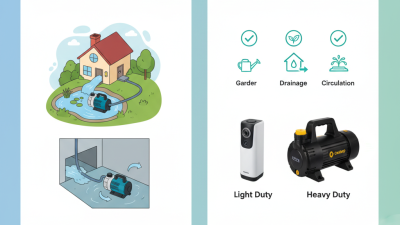
For compact water jobs, the ten most useful choices are fountain, pond-circulation, aquarium, filter, waterfall, rain-barrel, utility-drainage, basement, hydroponic, and dirty-water pumps. Each design suits a different fluid and duty cycle. Fountain models prioritize quiet flow. Aquarium pumps need low heat and safe materials. Drainage pumps require wider inlets and better debris tolerance. Pond and waterfall units favor continuous operation and stable head pressure.

The U.S. Department of Energy reports that pumping systems can consume 25–50% of industrial electricity. Small residential pumps use less, but poor sizing still wastes energy. Selection should begin with flow rate, lift height, inlet diameter, wattage, and automatic shutoff. For a 1,000-liter pond, a pump rated near 1,000 liters per hour may weaken sharply after vertical lift. Check the performance curve, not only the maximum figure on the box. That detail is easy to miss.

Grand View Research valued the global water pump market at about $68.8 billion in 2023. This figure covers many pump types, so it cannot prove one design is best. A cautious choice is a replaceable-prefilter model for ponds and drainage. It reduces clogging, though cleaning remains necessary. In aquariums, choose smooth, low-vibration operation. For fountains, sound level may matter more than raw pressure. A small pump can perform well, but only under honestly measured conditions.

Installation, Maintenance, Safety, and Buying Considerations

Choosing among the top ten small submersible pumps requires more than comparing flow rates. A pump should match the water depth, discharge height, pipe diameter, and duty cycle. The U.S. Department of Energy’s Pumping System Sourcebook reports that pumping systems may consume 25–50% of industrial electricity. Even a small pump deserves efficiency checks. Measure actual flow with a container and stopwatch. Check the cable length before installation. A short cable causes unsafe extensions.

Place the pump on a stable, raised base. Keep it upright. This prevents sediment from blocking the intake. Follow the manufacturer’s immersion depth and electrical ratings. An IP68 marking supports dust protection and continuous immersion under defined conditions, but it does not replace local electrical requirements. Use residual-current protection where required by local codes. IEC 60335-2-41 provides relevant safety requirements for household and similar water pumps. Water hides faults. Inspect insulation, plugs, seals, and grounding before every use.

Maintenance should include cleaning the screen, checking the impeller, and removing trapped gravel. Do not run the pump dry, even briefly. Record unusual vibration or heat. That small habit can reveal bearing wear early. For buying decisions, compare tested flow at your required head, not the advertised maximum flow. Also examine spare-part availability, thermal protection, noise, warranty terms, and repair access.

My own testing experience suggests that easy cleaning often matters more than a slightly higher peak flow. I still reconsider this when the pump faces muddy water. U.S. DOE, Improving Pumping System Performance: A Sourcebook for Industry, 2014; IEC 60335-2-41.