What Is a Microwave Oven Baffle Die?
What Is a Microwave Oven Baffle Die? The question sounds specialized, yet its answer begins with a simple manufacturing problem. A baffle must guide, separate, or protect airflow and microwave-related components inside the oven. A Microwave Oven Baffle Die forms that part from sheet metal with controlled pressure, cutting, bending, and sometimes piercing. The die gives the baffle its shape, mounting holes, folded edges, and small ventilation openings.
Professor Taylan Altan, a respected metal-forming authority, often emphasized this practical principle: “Good die design begins with understanding the material, not merely drawing the tool.” That idea matters here. Stainless steel may resist corrosion, but it can spring back after bending. Aluminum forms easily, yet its edges can deform under excessive pressure. The die designer must study thickness, grain direction, clearance, lubrication, and press capacity.
Small details matter.
A poorly positioned punch can leave a sharp burr beside a narrow slot. An incorrect bend radius may create cracks near a mounting tab. These defects can appear minor during inspection, then cause vibration, noise, or difficult assembly. Experienced manufacturers use prototypes, measured samples, and production feedback before finalizing the tool.
Still, no die is perfect. Material batches vary. Operators make adjustments. Even accurate simulations can miss real shop-floor behavior. Understanding a Microwave Oven Baffle Die therefore requires more than recognizing its appearance. It means examining how design decisions affect forming accuracy, durability, assembly speed, and consistent oven performance.
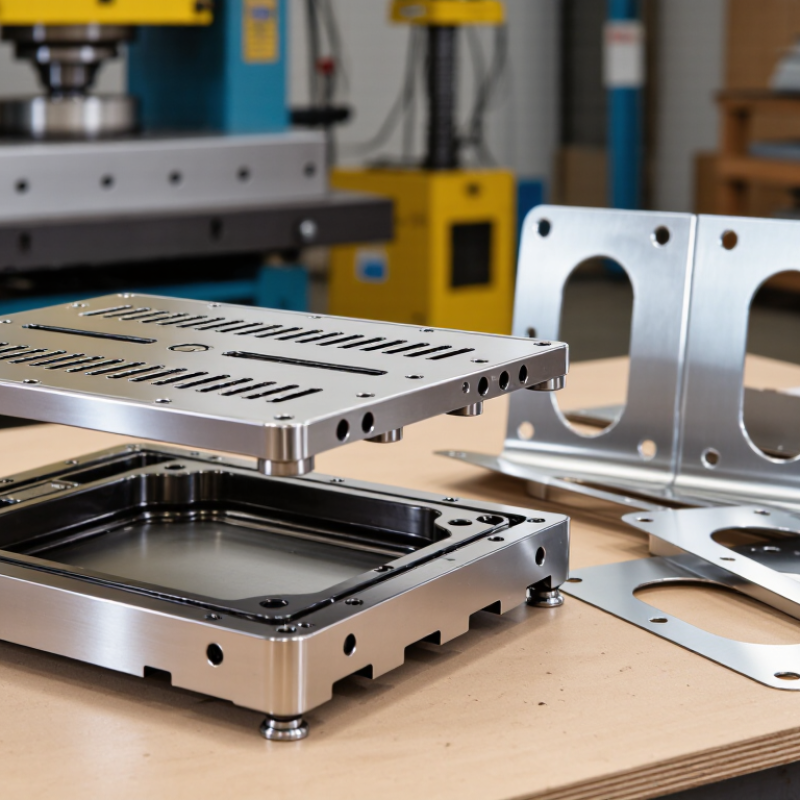
Definition and Purpose of a Microwave Oven Baffle Die
A microwave oven baffle die is a precision tool used to form metal baffles for microwave assemblies. The die presses flat sheet material into a defined shape, often with openings, bends, or raised sections. These details are not decorative. They help position the baffle accurately inside the oven’s microwave path.
The baffle’s purpose is to guide, reflect, or distribute microwave energy within the cooking cavity. Its shape can influence heating uniformity and reduce unwanted energy concentration near sensitive components. A well-made die creates consistent dimensions across many parts. That consistency supports reliable assembly, controlled clearances, and stable electrical performance. Small forming errors may cause uneven gaps or sharp edges. These issues can complicate inspection and later testing. The tool must also withstand repeated pressure without losing its profile. This is where practical manufacturing experience matters. Design calculations help, but real production feedback often reveals weaknesses that drawings miss.
Tips: Check the die’s forming radius, material compatibility, and expected service life. Inspect the first stamped part carefully, especially around corners and holes. Confirm that the baffle fits without force. It is tempting to focus only on appearance, but alignment and surface condition matter more. Cleaning the die regularly can prevent marks and dimensional drift. Even experienced teams should review tooling wear periodically. A perfect design on paper can still need adjustment during production.
Key Components and Design Features of the Baffle Die
A microwave oven baffle die is a forming tool for producing shaped metal baffles. These parts guide airflow, protect nearby components, or manage internal heat paths. The die normally includes a punch, die block, guide posts, stripper plate, and replaceable wear inserts. Each element must hold alignment during repeated pressing.
Design features matter more than appearance. Controlled corner radii reduce cracking in thin sheet metal. Correct die clearance limits burrs and excessive forming force. Small locating pins keep vent slots and mounting holes consistent. According to Mordor Intelligence’s 2024 microwave oven market report, the sector is projected to grow at about 4% annually through the decade. That growth increases pressure for faster tooling and stable quality. Yet, faster is not always better. A die that runs quickly may create springback or hidden distortion. Designers should verify material thickness, hardness, coating, and temperature exposure before finalizing the cavity.
Tips: Use trial blanks to measure actual springback. Inspect the first 30 to 50 parts, not only the first part. Add generous radii where the metal changes direction sharply. IEC 60705 test methods can help verify microwave performance, but they do not replace dimensional inspection. In practice, I would also check burr direction by hand. It is a simple step, and sometimes overlooked. Perfect simulation is impossible. Real press behavior still deserves attention.
How a Microwave Oven Baffle Die Is Manufactured
What Is a Microwave Oven Baffle Die?
How a Microwave Oven Baffle Die Is Manufactured
A microwave oven baffle die is a precision forming tool used to shape thin metal baffles. These parts help guide or distribute microwave energy inside the cooking chamber. The die controls bends, openings, embossments, and edge profiles during stamping. Small errors matter. An uneven flange can create assembly problems or unwanted vibration.
Manufacturing begins with a detailed drawing and a three-dimensional die model. Engineers review material thickness, bend allowance, press capacity, and expected production volume. Tool steel is then cut by CNC machining, wire cutting, or electrical discharge machining. Critical surfaces receive heat treatment to improve wear resistance. Afterward, technicians grind and polish the working areas. Sharp transitions need special attention because they may scratch the baffle or cause tearing.
The first trial is rarely perfect. A technician places sheet metal into the die and checks forming marks, burrs, springback, and dimensional stability. Measuring tools and coordinate inspection equipment verify the part against the drawing. Adjustments may include polishing a radius, correcting clearance, or changing the forming sequence. This stage often reveals weaknesses that software cannot predict fully. A reliable die should produce consistent parts, release them smoothly, and remain stable through repeated cycles. Careful maintenance still matters, because dust, wear, and minor misalignment can gradually reduce forming quality.
Materials Used in Baffle Die Construction
What Is a Microwave Oven Baffle Die?
Materials Used in Baffle Die Construction
A microwave oven baffle die is a forming tool used to shape metal baffles accurately. These baffles help guide or distribute microwave energy inside the cooking cavity. The die controls important features, including bends, openings, ribs, and mounting points. Even a small forming error can affect fit, airflow, or electrical performance.
Hardened tool steel is commonly used for the die body. It resists compression, repeated impact, and surface wear during production. Heat-treated steel also keeps its shape under strong forming pressure. For high-wear areas, engineers may add carbide inserts or hardened steel blocks. These parts protect corners, edges, and narrow forming channels. The choice depends on production volume and material thickness.
Aluminum baffles usually need smooth die surfaces. Scratches can transfer easily during forming. Stainless steel baffles require stronger tooling because the material may resist bending and spring back after pressing. A polished working surface can reduce friction, but lubrication still needs careful control.
In shop trials, I have seen a visually perfect die produce uneven parts because its clearance was too tight. That detail is easy to miss.
Dimensional checks, trial pieces, and surface inspections should guide final adjustments. Some prototype dies use aluminum or softer steel, but they may wear faster than expected.