What Is a Water Pump Motor and How Does It Work?
A water pump motor converts electrical energy into mechanical rotation, driving an impeller, piston, or diaphragm. That movement creates pressure and flow. In a household booster system, the motor may hum quietly while the impeller pushes water through narrow pipes. In agricultural equipment, it may lift water from a deep well.
The distinction matters. A motor produces torque; the pump moves fluid. Together, they form a pumping unit, but they are not identical components. The International Energy Agency has reported that electric motor systems consume roughly half of global electricity. Pumping equipment therefore deserves careful attention during design, maintenance, and replacement. The U.S. Department of Energy also identifies correctly sized pumps, efficient motors, and controls as important energy-saving measures.
A typical water pump motor uses electromagnetic force to rotate a shaft. The shaft transfers torque to the pump’s moving element. Centrifugal pumps use rotating impellers, while positive-displacement pumps use repeated chamber movement. Flow rate depends on speed, pressure, pipe resistance, and pump design. It is easy to oversimplify this process. A powerful motor does not automatically create an efficient system. Poor alignment, clogged filters, worn bearings, or incorrect voltage can waste energy and shorten service life. The United Nations World Water Development Report notes that agriculture accounts for about 70% of global freshwater withdrawals, making reliable pumping especially important in irrigation. This guide examines how a water pump motor works, where losses occur, and which practical checks support safer, more dependable operation.
Water Pump Motor Definition: Converting Electrical Energy into Water Flow
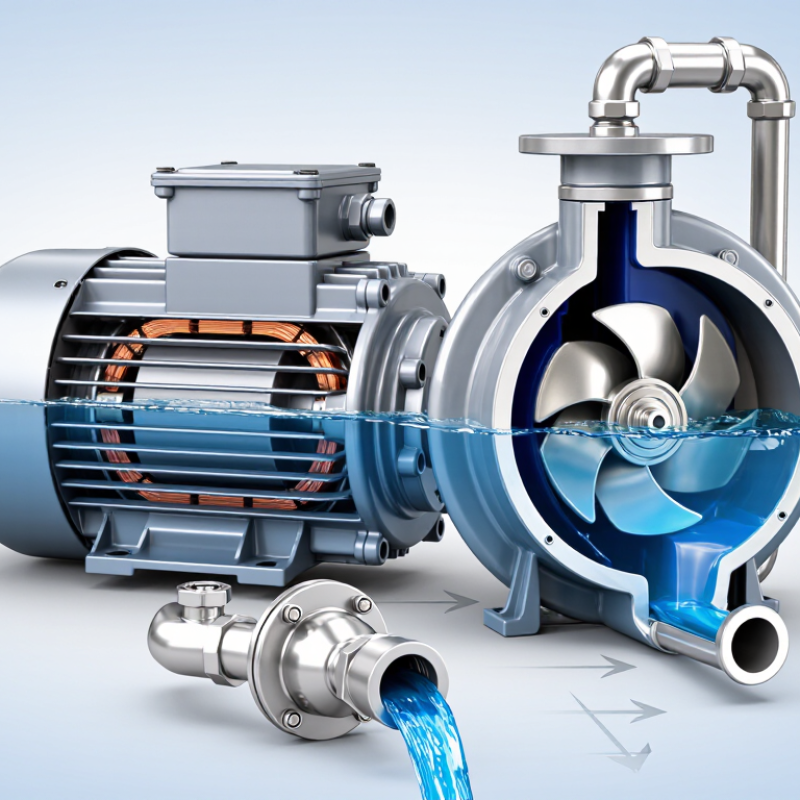
A water pump motor is the electromechanical drive that turns electricity into controlled water movement. Its stator creates a rotating magnetic field. That field spins the rotor and shaft. The shaft drives an impeller, which raises water pressure and velocity. In simple terms, electrical energy becomes rotational force, then hydraulic flow. The explanation is useful, but incomplete. Heat, friction, leakage, and poor alignment consume part of the input.
The International Energy Agency reports that motor-driven systems use about 53% of global electricity. This figure explains why motor efficiency matters beyond a single pump room. A 7.5-kilowatt motor may draw steady power while moving less water than expected. Restricted pipes, excessive head, or an oversized impeller can cause that mismatch. Flow is not created by the motor alone. The pump, motor, controls, and pipe network work as one system.
The U.S. Department of Energy’s Pump Life Cycle Costs guide states that energy can exceed 40% of a pump’s life-cycle cost. Therefore, technicians should compare electrical input, flow rate, pressure, and operating hours. A clamp meter and flow measurement can expose hidden waste. Variable-speed control may reduce throttling losses when demand changes, but it is not automatically better. Poorly selected controls can add losses and maintenance problems. That is the part many basic definitions miss. Reliable evaluation needs measured site data, not motor nameplate optimism.
Main Components: Stator, Rotor, Impeller, Shaft, Seals, and Bearings
What Is a Water Pump Motor and How Does It Work?
Main Components: Stator, Rotor, Impeller, Shaft, Seals, and Bearings
A water pump motor converts electrical energy into mechanical rotation. Inside the motor, the stator creates a rotating magnetic field. The rotor responds to this field and turns around the central axis. This motion travels through the shaft to the pump chamber. A steady electrical supply matters because voltage changes can increase heat and shorten motor life.
The impeller is the working wheel. Its curved vanes draw water into the center and push it outward through the discharge passage. The shaft keeps the rotor and impeller aligned during rotation. Even a small bend can cause vibration, noise, and uneven flow. Seals prevent water from entering the motor housing, while bearings support the rotating shaft and reduce friction.
During inspection, I look for leaking seals, rough bearing sounds, and unusual shaft movement. These details often reveal problems before complete failure. The impeller can also collect sand, rust, or other debris. That restriction forces the motor to work harder. A common mistake is checking only electrical connections. Mechanical wear matters too. In practice, clean water does not guarantee a trouble-free pump, because poor alignment or dry running can still damage internal parts.
What Is a Water Pump Motor and How Does It Work?
A water pump motor converts electrical energy into mechanical rotation. The stator creates a rotating magnetic field, which turns the rotor, shaft, and impeller. Seals help prevent leakage, while bearings support the rotating shaft.
Chart basis: Representative operating point for a direct-coupled, two-pole induction motor supplied at 50 Hz. The synchronous speed is 3,000 rpm, while a typical loaded motor runs near 2,850 rpm because of slip. Stationary parts are shown at 0 rpm; the rotating seal face and bearing inner ring follow the shaft.
Operating Sequence: How 50/60 Hz AC Power Drives the Impeller
A water pump motor converts electrical energy into the rotation needed to move water.
In a typical AC pump, the motor receives 50 or 60 Hz alternating current through its supply terminals. The current enters the stator windings and creates a changing magnetic field. That field pulls the rotor around, much like an invisible hand turning a metal wheel.
The operating sequence is quick. At 50 Hz, a two-pole motor has a theoretical magnetic speed of 3,000 revolutions per minute. At 60 Hz, the figure rises to 3,600 revolutions per minute.
An induction motor runs slightly slower because it needs slip to produce torque. This detail is easy to miss. When the rotor turns, it drives the shaft connected to the impeller. The impeller then accelerates water outward, creating lower pressure at its center and higher pressure near its outer edge. Water enters through the suction port and leaves through the discharge passage.
Single-phase pumps may use a starting winding and capacitor to create an initial rotating effect. Three-phase motors form a smoother rotating field and usually start more evenly.
In field inspections, a humming motor with weak flow often points to a blocked impeller, low voltage, or a failing capacitor. The noise matters. So does vibration.
A grounded enclosure, correct overload protection, and proper voltage are essential. Actual speed can change under load, and pump performance depends on impeller shape, water temperature, and pipe resistance. Simple explanations help, but they should not replace measurements.
Pump Affinity Laws: Q∝N, H∝N², and Power∝N³
What Is a Water Pump Motor and How Does It Work?
A water pump motor converts electrical energy into rotating shaft power. The shaft drives an impeller, which adds velocity to the water. The casing then changes much of that velocity into pressure. In a practical field check, technicians compare a flow reading, discharge pressure, and motor current. These measurements reveal whether the pump is operating normally.
Pump affinity laws describe how speed changes affect performance. With the same impeller diameter, flow varies directly with speed: Q∝N. Head changes with the square of speed: H∝N². Power changes with the cube of speed: Power∝N³. If speed drops by 10%, flow falls to about 90%, head to 81%, and power to roughly 73%. That difference matters. A small speed reduction can greatly reduce energy use.
The laws are useful, but they are not perfect promises. They work best for the same pump under similar conditions. Pipe friction, water temperature, viscosity, air pockets, and impeller wear can alter the result. A motor may also run inefficiently near its operating limit. I would verify calculated values with gauges and a clamp meter. Small mistakes matter. A reading taken before the system stabilizes can create a false diagnosis. Always check the pump curve and the actual system resistance before changing speed.