

loading

Our Blog

Check out our innovative pump solutions and industry insights to see what's new in the pumping industry. Stay up to date with the latest trends and news in the world of pumping technology by following our pumping technology blog.

What Are the Top Electrical Enclosure Types in 2026?

Electrical Enclosure selection is becoming more demanding as factories, data centers, and renewable-energy sites expand worldwide. Grand View Research estimates that the global electrical enclosures market will continue growing through 2030, supported by industrial automation and infrastructure investment. MarketsandMarkets also identifies rising demand for customized, corrosion-resistant, and connected enclosure systems. These figures suggest strong momentum. They do not guarantee identical growth in every region.

In 2026, the leading enclosure types will likely include metallic, non-metallic, stainless-steel, modular, explosion-resistant, and outdoor-rated designs. Each option answers a different physical problem. A powder-coated steel cabinet may protect a motor-control system indoors. A polycarbonate enclosure may resist moisture near a washdown area. Stainless steel remains practical where salt, chemicals, and repeated cleaning are unavoidable.

NEMA President and CEO Debra Phillips has stated, “Electrification is essential to building a stronger, more resilient economy.” Her observation matters here. Enclosures protect the equipment supporting that transition. They also influence maintenance time, thermal performance, worker safety, and service life.

However, product labels can mislead. “Weatherproof” does not always mean suitable for direct spray. A high IP rating cannot replace correct material selection. Buyers still need to examine temperature, ultraviolet exposure, impact risk, cable entry, and local installation requirements. This guide compares the top Electrical Enclosure types for 2026, using recognized industry classifications and market evidence. Forecasts remain imperfect. Real-world performance depends heavily on installation details.
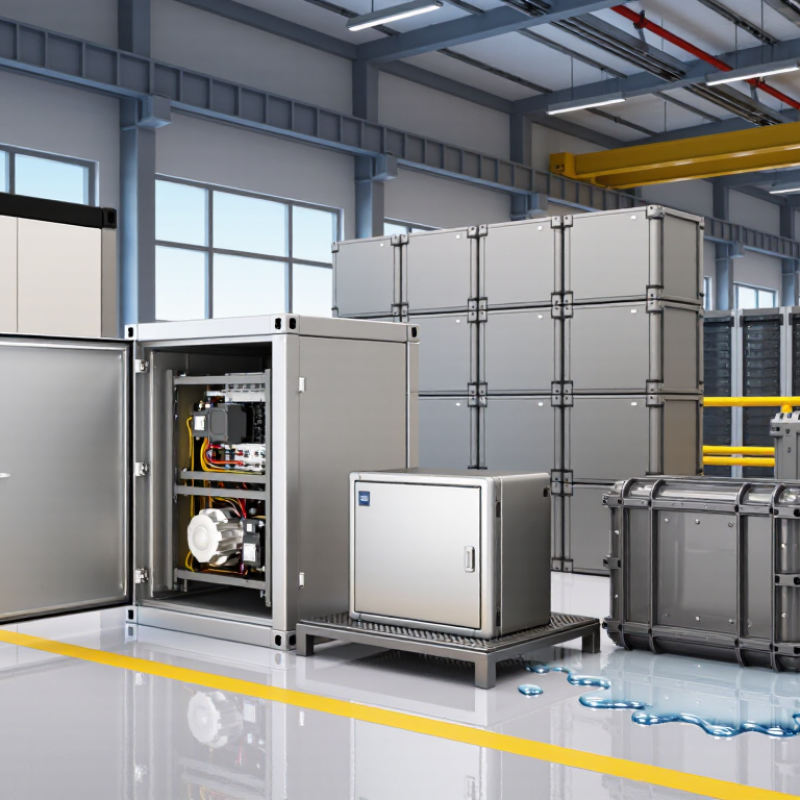
What Are the Top Electrical Enclosure Types in 2026?

Electrical Enclosure Basics and Selection Criteria for 2026

Electrical enclosure selection starts with the actual environment, not the product category. A cabinet beside a washdown line faces different risks from one inside a dry control room. Check exposure to dust, water, corrosion, impact, heat, and vibration. Then match the enclosure’s protection rating to the site conditions and applicable standards. NEMA and IEC ratings are not directly interchangeable, so verify the specific test requirements rather than relying on a familiar label.

The market is growing, but growth does not make every enclosure suitable. Grand View Research estimated the global electrical enclosure market at USD 7.49 billion in 2023 and projected a 5.8% compound annual growth rate from 2024 to 2030. That forecast signals continued investment in electrical infrastructure; it does not replace an engineering assessment. Allow space for cable bends, ventilation, maintenance access, and future components. Measure the wall or machine frame before ordering. Small detail, big headache. Also consider material: painted steel may suit indoor use, while stainless steel or nonmetallic options can better handle corrosive or wet settings. Still, “corrosion-resistant” is not a complete specification. Chemical concentration and cleaning methods matter. A tidy rating table can help, but it may miss the awkward realities of a cramped installation or a door that must open beside a pipe.

Electrical Enclosure Basics: Common IP Ratings in 2026

Compare the solid-particle and water-protection digits of common IEC 60529 IP ratings. Higher digits indicate a higher defined protection level within that category; the digits are classification codes, not linear measurements.

Selection note: IP ratings describe protection against access to hazardous parts, solid objects, and water—not corrosion resistance, impact strength, temperature limits, or suitability for every hazardous location. Confirm the applicable standard and installation conditions when choosing an enclosure.

Wall-Mounted Electrical Enclosures for Indoor and Outdoor Use

Wall-mounted electrical enclosures remain a practical choice for indoor and outdoor installations in 2026. They keep terminals, breakers, control equipment, and wiring organized near the point of use. Indoor models often use painted steel, stainless steel, or polycarbonate. They protect equipment from dust, accidental contact, and light mechanical impact. Field technicians usually value easy access more than appearance. Measure twice.

Outdoor service demands stronger protection. Look for a suitable IP or NEMA rating for rain, dust, and cleaning conditions. A sealed door alone does not guarantee reliable performance. Cable glands, hinges, fasteners, and wall penetrations also affect protection. Ultraviolet exposure can weaken some plastics, while coastal air may accelerate metal corrosion. Stainless steel or UV-stabilized materials may perform better in these environments. Drainage matters too. Condensation can form inside a tightly sealed box during temperature changes.

Size selection requires more than counting components. Leave working space around terminals and allow room for heat movement, cable bends, and future maintenance. Cooling fans may help, but they can also draw dust into the enclosure. Passive ventilation is cleaner, yet it may provide less thermal control. This trade-off deserves review. Grounding metallic parts, labeling circuits, and checking door clearances support safer maintenance. A higher rating is not automatically better. An oversized enclosure can waste space, while an undersized one creates heat and crowded wiring. Installation conditions should guide the final choice.

Floor-Standing Enclosures for Large-Scale Electrical Systems

What Are the Top Electrical Enclosure Types in 2026?

Floor-Standing Enclosures for Large-Scale Electrical Systems

Floor-standing enclosures suit systems with substantial switchgear, power distribution, and control equipment. Their height and depth can provide space for cable routing, separation, and maintenance access. That space matters in data centers, where dense electrical infrastructure supports growing loads. The U.S. Department of Energy’s 2024 United States Data Center Energy Usage Report estimates that U.S. data centers used 176 terawatt-hours of electricity in 2023, about 4.4% of national electricity use. This figure signals the scale of infrastructure involved, not a specific enclosure requirement.

In practice, selection starts with the equipment layout and the room itself. Check total installed weight, door swing, service clearance, cable-entry direction, and heat dissipation before fixing the enclosure footprint. A cabinet that fits on a drawing may block a walkway once its doors open. It happens. Match the enclosure’s ingress protection rating to actual dust and moisture exposure, and confirm materials suit the operating environment. Also plan for future circuits; spare capacity is useful, but oversized cabinets can waste valuable floor space.

Tips: Map cable routes and maintenance access before installation. Leave room for upgrades, but verify the floor can support the loaded enclosure. Small omissions here can become awkward service problems later.

Junction, Terminal, and Modular Enclosures for Flexible Installations

Junction, terminal, and modular enclosures solve different installation problems. A junction enclosure protects wire splices and branch connections, such as those above a damp workshop ceiling. Terminal enclosures keep labeled connection blocks accessible for testing and maintenance. Modular enclosures allow sections to be added as control equipment grows. Small distinction. Big impact. The IEA’s Electricity 2024 report projects global electricity demand will grow by an average of 3.4% annually from 2024 through 2026. More connected loads make clear enclosure layouts and service access increasingly important.

Choose junction boxes for simple, protected connections; match the enclosure’s ingress protection rating to dust, spray, and washdown exposure. For terminal assemblies, leave room for wire-bend radius, identification labels, and a technician’s meter probes. Modular designs suit expanding panels, but only when mounting, heat dissipation, and cable entry remain coordinated. Check the manufacturer’s drawings and applicable IEC 60529 IP rating before specifying protection. A crowded enclosure can trap heat or make troubleshooting awkward. I have seen tidy drawings turn into cramped installations once glands and cable bends are included. That detail is easy to miss. Keep spare capacity, but avoid oversized boxes where unused volume complicates routing or support.

Specialized Enclosures for Hazardous, Marine, and Harsh Environments

Hazardous-area enclosures must contain electrical equipment without allowing heat, sparks, or faults to ignite nearby gases or dust. Selection starts with the specific hazard, not the enclosure’s appearance. Check the area classification, temperature limits, cable entries, and required protection method. A small mismatch can compromise the whole installation. IEC 60079 standards provide the technical framework for equipment used in explosive atmospheres, while qualified professionals should verify that each enclosure suits its actual location.

Marine and outdoor installations face salt spray, standing water, vibration, and temperature swings. Material choice matters: stainless steel resists corrosion, while nonmetallic materials can reduce weight and avoid rust. Seals and fasteners deserve equal attention. Corrosion is costly. NACE International’s IMPACT study estimated its global annual cost at US$2.5 trillion, or 3.4% of global GDP, based on 2013 data. That figure covers many industries, not enclosures alone, but it shows why corrosion control deserves early planning. In harsh environments, compare ingress-protection ratings with real exposure, then inspect seals and entry points during maintenance. A rating on paper is not a maintenance plan.

What Are the Top Electrical Enclosure Types in 2026? — Specialized Enclosures for Hazardous, Marine, and Harsh Environments

Enclosure type or rating Best-suited environment Typical protection Common materials and features Typical applications Selection considerations
NEMA 7 Indoor hazardous locations where flammable gases or vapors may be present. Designed for specified hazardous-location use; construction is intended to contain an internal explosion and prevent ignition of the surrounding atmosphere when properly installed. Heavy-duty metal construction with a flame-path joint design and robust threaded or gasketed interfaces, as applicable to the certified product. Control and instrumentation equipment in certain chemical, processing, and energy facilities. Confirm the exact hazardous-location classification, gas group, temperature code, and certification required for the installation. A NEMA type designation alone does not identify every permitted hazardous location.
NEMA 9 Indoor hazardous locations where combustible dust may be present. Intended for specified dust-hazard applications, including protection against dust entry and ignition hazards as covered by the product’s certification. Robust metal body with carefully designed covers, joints, and cable-entry provisions. Equipment serving grain, food-processing, and other dust-producing industrial operations, where the applicable classification permits its use. Verify the dust classification and the enclosure’s listing or certification. Do not assume that a NEMA 9 enclosure is interchangeable with a gas-hazard enclosure.
NEMA 4X Outdoor or washdown locations exposed to rain, splashing water, hose-directed water, and corrosive agents. Provides protection against specified environmental conditions and corrosion; it is not intended to indicate hazardous-location approval. Common options include stainless steel, coated metals, and nonmetallic materials; sealed doors and corrosion-resistant hardware are typical. Coastal installations, food and beverage processing, wastewater facilities, and outdoor control panels. Choose a material and finish suited to the actual chemicals, salt exposure, cleaning method, and temperature range. Check door seals and cable-entry fittings as part of the complete installation.
NEMA 6P Locations where temporary submersion may occur, including some outdoor and below-grade installations. Designed to provide protection against specified water entry during prolonged submersion under the conditions defined by the applicable rating. Sealed construction with secure covers and suitable corrosion-resistant materials or finishes. Outdoor junctions, utility installations, and equipment in areas subject to flooding or washdown. Check the manufacturer’s stated submersion depth, duration, and installation requirements. Cable glands, conduit connections, and seals must be suitable for the same conditions.
IP66-rated enclosure Harsh indoor or outdoor environments with dust and powerful water jets. Under the IEC IP code, the first digit 6 indicates dust-tight protection; the second digit 6 indicates protection against powerful water jets under specified test conditions. Available in metal and nonmetallic designs, typically with a gasketed cover and rated cable-entry components. Outdoor instrumentation, industrial controls, and equipment exposed to dust or routine high-pressure cleaning. IP ratings and NEMA type ratings use different test criteria and are not direct equivalents. IP66 alone does not establish corrosion resistance, submersion suitability, or hazardous-location approval.
NEMA 12 Indoor industrial areas exposed to circulating dust, falling dirt, and dripping noncorrosive liquids. Designed for specified indoor dust and drip conditions; not intended as a general outdoor, washdown, or submersion rating. Often made from painted steel, with a gasketed cover and protected openings. Machine controls, electrical panels, and automation equipment in factories and workshops. Use a more suitable rating when outdoor exposure, hose-directed water, corrosive agents, or hazardous atmospheres are present.
Marine-grade stainless-steel enclosure Marine and coastal settings exposed to salt spray, humidity, and corrosion. Corrosion resistance depends on the stainless-steel grade, design, finish, and maintenance; the material alone does not establish a water-ingress or hazardous-location rating. Often specified in 316 stainless steel for enhanced resistance to chloride environments; may include sealed doors and corrosion-resistant fasteners. Shipboard distribution and control equipment, coastal infrastructure, and offshore support systems. Confirm the required ingress-protection and marine approvals separately. Consider crevice corrosion, cleaning chemicals, galvanic compatibility, and the enclosure’s mounting location.
GRP / fiberglass-reinforced polyester enclosure Corrosive industrial, coastal, and outdoor environments where a nonmetallic enclosure is suitable. Protection depends on the enclosure’s tested rating and construction; the material can resist many corrosive conditions but is not universally chemical-proof. Lightweight, electrically insulating body; UV-resistant formulations and gasketed designs are available. Remote instrumentation, water-treatment equipment, and outdoor electrical distribution. Check chemical compatibility, UV exposure, impact strength, operating temperature, and the required ingress or hazardous-location certification.

Important: Select an enclosure using the site’s hazard classification, environmental exposure, required certification, and applicable local electrical codes. Ratings apply to tested configurations; openings, accessories, installation, and maintenance can affect protection.