

Our Blog
Check out our innovative pump solutions and industry insights to see what's new in the pumping industry. Stay up to date with the latest trends and news in the world of pumping technology by following our pumping technology blog.
- Home
- Blog
China Top 10 Oil Drilling Machine Manufacturers?
China has become a major source of drilling equipment for energy contractors worldwide. Its manufacturers offer land rigs, workover units, mud pumps, and complete drilling systems. This article examines China’s top 10 Oil Drilling Machine manufacturers through practical and verifiable criteria.
The comparison considers manufacturing experience, engineering capability, product range, certifications, export history, and after-sales support. It also looks at working details, such as rig mobility, drawworks capacity, power systems, control accuracy, and maintenance access. A reliable supplier should provide clear specifications, factory documentation, inspection records, and responsive technical assistance. Field performance matters more than attractive brochures.
A perfect ranking is impossible. Each manufacturer may serve a different drilling environment. Some focus on compact land rigs, while others build heavy-duty systems for demanding formations. Buyer priorities also vary with depth, climate, transport conditions, and local regulations. Details matter. Therefore, the list should be treated as a research starting point, not a final purchasing decision.
Where possible, the discussion separates established evidence from marketing claims. Readers should confirm current certifications, production capacity, warranty terms, spare-parts availability, and customer references before signing a contract. Factory visits and third-party inspections can reveal practical weaknesses that online catalogs often hide. That step is sometimes overlooked.
This guide aims to support engineers, contractors, procurement teams, and project managers with a balanced overview. It recognizes China’s strong manufacturing base while avoiding exaggerated promises. Real operating results, transparent communication, and long-term service should guide the final choice.
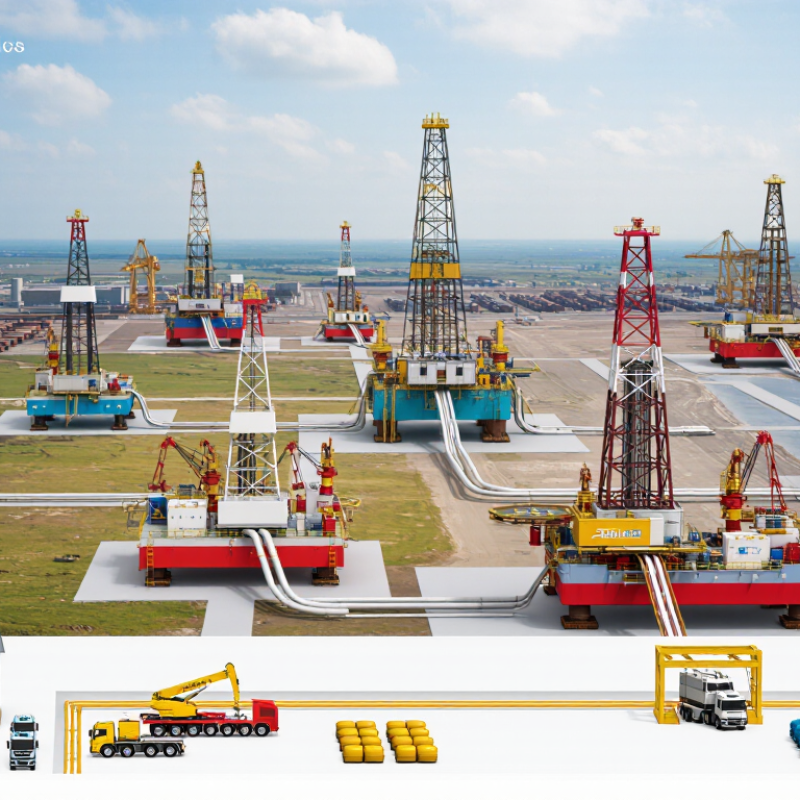
What Are Oil Drilling Machines and How Do They Work?
Oil drilling machines are engineered systems that create controlled wells through rock layers. A typical land rig uses a mast, drawworks, rotary equipment, drilling pipes, mud pumps, and well-control equipment. The bit cuts underground formations while the drill string transfers torque and weight. Drilling fluid cools the bit, carries rock fragments upward, and supports pressure inside the well.
The process is continuous. The hoisting system lowers new pipe sections, while pumps circulate fluid through the pipe and back up the wellbore. A blowout preventer seals the well if pressure changes unexpectedly. It is a critical safeguard.
According to the International Energy Agency’s Oil 2024 report, global oil demand may reach about 105.4 million barrels per day by 2030. This demand supports continued investment in efficient drilling equipment, especially for deeper and more complex wells.
Machine performance depends on torque, lifting capacity, pump pressure, automation, and maintenance quality. OPEC’s World Oil Outlook 2024 projects global oil demand could reach 112.3 million barrels per day by 2035. That figure does not guarantee steady rig activity. Financing, geology, environmental rules, and local infrastructure also matter. In field operations, a small seal failure can stop an entire drilling schedule. Operators therefore inspect vibration, mud density, pressure, and temperature throughout each shift. The technology is powerful, but not flawless. Human judgment still matters.
Key Criteria for Evaluating Chinese Oil Drilling Machine Manufacturers
China Top 10 Oil Drilling Machine Manufacturers?
When evaluating Chinese oil drilling machine manufacturers, begin with verified manufacturing experience. Review factory history, production capacity, and completed projects in similar geological conditions. A polished website proves little. Request equipment photographs, inspection records, and customer references that can be independently checked.
Technical performance deserves close attention. Compare rated torque, drilling depth, lifting capacity, hydraulic efficiency, and component quality. Ask whether each figure comes from controlled testing or field operation. Reliable manufacturers provide drawings, material specifications, maintenance schedules, and clear acceptance standards. Examine welding quality, frame alignment, control-system protection, and emergency shutoff access during a factory visit. Small details matter.
Safety documentation must match the target market’s requirements. Check quality-management systems, worker training, traceability, and third-party test reports. After-sales support is equally important. Confirm spare-parts availability, remote troubleshooting, installation guidance, and response times across different time zones. Calculate total ownership cost, not only the purchase price. Fuel use, downtime, transport, and routine servicing can change the final decision.
I have learned that supplier interviews can reveal practical knowledge. Ask how the machine performs in dust, cold weather, unstable ground, or limited water conditions. Strong engineers explain limitations instead of promising everything. No scorecard is perfect. A manufacturer may pass documentation checks yet struggle with communication after delivery. Keep written records, compare evidence, and inspect the machine before payment milestones. That discipline reduces avoidable surprises.
| Evaluation Rank | Anonymous Manufacturer Profile | Primary Product Focus | Typical Drilling Depth | Typical Power Range | Rig Configuration | Key Technical Criteria | Quality & Certification Evidence | Customization Capability | After-Sales Support | Indicative Evaluation Score |
|---|---|---|---|---|---|---|---|---|---|---|
| 1 | Anonymous Manufacturer 01 | Land oil and gas drilling rigs | 3,000–7,000 m | 1,000–2,000 hp | Trailer-mounted or skid-mounted, mechanical or electric drive | High load capacity, reliable drawworks, automated mud-pump control, robust mast design | Strong evidence expected ISO 9001; API-related documentation where applicable; factory inspection records | High: power system, mast height, mud system, control system and transport layout | Regional service teams, commissioning support and spare-parts planning | 92/100 |
| 2 | Anonymous Manufacturer 02 | Truck-mounted oil drilling equipment | 2,000–5,000 m | 750–1,500 hp | Self-propelled truck-mounted configuration | Road mobility, fast rig-up, hydraulic leveling, low-temperature operating options | Strong evidence expected ISO 9001; welding and pressure-system inspection records | High: chassis, winch, hydraulic system, mast and climate package | On-site installation, operator training and remote troubleshooting | 89/100 |
| 3 | Anonymous Manufacturer 03 | Electric-driven land rigs | 3,000–6,000 m | 1,000–1,500 hp | AC or DC electric drive with centralized control | Variable-speed control, energy monitoring, drive redundancy and automation readiness | Strong evidence expected ISO 9001; electrical testing; control-panel and motor documentation | High: drive system, power distribution, automation and data interface | Electrical commissioning, software support and spare-drive availability | 87/100 |
| 4 | Anonymous Manufacturer 04 | Small and medium-depth drilling rigs | 1,000–3,500 m | 350–1,000 hp | Skid-mounted, trailer-mounted or modular design | Compact transport dimensions, economical operation and simplified maintenance | Standard evidence expected ISO 9001; material certificates; load and performance test reports | Medium to high: pump capacity, mast, power pack and transport arrangement | Remote technical assistance and standard spare-parts packages | 84/100 |
| 5 | Anonymous Manufacturer 05 | Workover and service rigs | Workover applications up to approximately 4,000 m | 350–1,200 hp | Mobile service rig with telescopic or folding mast | Hoisting safety, rapid deployment, well-control compatibility and compact footprint | Strong evidence expected ISO 9001; lifting-equipment tests; well-control component documentation | High: mast, substructure, hydraulic system and auxiliary equipment | Field commissioning, maintenance manuals and operator instruction | 82/100 |
| 6 | Anonymous Manufacturer 06 | Desert and high-temperature drilling rigs | 2,000–5,000 m | 750–1,500 hp | Skid-mounted or truck-mounted configuration | Dust protection, cooling performance, reinforced structure and simplified filtration service | Standard evidence expected ISO 9001; environmental and thermal test records where available | Medium to high: cooling package, filtration, chassis and power system | Consumables planning, remote support and periodic service visits | 80/100 |
| 7 | Anonymous Manufacturer 07 | Cold-region and high-altitude drilling rigs | 1,500–4,500 m | 500–1,200 hp | Modular, trailer-mounted or skid-mounted rig | Cold-start package, insulation, hydraulic heating and reduced-power performance | Standard evidence expected ISO 9001; cold-start testing; hydraulic and electrical inspection documents | High: heating, insulation, fuel system, controls and transport modules | Pre-delivery commissioning, training and seasonal maintenance guidance | 78/100 |
| 8 | Anonymous Manufacturer 08 | Compact rigs for remote or environmentally sensitive sites | 1,000–3,000 m | 250–750 hp | Containerized, modular or compact skid-mounted rig | Low transport volume, noise control, fuel efficiency and reduced site preparation | Standard evidence expected ISO 9001; factory acceptance testing; environmental documentation where applicable | Medium: footprint, power source, noise package and mud handling system | Remote diagnostics, digital manuals and local service-partner coordination | 76/100 |
| 9 | Anonymous Manufacturer 09 | Hydraulic and mechanical drilling systems | 800–2,500 m | 250–800 hp | Trailer-mounted or crawler-mounted configuration | Hydraulic efficiency, simple controls, maintainable components and low operating cost | Standard evidence expected ISO 9001; hydraulic pressure tests; structural inspection reports | Medium: hydraulic circuit, mast, carrier and pump configuration | Standard warranty support, spare-parts supply and maintenance training | 73/100 |
| 10 | Anonymous Manufacturer 10 | Entry-level and application-specific drilling rigs | 500–2,000 m | 150–600 hp | Compact trailer-mounted or skid-mounted design | Competitive acquisition cost, straightforward operation and short manufacturing lead time | Verify carefully Request ISO 9001, material traceability, load testing and component certificates | Medium: basic layout, power pack, mast and transport configuration | Standard remote support; local service coverage should be confirmed before purchase | 70/100 |
China’s Top 10 Oil Drilling Machine Manufacturers
China’s Top 10 Oil Drilling Machine Manufacturers should be assessed through evidence, not advertising claims. The IEA’s World Energy Investment 2024 report estimated upstream oil and gas investment at about 570 billion US dollars. This spending increases demand for reliable rigs, mud pumps, hoisting systems, and automated controls. China’s leading manufacturers compete through production scale, engineering experience, export service, and compliance with international standards.
A practical top-ten evaluation should compare drilling depth, load capacity, power efficiency, delivery records, and after-sales response. Field testing matters more than showroom specifications. The American Petroleum Institute’s technical standards, including API Spec 7K, offer useful reference points for drilling equipment safety and performance. ISO 9001 certification can support process control, but it does not guarantee excellent field results. A ranking can still mislead. Some suppliers perform well on land rigs but lack offshore experience. Others offer strong machinery but limited spare-parts coverage abroad.
Tips: Ask for audited project records, not only brochures. Check operating hours, failure rates, warranty terms, and local service capacity. Confirm whether performance data comes from independent testing. Compare total ownership cost, including transport, installation, energy use, maintenance, and downtime. The Energy Institute’s Statistical Review of World Energy shows China remains a major global energy consumer, so domestic scale is valuable. However, scale alone cannot replace engineering judgment. A careful buyer should inspect weld quality, control-system redundancy, component traceability, and operator training before selecting a manufacturer.
Product Range, Technologies, and Industry Applications
China Top 10 Oil Drilling Machine Manufacturers: Product Range, Technologies, and Industry Applications
China’s leading oil drilling machine manufacturers usually offer truck-mounted, crawler, skid-mounted, and workover rigs. Product ranges may include mud pumps, rotary tables, top drives, pipe-handling systems, and control cabins.
According to the IEA’s Oil 2024 report, global oil demand is expected to reach 105.4 million barrels per day by 2029. This outlook supports continued demand for efficient drilling equipment, especially in mature fields and unconventional projects.
Technology separates capable suppliers from ordinary fabricators. Modern Chinese rigs commonly use variable-frequency drives, automated monitoring, hydraulic transmission, and modular mast designs. Some systems support remote diagnostics, reducing inspection time in deserts or cold regions. Applications include onshore oilfields, shale formations, coalbed methane, geothermal wells, and deep water-well construction.
Baker Hughes’ international rig data also shows China remains an active land-drilling market, although monthly rig numbers can change sharply. That variation matters when comparing production capacity.
Tips: Check rated depth, torque, mud-pump flow, and spare-parts availability. Ask for field records, not only catalog figures. A cheaper rig may consume more fuel or require longer maintenance. That is easy to overlook. Buyers should also verify local safety certification, operator training, and after-sales response. No supplier is perfect. Performance depends on geology, crew skill, and maintenance discipline.
How to Select the Right Chinese Manufacturer for Your Project
Selecting from China’s top ten oil drilling machine manufacturers requires more than comparing online rankings. Rankings change, and some lists lack technical evidence. Define your project before contacting suppliers. Record drilling depth, formation hardness, torque, mud system, mobility, power supply, and site climate. Ask each manufacturer for matching drawings, load charts, production schedules, and test procedures. Vague answers deserve caution.
Inspect the factory when possible. Examine welding quality, machining accuracy, hydraulic layouts, assembly records, and final testing. Ask for references from projects with similar geology and operating conditions. Request verifiable certificates, equipment manuals, and inspection reports. A video tour helps, but it cannot replace physical verification. Ask for evidence. Speak with engineers, not only sales staff.
Compare total ownership cost, including shipping, installation, spare parts, training, maintenance, and downtime. Put acceptance criteria in the contract, including drilling performance and delivery conditions. Use staged payments linked to inspections and factory acceptance testing. Check technical support hours and replacement-part availability. Do not rush. A low quotation may conceal weak components or expensive future repairs. I would not treat a polished website as proof of reliability. In one practical evaluation, the supplier’s equipment looked suitable, but its proposed power system did not match the remote site. That mistake was avoidable. Leave room for technical review, independent inspection, and uncomfortable questions before committing.