

Top 10 Nail Hardener Machines for Global Buyers?
Choosing a Nail Hardener Machine begins with a simple question: what does the device actually do? Some products cure gel polish with UV or LED light. Others are marketed as nail-strengthening tools, though their functions and evidence may differ. Buyers should check the device’s intended use, wavelength information, timer settings, and manufacturer guidance. Small details matter.
The market is growing, but the available numbers need careful reading. Grand View Research valued the global nail care market at USD 23.41 billion in 2023 and projected a 5.2% compound annual growth rate from 2024 to 2030. That figure covers nail care broadly. It does not establish the size of the nail-hardener-machine category. A market total can be useful context, not proof that every machine is effective.
Nail scientist and educator Doug Schoon is a relevant industry reference because his educational work addresses nail product chemistry and safe use. However, no source-confirmed, verbatim Schoon quotation about nail hardener machines is available here, so attributing one would risk misleading buyers. That gap matters. This guide compares ten machines through practical criteria: operating type, compatibility, controls, build quality, documentation, and buyer support. It also flags where product claims deserve closer scrutiny. A polished listing is not the same as reliable evidence. The right choice depends on the service, the user, and the details a seller can verify.
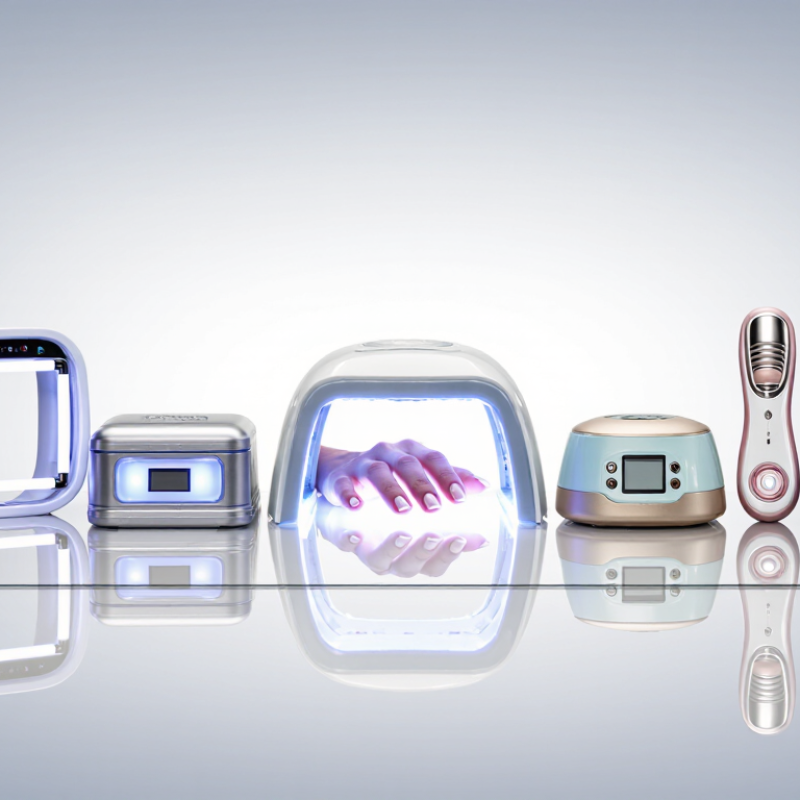
What Nail Hardener Machines Are and How They Work
A nail hardener machine usually means a UV or LED lamp used to cure gel products. The name is a little misleading: the device does not strengthen the natural nail plate by itself. Instead, light activates photoinitiators in gel polish, linking its molecules into a firm polymer layer. Many lamps use light around 365 or 405 nanometres, though curing time varies by formula, lamp output, and application thickness. A thin, even coat matters; an under-cured layer may remain soft beneath the surface. Not magic.
Grand View Research valued the global nail care market at USD 23.41 billion in 2023, reflecting broad demand for nail services and products. That figure covers the wider category, not hardening machines alone. Buyers should check whether a lamp’s wavelength and curing instructions match the gel system they use, rather than relying only on wattage. A 2023 Nature Communications study found cell damage after repeated exposure to a UV nail dryer in laboratory models. The researchers cautioned that these results do not directly establish the risk from typical consumer use. Still, avoid unnecessary exposure: keep hands positioned as instructed, and consider fingerless UV-protective gloves. A lamp can cure product effectively, but it cannot repair brittle nails or replace careful application.
Top 10 Nail Hardener Machines for Global Buyers: What They Are and How They Work
Nail “hardener machines” generally refers to UV or LED lamps that cure compatible gel nail coatings. They do not harden natural nails or ordinary air-dry polish. The categories below are common machine formats; power and features are typical market ranges, not guaranteed performance specifications.
| Machine type | Typical power | Light source and wavelength | How it works | Best suited for | Buyer considerations |
|---|---|---|---|---|---|
| 1. Traditional fluorescent UV lamp | About 9–36 W, depending on the number of tubes | UV fluorescent tubes; commonly around 365 nm | UV light initiates photochemical curing in compatible gel products. Curing time depends on the formulation and lamp condition. | Basic salon use and gels formulated for UV lamps | Check tube replacement availability, timer settings, and the gel maker’s recommended exposure time. |
| 2. LED nail-curing lamp | About 6–48 W | LED emitters, often around 405 nm | LED light activates photoinitiators in compatible gel coatings. LED lamps do not cure every UV gel product. | Users whose gel products specifically support LED curing | Confirm wavelength compatibility; advertised wattage alone does not establish curing effectiveness. |
| 3. Dual-wavelength UV/LED lamp | About 24–72 W | Typically combines LED output near 365 nm and 405 nm | Two wavelength bands can support a wider range of compatible gel formulations than a single-band lamp. | Salons using different gel systems | Verify product compatibility and follow each gel’s specified curing schedule. |
| 4. Compact mini lamp | About 3–12 W | Usually LED; wavelength varies by model | A small emitter cures a limited area at a time, so the nail may need careful positioning. | Travel, occasional use, or curing one nail at a time | Check whether the lamp covers the full nail and whether it has a stable timer or power source. |
| 5. Full-hand salon lamp | About 24–48 W | Commonly LED or dual-wavelength UV/LED | Multiple emitters distribute light across the hand; a timer controls the exposure period. | Routine home manicures and salon services | Look for even coverage, a removable base for pedicures, and an interior large enough for the hand. |
| 6. High-output salon lamp | About 48–72 W advertised output | Usually multi-emitter LED or dual-wavelength LED | Multiple LEDs provide broad coverage. A higher wattage figure does not by itself guarantee faster or more complete curing. | Frequent professional use with compatible products | Assess tested curing guidance, heat-management features, timer options, and lamp durability—not wattage alone. |
| 7. Cordless rechargeable lamp | Often about 24–48 W advertised output | Typically LED or dual-wavelength UV/LED | A rechargeable battery powers the light source without a mains cable during use. | Mobile technicians and workspaces with limited outlet access | Check battery capacity, charging time, run time, and whether output remains consistent as the battery drains. |
| 8. Flash-cure spot lamp | About 3–9 W | Usually a focused LED source; wavelength varies | A small, targeted light briefly holds or partially cures a gel layer before full curing in a suitable lamp. | Nail art placement and certain extension techniques | A spot lamp is generally not a substitute for the full cure required by the gel manufacturer. |
| 9. Pedicure or foot-compatible lamp | About 24–60 W | LED or dual-wavelength UV/LED, depending on model | A wider opening and base allow toes to be positioned beneath the emitters for curing compatible gel polish. | Pedicures and users who need additional space | Check the opening dimensions, removable base, cleaning access, and toe coverage. |
| 10. Dual-hand or wide-format lamp | About 48–120 W advertised output | Usually a large LED or dual-wavelength array | A wider chamber accommodates both hands or provides extra room; light distribution still depends on emitter placement and hand position. | High-throughput salons or users prioritizing a larger curing area | Confirm that both hands receive adequate coverage and that the lamp’s instructions permit simultaneous curing. |
Important: Follow the gel product’s instructions for lamp type and curing time. Avoid looking directly at operating LEDs, and limit unnecessary skin exposure to UV light. A lamp’s wattage rating or timer setting alone cannot confirm that a gel layer has cured fully.