

loading

Our Blog

Check out our innovative pump solutions and industry insights to see what's new in the pumping industry. Stay up to date with the latest trends and news in the world of pumping technology by following our pumping technology blog.

Top 10 Igu Glass Storage System Suppliers Worldwide

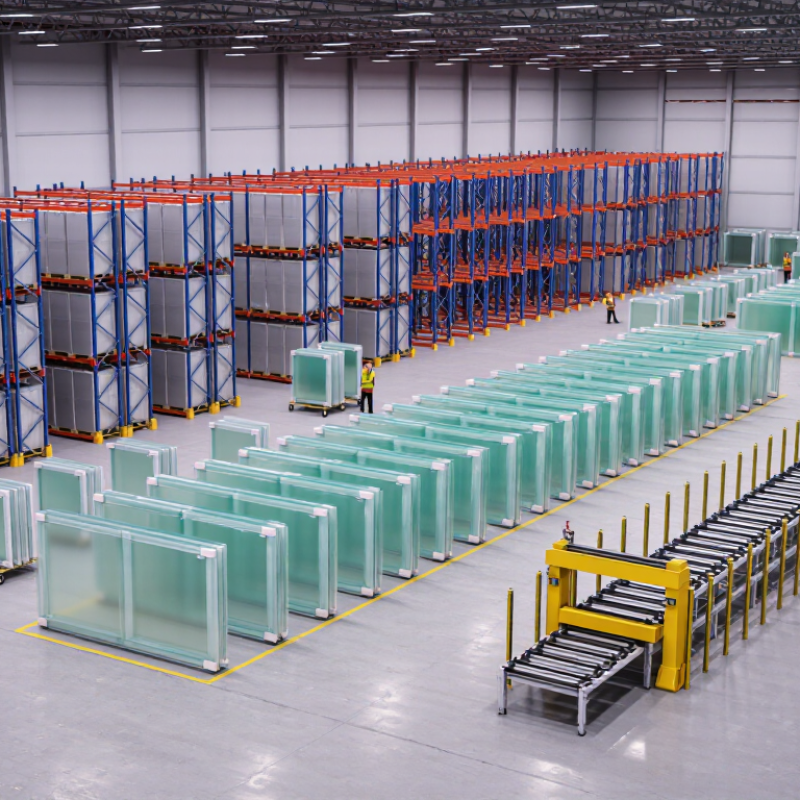
Insulating glass units are heavy, edge-sensitive, and awkward to move. Their storage systems must support safe handling, clear access, and efficient use of floor space. An Igu Glass Storage System may include A-frames, stillages, racks, or automated storage equipment, depending on the glass format and production workflow. Small design choices matter. Rack angle, contact surfaces, loading direction, and aisle width can affect daily handling. So can the way units are separated and secured during storage.

This overview introduces ten suppliers serving markets worldwide and offers a practical starting point for comparing their capabilities. It considers product range, customization, handling requirements, installation support, and the availability of technical information. Fit comes first. A system suited to one factory may not suit another, especially when unit sizes, throughput, or building layouts differ. Supplier names alone do not confirm performance; buyers should request specifications, reference projects, and guidance for their own operating conditions. The comparison is not a perfect science. Public information can vary, and some details may need direct confirmation. Treat this list as a research aid, then check dimensions, load ratings, service coverage, and compatibility with existing equipment before making a decision.
Top 10 Igu Glass Storage System Suppliers Worldwide

What IGU Glass Storage Systems Are and How They Work

An IGU glass storage system keeps insulated glass units upright, separated, and accessible between production stages or before installation. Each unit contains two or more panes joined by a spacer and sealed around the edge. Storage racks commonly use padded A-frames, adjustable supports, and non-abrasive separators to limit contact between glass surfaces. Forklifts move loaded racks through designated aisles. The rack must stay stable; a slight tilt can shift the load.

Good storage protects both the glass and its edge seals. Keep units dry and away from direct heat, standing water, and sudden temperature changes. The U.S. Department of Energy’s Energy Saver guidance estimates that windows account for about 25–30% of residential heating and cooling energy use. That figure concerns building energy, not warehouse storage, but it shows why IGU performance matters. Scratched panes or damaged seals can undermine that performance. One detail is easy to overlook: rack capacity should reflect the actual unit size and weight, not just the number of slots.

Tips: Store units upright, use clean separators, and follow the rack maker’s load limits. Check labels before moving a rack. Small handling errors can travel downstream.

How to Evaluate IGU Glass Storage System Suppliers

When evaluating an IGU glass storage system supplier, start with your actual units, not a glossy catalogue. Record maximum pane size, unit weight, thickness range, and how often loads move. Small details matter. Check whether rack contact points use non-marking, replaceable pads and keep pressure away from glass edges. Ask for rated load data and installation drawings.

Compare the proposed layout with your floor plan and daily handling routines. Confirm aisle width, forklift turning space, floor capacity, and safe access to every stored unit. Ask the supplier to explain stability under uneven loading and what routine inspections should cover. Request references from facilities with similar unit sizes and handling volumes, along with clear warranty and spare-part terms. Paperwork helps. A reference call may still reveal practical issues that a polished specification misses.

Assess who measures the site, checks the final design, and trains operators after installation. Good guidance should cover loading sequence, separator placement, and what to do when pads are damaged or units shift. Compare ownership costs, not just purchase price: include maintenance, replacement components, downtime, and future capacity changes. Suppliers may not answer every question perfectly; unclear answers deserve follow-up, not assumptions.

Top 10 IGU Glass Storage System Suppliers Worldwide

Choosing among the Top 10 IGU Glass Storage System Suppliers Worldwide takes more than comparing rack prices. Insulating glass units are heavy, edge-sensitive, and often made to project-specific dimensions. A suitable system should support stable loading, protect glass edges, and allow safe access without awkward repositioning. Check maximum pane size, rated load, rack spacing, floor requirements, and compatibility with your handling equipment.

Small details matter.

The 2024 Global Status Report for Buildings and Construction, published by the Global Alliance for Buildings and Construction and UNEP, estimates that buildings and construction represented 32% of global energy demand and 34% of energy-related CO₂ emissions in 2023. This context reinforces demand for energy-efficient building components, including insulated glazing. It does not, by itself, prove that any particular storage system improves building performance.

That distinction matters.

When assessing worldwide suppliers, ask for engineering drawings, load documentation, installation guidance, and examples of systems used with comparable unit sizes. Request details on separators, contact surfaces, corrosion protection, and maintenance access. Compare lead times and after-sales support as well as quoted capacity. A rack can look robust. Still, actual workflows may expose blind spots, especially in tight production areas. No single layout fits every plant, and published specifications may not capture daily handling conditions.

Comparing Supplier Technologies, Capacity, and Services

IGU storage suppliers differ most in how they protect sealed units while keeping production moving. Passive A-frame racks suit smaller lines and changing product mixes; automated buffers reduce forklift traffic and can feed cutting or sealing stations directly. Ask for rated loads per rack, maximum glass dimensions, aisle clearance, and handling time—not just headline storage capacity. A rack holding many units may still create bottlenecks if operators cannot retrieve the right size quickly. Small detail. Big consequences.

Service matters just as much. Compare installation planning, operator training, preventive maintenance, spare-part availability, and integration with existing controls. Request a layout based on your actual unit thicknesses and daily production peaks. A generic capacity estimate can look convincing, but it may omit breakage zones or access space. The International Energy Agency’s 2023 buildings analysis attributes about 30% of global final energy consumption to building operations. That figure does not measure IGU systems, but it explains why reliable production of efficient glazing matters. Suppliers should provide clear load calculations and documented safety checks; vague assurances are not enough. Even so, no spreadsheet replaces a floor visit. Reliable figures, imperfect reality.

Top 10 IGU Glass Storage System Suppliers Worldwide - Comparing Supplier Technologies, Capacity, and Services

Comparison basis: The entries below are technology-based supplier profiles, not named companies or a verified ranking of individual suppliers. Capacity is project-specific and depends on IGU dimensions, weight, rack configuration, aisle space, and handling equipment; no unverified numeric capacity claims are presented.

Profile Storage technology Typical configuration Capacity comparison basis Handling and access Best suited to Common services to evaluate
1. Fixed A-frame rack specialist Stationary A-frame support for upright glass loads Fixed bays with padded contact surfaces and load-separation materials Number of bays and maximum rated load per bay; confirm compatibility with IGU size and weight Forklift or crane loading, with access from one or both sides depending on design Plants needing a simple, low-complexity storage area for staged or finished units Layout planning, rack load-rating documentation, installation, inspection guidance
2. Mobile A-frame and stillage specialist Transportable frames or stillages designed to support glass upright Reusable units moved between production, staging, and dispatch areas Units per frame and allowable frame load; verify load restraint and transport conditions Forklift handling; some designs can be moved with compatible powered equipment Operations that need flexible staging or internal transfer between work areas Frame selection, handling instructions, maintenance recommendations, replacement parts
3. Adjustable-rack specialist Configurable supports with adjustable dividers or contact points Bay spacing can be changed to accommodate different product widths Usable positions per bay and permissible load for each adjustment setting Manual or powered loading; adjustments must preserve stable support and separation Mixed-size production where product dimensions vary frequently Configuration advice, operator training, safety checks, spare support components
4. Cassette and magazine-system specialist Removable cassettes or magazines arranged in dedicated storage positions Load is organized by cassette, production batch, or dispatch sequence Number of cassette positions and rated load per cassette; product fit is cassette-specific Forklift or purpose-designed transfer equipment; requires compatible floor and aisle layout Repeatable production flows and organized batch staging Cassette design, interface planning, commissioning, operating procedures
5. High-density vertical storage specialist Multi-level storage for upright loads in a compact footprint Vertical positions served by manual or powered retrieval equipment Usable storage positions, clear height, and rated load per position Access equipment and retrieval sequence determine throughput and operator requirements Sites where floor space is limited and vertical clearance is available Site survey, structural and floor-load review, equipment integration, safety training
6. Automated storage and retrieval specialist Automated storage and retrieval system (AS/RS) using controlled load handling Racks, transfer equipment, control software, and defined storage locations Storage locations, rated load, and system throughput; performance depends on layout and operating profile Automated retrieval with operator-controlled input and output points High-volume facilities requiring traceable, repeatable stock movement System design, controls integration, commissioning, software support, preventive maintenance
7. Shuttle-based storage specialist Powered shuttle moves loads within dedicated storage lanes Lane-based storage with defined load carriers and transfer points Lane count, usable positions per lane, and rated load per carrier Shuttle handles movement inside lanes; suitable loading equipment is still required at interfaces Facilities with repeatable load formats and a need to reduce travel within storage lanes Lane and carrier engineering, control-system integration, operator training, maintenance support
8. Crane-served storage specialist Overhead or gantry crane serves designated storage positions Storage bays arranged around crane travel paths and safe load zones Rated crane load, hook coverage, available positions, and building clearances Crane-based handling requires trained operators and suitable lifting interfaces Large-format or heavy loads where floor-based handling is constrained Crane and rack coordination, lifting-device selection, installation, inspection planning
9. Mobile-base storage specialist Storage racks mounted on powered or mechanically assisted mobile bases Rows open an access aisle when needed rather than keeping every aisle open Rack positions, base load rating, and access frequency; capacity depends on aisle and floor design Controlled aisle opening and retrieval; floor condition and emergency access require review Warehouses seeking higher space utilization with managed access to stored loads Floor assessment, layout design, safety controls, installation, maintenance planning
10. Integrated warehouse-system specialist Combination of racks, handling equipment, identification, and inventory software Storage system linked to production planning, dispatch, or warehouse management workflows Positions and rated loads plus defined inventory and retrieval performance requirements May combine manual, forklift, crane, or automated handling according to the project design Facilities seeking coordinated storage, stock visibility, and dispatch workflows Process review, system integration, data setup, commissioning, training, ongoing technical support

How to Choose the Right Supplier for Your Business

Choosing an IGU glass storage-system supplier is less about the tallest rack than safe handling and a predictable workflow. Ask for drawings showing rack capacity, glass dimensions, loading direction, aisle clearance, and restraint points. Request a site assessment using your actual pane sizes, forklift routes, floor limits, and peak daily volume.

That matters. The International Energy Agency reports that buildings account for about 30% of global final energy use and 26% of energy-related emissions.

That context makes reliable insulated glazing important, but a storage rack alone cannot guarantee building performance.

Compare suppliers on installation support, operator training, inspection guidance, spare-part availability, and documented load testing. Ask for references from facilities with similar glass formats and production speeds; then speak directly with their operators if possible.

A low quote can hide costly delays. Check how the supplier handles urgent repairs and whether replacement parts are locally available. One detail is easy to miss: confirm that protective contact surfaces will not mark glass edges during repeated loading.

Request a written maintenance schedule and clarify who is responsible for periodic checks. I would not rely only on a polished demonstration; real factory traffic is messier.

For the final comparison, score each proposal against your site constraints, safety evidence, service response, and total operating cost—not just purchase price.