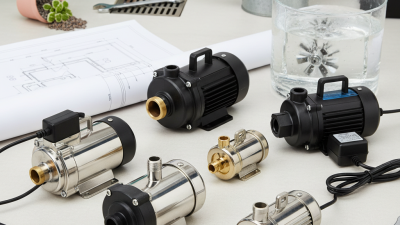
2025 How to Choose the Best Motor Pump for Your Needs
In the quest to select the most suitable motor pump for various applications, understanding the core functionalities and capabilities of these essential devices becomes paramount. According to the Global Market Insights report, the motor pump market is projected to reach over $60 billion by 2025, driven by the increasing demand across sectors such as agriculture, oil and gas, and wastewater management. This staggering growth underscores the need for end-users to carefully evaluate their specific requirements in order to optimize performance and efficiency.

Industry expert Dr. Elena Martinez emphasizes the importance of tailored solutions in her research on motor pump applications. She states, "Choosing the right motor pump is not just a matter of specifications; it's about understanding the unique demands of your project and selecting equipment that can meet those challenges." With myriad options available in the market, from centrifugal to positive displacement pumps, consumers must consider factors such as flow rate, pressure, energy consumption, and maintenance needs to make informed decisions. In a landscape characterized by rapid technological advancements, being equipped with the right information can significantly impact operational success and sustainability.
Understanding the Different Types of Motor Pumps Available
When it comes to selecting the best motor pump for your needs, understanding the various types of motor pumps available is essential. Motor pumps generally fall into three main categories: centrifugal, positive displacement, and submersible pumps. Centrifugal pumps are ideal for liquids that flow freely and are commonly used in water supply, irrigation, and HVAC systems. Positive displacement pumps, on the other hand, are perfect for viscous liquids and applications requiring high pressure, making them suitable for chemical processing and oil transfer.
**Tip:** Consider the fluid properties, such as viscosity and corrosiveness, when choosing a pump type. This will ensure that the pump not only works efficiently but also has a longer lifespan.
Submersible pumps are designed to operate while submerged in the liquid they are pumping, making them perfect for applications like dewatering and sewage management. Each type of motor pump has its own unique advantages and appropriateness based on the task at hand.
**Tip:** Always check the pump's specifications for flow rate and head pressure to ensure it meets your application's requirements. Proper matching of pump type with the intended use will help in maximizing efficiency and minimizing maintenance costs.
2025 Motor Pump Types Comparison
Key Factors to Consider When Choosing a Motor Pump
When selecting the best motor pump for your needs, there are several key factors to consider. First, it's essential to understand the specific requirements of your application, including flow rate and pressure. For instance, the global market for artificial lifting systems is projected to grow from $13.71 billion in 2025 to $20.41 billion by 2032, marking a compound annual growth rate (CAGR) of 5.85%. This growth indicates a rising demand for efficient motor pumps capable of supporting various industrial applications, making it crucial to assess your operational needs thoroughly.
Additionally, focusing on technological advancements can significantly influence your choice. The electric water pump market for automobiles, valued at $241 million in 2018, is expected to reach approximately $1.48 billion by 2032 with a noteworthy CAGR of 15%. This surge reflects the increasing adoption of electric pumps in modern vehicles, emphasizing the importance of selecting pumps that incorporate innovative technologies. Furthermore, the breast pump market is anticipated to grow from $2.14 billion in 2025 to $3.77 billion by 2032, with an 8.4% CAGR, highlighting the need for pumps designed with user convenience and efficiency in mind. By evaluating these trends and technological factors, you can make an informed decision when choosing a motor pump that best suits your needs.
Assessing Your Specific Needs and Applications for Motor Pumps

When selecting the best motor pump for your specific needs, it’s essential to assess your unique applications and requirements.
According to a report by the American Pump Manufacturers Association, the global pump market is projected to reach $76 billion by 2025, driven largely by advancements in technology and increasing demand across various industries.
This growth underscores the importance of understanding the specific functions and environments in which your pump will operate, as different applications—such as agriculture, construction, and wastewater management—require distinct pump characteristics.
For instance, when evaluating motor pumps for agricultural irrigation, it is crucial to consider factors like flow rate and energy efficiency.
The U.S. Department of Agriculture estimates that irrigation accounts for approximately 80% of total water withdrawals in agricultural sectors, making the choice of an efficient motor pump a key element for sustainability and cost-effectiveness.
Additionally, pumps designed for industrial processes may require higher pressure ratings and varying durability standards to handle abrasive materials or corrosive substances.
Thus, aligning the motor pump selection with your particular operational demands will lead to enhanced performance and longevity.
Evaluating Motor Pump Specifications and Performance Metrics
When it comes to selecting the best motor pump for your needs, evaluating specifications and performance metrics is crucial. Start by examining the pump's flow rate, typically measured in gallons per minute (GPM) or liters per minute (LPM). This indicates how much fluid the pump can move within a specific timeframe, which is essential for matching the pump's capabilities to your application requirements.
Understanding the maximum head, or the height the pump can lift fluid, is equally important, as it affects the overall efficiency and suitability for your project.
Another vital aspect to consider is the motor's power rating, usually expressed in horsepower (HP) or kilowatts (kW). This information provides insight into the pump's operational strength and its ability to handle varying workloads. Additionally, evaluate the energy efficiency of the motor, as this can lead to cost savings over time. Assessing durability through materials and design can also impact the pump's lifespan and maintenance needs.
By carefully considering these specifications and performance metrics, you can make an informed decision that aligns with your specific needs and operational goals.
Tips for Maintenance and Longevity of Your Motor Pump
When selecting a motor pump, maintenance and longevity are critical factors to consider.
Regular upkeep enhances performance and extends the life of the pump. First, ensure that you frequently check the oil levels and change the lubricant as recommended by the manufacturer.
This prevents overheating and wear, allowing the pump to operate efficiently under its designated load conditions.
Another essential aspect of maintenance is monitoring the operating environment. Keeping the motor pump free from debris, dust, and moisture can significantly reduce the likelihood of malfunctions.
Regularly inspecting seals and connections for wear and tear will also help in early detection of potential issues, thereby avoiding costly repairs.
By implementing a routine maintenance schedule and adhering to the guidelines provided by the manufacturer, users can maximize the utility and reliability of their motor pumps over time.