How to Choose the Right Well Water Pump?
Choosing a well water pump is not just a matter of horsepower. The right pump must match the well’s depth, recovery rate, household demand, and required pressure. Get one detail wrong, and a shower may weaken when a washing machine starts. Small details matter.
The U.S. Centers for Disease Control and Prevention reports that more than 43 million people in the United States rely on private wells for drinking water. That makes dependable pumping equipment an everyday necessity, not a niche concern. The U.S. Geological Survey’s Estimated Use of Water in the United States in 2020 also documents the scale and variety of domestic water use. Yet a national average cannot tell you what your own well can sustainably deliver. That part requires site-specific measurements.
Before comparing models, record the well’s static water level, pumping water level, and recovery rate. Then estimate peak household flow and the pressure needed at fixtures. Pumping guidance from the Hydraulic Institute emphasizes evaluating a pump against its operating conditions, rather than choosing by motor size alone. In practice, a deep, narrow well may call for a different design than a shallow well supplying a modest cabin. There is no universal winner.
This guide explains how to compare submersible and jet pumps, estimate total dynamic head, and check flow capacity. It also covers controls, pressure tanks, efficiency, and maintenance. A pump can look perfect on paper. Real wells are less tidy. Measure carefully, and treat uncertain well data as a reason to investigate—not guess.
Identify Your Well Type and Household Water Demand
Before comparing pumps, identify the well’s construction and seasonal water level. A drilled well can be deep yet have a modest recovery rate; a shallow well may lose water during dry weather. Depth matters. Penn State Extension notes that shallow-well jet pumps generally lift water from no more than about 25 feet below the pump. Deeper water levels usually call for a deep-well system, often with a submersible pump. Measure the distance from pump to water, not just the well’s total depth.
Estimate daily use and peak demand separately. The USGS reported average domestic water use of about 82 gallons per person per day in 2015. That is a planning benchmark, not a pump-flow target. Not just gallons. Note how many showers, taps, or appliances might run together, then compare that peak flow with the well’s tested recovery rate. A pump that delivers water faster than the well replenishes can lower the water level and interrupt supply.
I would not size a pump from household headcount alone. Record the static water level, pumping water level, well yield, and pressure-tank settings; a qualified well professional can help test these safely. These details reveal whether the limit is pump capacity or the well itself. That distinction is easy to miss. Sources: USGS, Estimated Use of Water in the United States in 2015; Penn State Extension, Private Water Systems.
Measure Well Depth and Water-Level Changes
A pump must match the water your well can actually supply, not just its total depth. Measure the distance from the well opening to the water surface with a clean water-level tape. Record the date and recent pumping conditions. A level checked right after heavy use may be lower than the resting level. Small details matter.
Check both the static water level and the pumping water level. The second reading shows how far water falls while the pump runs, especially during household peak use. Compare readings across seasons if possible; dry months can change the available water column. A simple log helps. I once thought one measurement would be enough, but that assumption can miss slow seasonal changes. For total well depth or uncertain readings, ask a qualified well professional to verify them.
Tips: Measure at similar times, note recent pump use, and keep hands and equipment clear of electrical components. Use the lowest expected water level when discussing pump placement and capacity. Don’t set a pump so close to the bottom that it can draw sediment. If readings seem inconsistent, check your method before choosing equipment.
Choose a Pump Type Suited to Your Well
Start with the well’s water level, not its total depth. A shallow-well jet pump sits above ground and draws water through a suction pipe. It generally suits water levels within roughly 25 feet of the pump, though site conditions can reduce that limit. Depth matters. If the water level is lower, a deep-well jet pump uses an ejector assembly to lift water from greater depths. Its extra piping and adjustments can make installation more involved.
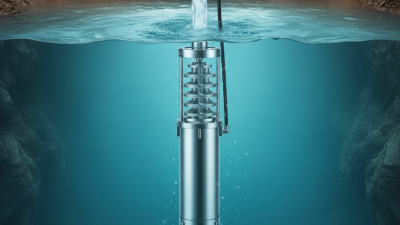
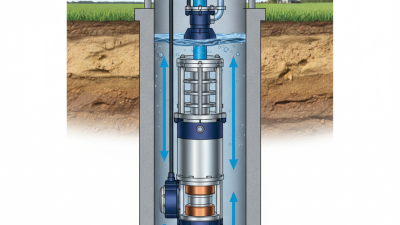
For deeper wells, a submersible pump is often practical because its motor and pump sit underwater, pushing water upward. Check the well casing diameter, pumping water level, household flow needs, and pressure requirements before choosing. These details matter more than horsepower alone. Keep it simple. An oversized pump may cycle too often, while an undersized one can struggle when several taps run. Ask a qualified well professional to check the well’s yield and electrical supply, especially when records are incomplete. It is tempting to focus on horsepower, but guessed depth is not a reliable specification: water levels can drop during pumping, changing which pump type fits best.
How to Choose the Right Well Water Pump? - Choose a Pump Type Suited to Your Well
| Pump Type |
Best Suited Well Conditions |
Typical Water-Level Range |
Advantages |
Key Considerations |
| Shallow-well jet pump |
Shallow wells where the pump can be installed above the water source |
Usually up to about 25 ft (7.6 m) from the pump to the pumping water level |
Accessible for maintenance; suitable for many shallow wells; does not require a pump submerged in the well |
Actual lift is limited by atmospheric pressure, pipe losses, and installation conditions. The pumping water level—not just the well’s total depth—must be within the pump’s lift capability. |
| Deep-well jet pump |
Wells where the water level is beyond the practical lift range of a shallow-well jet pump |
Often used for pumping water from roughly 25–110 ft (7.6–33.5 m); maximum depth depends on the pump and ejector setup |
The pump motor remains above ground; can serve deeper wells than a shallow-well jet pump |
Requires a correctly sized ejector assembly and additional piping in the well. Performance and usable depth vary by model and system design. |
| Submersible well pump |
Deep wells, or installations where the pump can be placed below the water level |
Available for a wide range of depths, from relatively shallow wells to several hundred feet, depending on the model |
Pushes water up rather than pulling it; typically delivers good performance in deep wells and avoids an above-ground jet ejector |
Choose the pump for the required flow rate and total dynamic head. Confirm well diameter, available power, water quality, and the pump’s installation limits. |
Selection tip: Measure the pumping water level while the well is operating, then consider the delivery height, pipe losses, and household water demand. Well depth alone does not determine the correct pump.
Match Pump Capacity to Flow Rate and Pressure Needs
Match the pump to peak flow, not the household’s daily average. The U.S. Geological Survey’s Circular 1441 reports average domestic water use of about 82 gallons per person per day in 2015. Not a peak. A shower, washing machine, and faucet running together can demand far more water in a short burst. Count likely simultaneous uses, then compare that flow with the well’s sustainable yield and the pump’s rated output.
Pressure matters just as much. A common residential pressure-switch setting is 40/60 psi, but the right setting depends on the plumbing and equipment. Add the elevation from the water level to the highest fixture: water pressure drops about 0.43 psi for every vertical foot. Include losses through long pipes, filters, and treatment equipment, too. A pressure gauge near the tank can reveal whether pressure falls sharply when several fixtures run.
A pump that delivers plenty of gallons but weak pressure may leave an upstairs shower sputtering. One with excessive capacity can outpace a slow-recovering well. That estimate is imperfect. Check the well’s measured recovery rate and the pump curve at the required pressure before choosing a model. The USGS figure describes average use, not a sizing rule.
Source: USGS, Estimated Use of Water in the United States in 2015, Circular 1441, 2020.
Compare Power, Materials, Controls, and Maintenance Requirements
A well pump should match the well, not just the house. Check the well’s recovery rate and the total lift, including the depth to water and the pressure needed indoors. A higher-horsepower pump may sound safer, but it can draw water faster than a slow-recovering well can supply it. That mismatch can cause cycling, low pressure, or dry running. More power is not always better.
Materials matter when water carries sand, iron, or corrosive minerals. Stainless steel components resist rust, while some engineered plastics can suit lighter-duty conditions; confirm the pump’s specifications against a water test and well records. Sediment can wear internal parts sooner than expected. A small detail, but an expensive one. I would not choose by casing material alone, either: seals, impellers, and the water’s chemistry all affect service life.
Look at the controls as carefully as the motor. A pressure switch and tank should work together to avoid rapid starts, while dry-run protection can help when the water level drops. Variable-speed controls may steady pressure, but they add components that need correct setup. Keep the control box accessible and note its settings before service. Maintenance is usually modest, not nonexistent: watch for changing pressure, unusual cycling, or grit at faucets. Don’t open energized equipment; have a qualified well technician inspect electrical faults or repeated problems.
How to Choose the Right Well Water Pump?
Compare power, materials, controls, and maintenance requirements.
The chart shows theoretical hydraulic power at a constant flow of 1 m³/h, calculated using water density of 1,000 kg/m³ and gravitational acceleration of 9.81 m/s². Actual electrical input must be higher because pumps are not perfectly efficient. Before choosing a pump, check your well’s total dynamic head and required flow; then compare water-compatible materials, control features such as dry-run protection, and the manufacturer’s maintenance requirements.