

How to Choose a Small Water Pump in 2026?
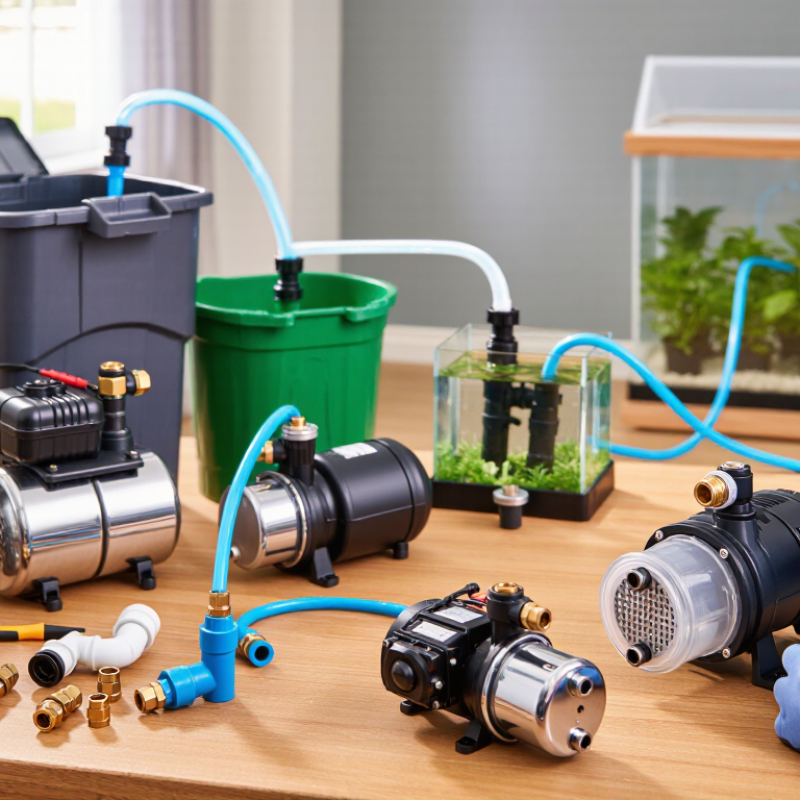
Choosing a small water pump in 2026 requires more than comparing prices or reading one impressive specification. The right model must match your water source, lifting height, flow requirement, power supply, and operating environment. A pump moving water from a rain barrel needs different strengths from one feeding a greenhouse, aquarium, fountain, or emergency drainage system. Measure the vertical distance carefully. A few extra meters of head can reduce real flow noticeably.
Begin with the pump’s rated flow and maximum head, but treat both figures cautiously. They are often measured under ideal laboratory conditions. In practical use, hoses, elbows, filters, and dirty water create resistance. A small water pump may deliver 1,000 liters per hour on paper, yet provide far less through a narrow, lengthy hose. Check the performance curve whenever possible. Confirm whether the pump supports continuous operation, automatic shutoff, dry-run protection, and the correct voltage. Safety matters.
Material selection also deserves attention. Stainless steel, reinforced plastic, and sealed electrical components can improve durability, especially around fertilizer, saltwater, or outdoor moisture. However, no pump is maintenance-free. Sediment may block the intake. Seals can age. Noise can become annoying in a quiet room. I have learned that installation details often matter as much as the pump itself. A level base, clean intake screen, and accessible power connection prevent many avoidable failures.
There is no perfect choice.
This guide examines practical selection criteria for 2026, including efficiency, reliability, smart controls, maintenance, and total ownership cost. It also questions attractive claims, because the cheapest model can become expensive after repeated replacement.
Define Your Small Water Pumping Requirements
How to Choose a Small Water Pump in 2026?
Define Your Small Water Pumping Requirements
Start with the water’s destination, not the pump’s size. Measure the required flow in liters per minute and the total head in meters. Total head includes vertical lift, pipe friction, filters, valves, and outlet pressure. A 10-meter lift through narrow tubing may demand more power than expected. Write down the pipe length and diameter.
Check the duty pattern carefully. Will the pump run for five minutes, eight hours, or every day? Intermittent irrigation, household transfer, drainage, and circulation need different operating points. The International Energy Agency reports that water supply and wastewater services consume about 4% of global electricity in World Energy Outlook 2016. Efficiency matters, even for small equipment.
Water quality also changes the decision. Clean water, rainwater with sediment, and mildly dirty water can require different materials and inlet protection. The WHO and UNICEF Joint Monitoring Programme reported that 2.2 billion people lacked safely managed drinking water in 2022, showing why dependable water handling remains important. Do not rely on a product label alone. Compare its flow at your actual head.
A rough estimate may work briefly. That is the weak part. Recheck seasonal demand, voltage, noise, dry-run risk, and maintenance access before buying. The Hydraulic Institute recommends evaluating pumps around their intended operating point, not only their maximum rating. That small distinction can prevent overheating, poor delivery, and wasted electricity.
How to Choose a Small Water Pump in 2026? - Define Your Small Water Pumping Requirements
| Requirement | What to Define | Practical Reference Range for Small Pumps | Why It Matters | Selection Guidance |
|---|---|---|---|---|
| Application | The intended task and water source | Tank transfer, drainage, irrigation, fountain circulation, rainwater handling, or pressure boosting | Different applications require different pump designs, controls, and materials | Choose the pump type according to the task before comparing power or price |
| Required Flow Rate | How much water must be moved per unit of time | Approximately 5–80 L/min for many compact domestic and light-duty systems | Flow determines filling, draining, irrigation coverage, and circulation speed | Specify the target flow at the required head, not only the pump's maximum open-flow rating |
| Total Dynamic Head | Vertical lift plus friction and pressure losses | Often 2–20 m for small transfer and boosting applications | A pump's flow decreases as discharge height and pipe resistance increase | Add static lift, estimated pipe friction, fittings, filters, and any required outlet pressure |
| Water Type | Clean water, slightly dirty water, or wastewater | Clean water typically contains no solids; drainage water may contain small particles | Particles can clog impellers, damage seals, or require a larger solids passage | Check the maximum permitted particle size and avoid using a clean-water pump for abrasive or fibrous waste |
| Pump Type | Submersible, surface-mounted, diaphragm, centrifugal, or peripheral design | Submersible pumps suit drainage; centrifugal pumps suit general transfer; diaphragm pumps suit controlled delivery | Pump architecture affects priming, noise, pressure, solids handling, and installation | Select a submersible model for underwater operation; use a self-priming or primed surface pump where needed |
| Power Supply | Available voltage, frequency, battery source, and circuit capacity | Common small systems use 12 V DC, 24 V DC, or 100–240 V AC at 50/60 Hz | Incorrect voltage can cause poor performance, overheating, or electrical failure | Match the pump's rated voltage and frequency to the power source; allow for startup current |
| Rated Power | Electrical input power required during operation | Approximately 30–750 W for many compact pumps, depending on flow and head | Power affects energy use, wiring, battery runtime, and heat generation | Do not select by watts alone; compare the pump curve at the desired flow and head |
| Duty Cycle | Operating duration and frequency | Intermittent use may run for minutes; continuous-duty models are designed for extended operation | A pump intended for short cycles may overheat during continuous use | Confirm continuous-duty capability, thermal protection, and permitted starts per hour |
| Inlet and Outlet Size | Connection diameter and hose or pipe compatibility | Common compact connections are approximately 13–32 mm, depending on flow | Small or restrictive piping increases friction loss and can reduce actual flow | Use the recommended pipe size and minimize sharp bends, unnecessary reducers, and clogged filters |
| Priming Requirement | Whether the pump and suction line must be filled before starting | Submersible pumps are generally self-priming by installation; many surface pumps require priming | Air in the suction line can prevent pumping and may damage some pumps | Choose self-priming equipment for installations where manual priming is inconvenient or unreliable |
| Noise and Vibration | Acceptable operating sound and vibration level | Compact indoor pumps may be selected around 40–65 dB(A), subject to installation conditions | Noise can be disruptive in homes, offices, aquariums, and near sleeping areas | Review the tested noise rating and use vibration isolation, flexible connectors, and a stable mounting surface |
| Protection and Safety | Dry-run, overload, thermal, leakage, and water-ingress protection | Protection requirements depend on whether the pump is indoors, outdoors, submerged, or exposed to rain | Protection reduces the risk of motor damage, electric shock, and unsafe operation | Use suitable residual-current protection and verify the enclosure rating and installation instructions |
| Operating Temperature | Water and ambient temperature during operation | Many general-purpose pumps handle cool or room-temperature water; exact limits vary by design | Excessive temperature can shorten seal life and overheat the motor | Confirm the maximum liquid and ambient temperature before pumping warm or heated water |
| Materials and Chemical Compatibility | Pump housing, impeller, shaft, seals, and liquid chemistry | Plastic, stainless steel, ceramic, and elastomer components are common in small pumps | Corrosive chemicals and unsuitable seals can cause leakage or rapid component failure | Check a chemical-compatibility chart for treated, saline, acidic, oily, or fertilizer-containing water |
| Automatic Controls | Float switch, pressure switch, level sensor, timer, or variable-speed control | Basic models may use manual switching; drainage systems often use float or level control | Automatic control can prevent overflow, dry running, and unnecessary energy use | Select controls that match the tank geometry, minimum water level, and required operating logic |
| Installation Space | Available footprint, clearance, access, and mounting position | Compact pumps may fit in narrow tanks or cabinets, but inlet, outlet, and service clearance are still required | Poor access makes cleaning, inspection, and replacement difficult | Measure the installation area and leave room for ventilation, cable routing, and routine maintenance |
| Maintenance Needs | Cleaning interval, filter access, seal inspection, and spare parts | Dirty-water applications generally need more frequent inspection than clean-water circulation | Blocked passages and worn seals reduce flow and increase energy consumption | Prefer accessible strainers, removable covers, and clearly specified replacement parts |
| Performance Margin | Extra capacity above the calculated operating point | A modest margin is generally preferable to selecting the absolute maximum rating | A small reserve helps compensate for pipe aging, filter loading, and uncertain friction losses | Use the manufacturer's performance curve and avoid excessive oversizing, which can waste energy or cause unstable flow |
Note: The ranges above are general planning references for small water-pump applications. Actual performance depends on the pump curve, pipe layout, water quality, temperature, installation method, and operating conditions. Always verify the final selection against the technical data sheet and applicable electrical safety requirements.
Related Posts
-
What is a Small Water Pump? Types, Uses, and Buying Guide Explained
-
Best Small Water Pump Options for 2026 What Should You Know?
-
Best Small Water Pumps at the 139th Canton Fair 2026?
-
How to Choose the Best Small Water Pump for Your Needs?
-

China Top 10 Water Pump Prices for Global Buyers?
-
How to Choose China Top Bore Pump Manufacturers?