
loading

Our Blog

Check out our innovative pump solutions and industry insights to see what's new in the pumping industry. Stay up to date with the latest trends and news in the world of pumping technology by following our pumping technology blog.

How to Choose the Right Well Pumps for Your Needs?

Choosing the right well pumps can be challenging. Each option has unique features and specifications. It’s important to find one that meets your specific needs.

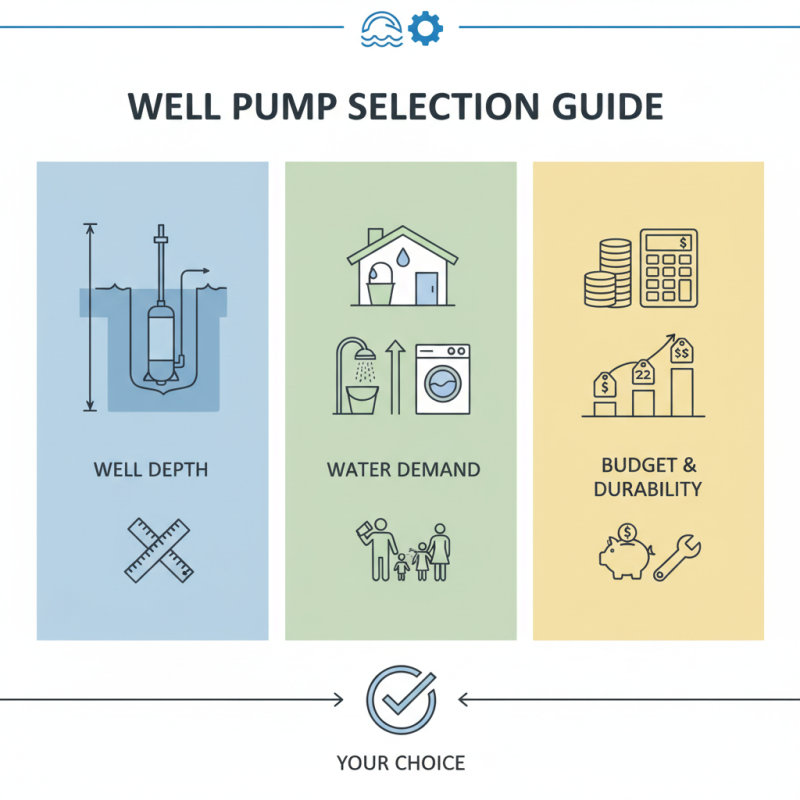
Consider the depth of your well. The pump must reach water efficiently. Assess your water demand as well. This influences the pump's power and flow rate.

Don’t ignore your budget. Higher-priced pumps may offer better durability. However, cheaper options could suffice for less rigorous use. Reflecting on these factors can guide your decision. Investing time in research pays off.
How to Choose the Right Well Pumps for Your Needs?

Understanding Different Types of Well Pumps Available in the Market

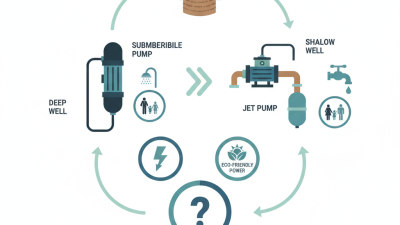
When selecting a well pump, understanding the types available is essential. Surface pumps are popular for shallow wells. They can lift water from depths of about 25 feet. It’s estimated that they are widely used in residential applications due to their ease of installation. However, they are not suitable for deep wells.

Submersible pumps are another option. These pumps operate underwater, which allows them to handle greater depths, often over 100 feet. According to recent industry reports, submersible pumps can be more efficient in terms of energy consumption. They also provide a steady water supply. But they can be costly to repair if failure occurs.

Lastly, jet pumps serve as a versatile solution. They can be installed above or below ground. They work well in a range of applications, from residential to agricultural. However, their efficiency can drop significantly in deeper wells. Knowing these differences helps in making an informed decision. Each pump has its unique challenges, and the selection often requires careful consideration of well depth and water demand.
Assessing Your Water Requirements: Flow Rate and Depth Considerations

When selecting a well pump, understanding your water requirements is crucial. The flow rate is a primary consideration. This measures how quickly water can be delivered. For a household, consider daily needs for drinking, cooking, and cleaning. An average home might require 10-20 gallons per minute. Are you aware of the peak demand times? Your flow rate should match these needs.

Depth is another critical factor. This refers to how deep the well is drilled. A deeper well may require a different pump. If your water level fluctuates, you need to account for that. It’s essential to measure the static water level. Sometimes, people underestimate the depth, leading to inadequate pumping solutions. This can result in frustration and wasted time.

Explore the options available based on flow rate and depth. Not all pumps are created equal. Some may seem cost-effective but don’t meet specific requirements. Take time to assess your situation. Consider potential issues before making a choice. It’s easy to overlook these details, leading to suboptimal performance. Reflecting on your real needs will help in choosing wisely.

Water Requirements for Well Pumps

Evaluating Energy Efficiency and Cost of Operation for Well Pumps

When choosing well pumps, energy efficiency is crucial. A study by the U.S. Department of Energy indicates that inefficient pumps can increase energy costs by over 20%. Proper evaluation can save you money and reduce environmental impact. The right pump should balance operational efficiency with the demands of your water system.

Cost of operation goes beyond the purchase price. Many pumps require regular maintenance, which adds to expenses. An analysis shows that well pumps consuming less energy typically have a higher upfront cost. However, they can lead to savings over time. For instance, switching to a variable speed pump can reduce energy usage by around 30%.

Selecting well pumps isn't straightforward. Each application presents unique challenges. Factors like water depth, flow rate, and frequency of use impact pump choices. In many cases, a lower efficiency pump might seem appealing due to its price, but may not be sustainable in the long run. Assessing both the initial investment and long-term efficiency can be complex. Make informed choices for a balance between performance and costs.

How to Choose the Right Well Pumps for Your Needs? - Evaluating Energy Efficiency and Cost of Operation for Well Pumps

Pump Type Power Rating (HP) Max Flow Rate (GPM) Energy Efficiency (%) Estimated Annual Operating Cost ($)
Submersible Pump 1.5 20 85 150
Jet Pump 1 15 75 200
Centrifugal Pump 2 25 80 180
Hand Pump N/A 5 N/A 50
Solar Pump 1 12 90 120

Installation Considerations: Professional Help vs. DIY

How to Choose the Right Well Pumps for Your Needs?

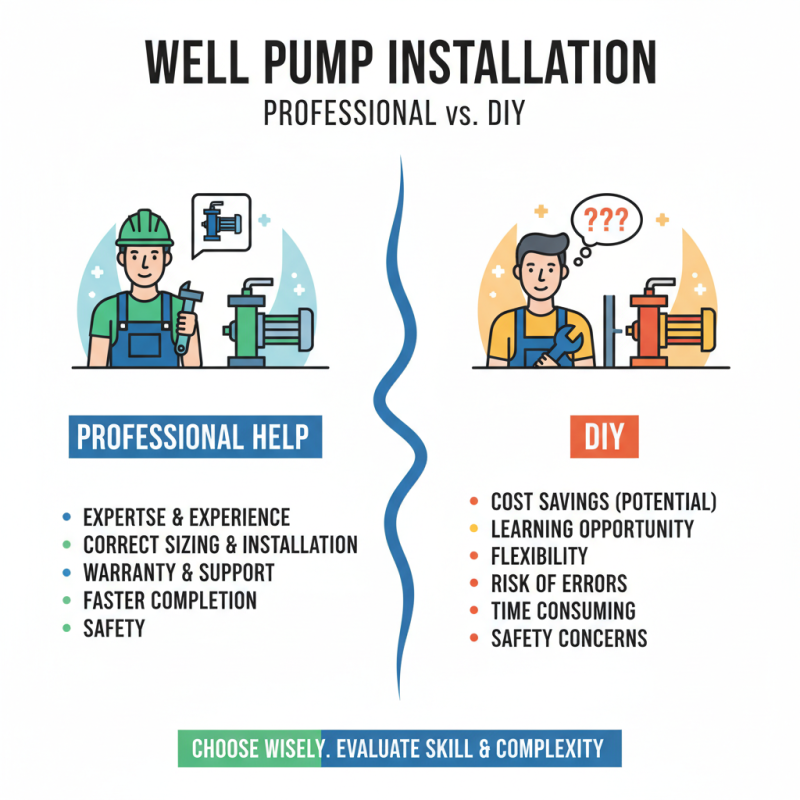
When it comes to installing well pumps, choosing between professional help and a DIY approach is crucial. Evaluate your skill level and the complexity of the project. If you're confident and willing to learn, DIY might be an option. However, some tasks require expertise.

Professional help can ensure that the installation is done correctly. They understand local codes and safety standards. Mistakes in installation can lead to costly repairs later. It’s essential to weigh the pros and cons before deciding.

Tips: Take time to plan your installation properly. Gather all necessary tools upfront to avoid interruptions. If you choose to go the DIY route, consider watching tutorial videos. They can offer valuable insights and practical techniques. Don't be discouraged if things don’t go perfectly. Learning through practice is part of the process. Sometimes, calling in a professional after trying yourself can save money in the long run.

Maintenance Tips for Longevity of Your Chosen Well Pump

How to Choose the Right Well Pumps for Your Needs?

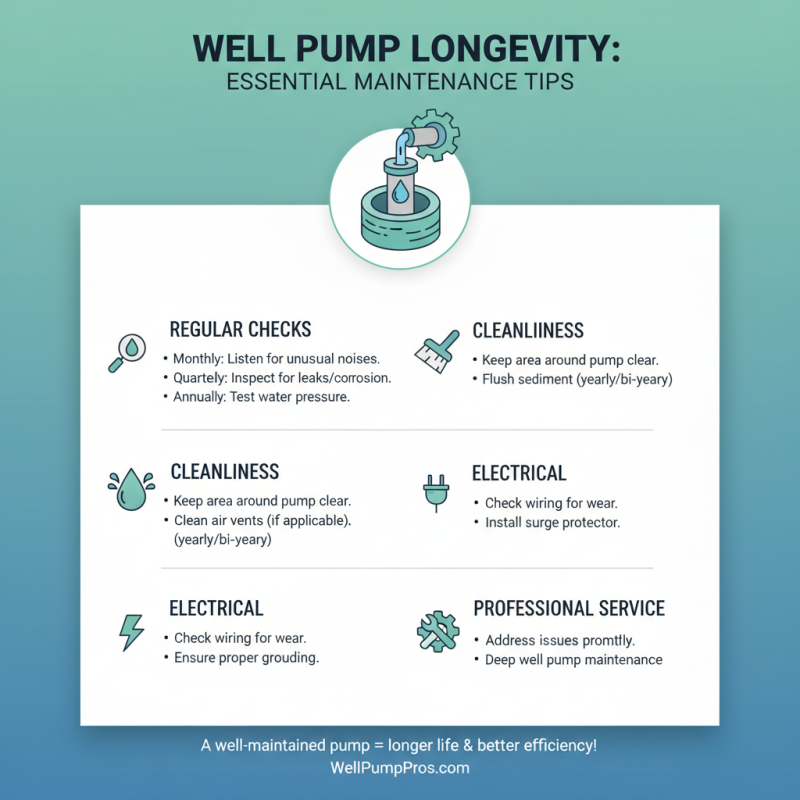
Choosing the right well pump is only part of the process. Once you have your pump, maintenance is vital. A well-maintained pump lasts longer and operates more efficiently. Here are some practical tips.

Regularly check the pressure switch. It controls the pump's operation. If it's faulty, it may not start or stop correctly. This can lead to wear and tear. Adjustments are often simple and require minimal tools.

Monitor the pump's noise level. Unusual sounds can signal problems. Address any changes early to prevent damage. Also, inspect electrical connections regularly. Frayed wires can cause serious issues. Moreover, ensure the pump is free of debris. A clean environment keeps it running smoothly.

Don’t forget about winter care. If you live in a colder climate, insulation is important. Pipes can freeze, leading to costly repairs. Take time to prepare your system before the cold sets in. Maintaining your well pump is an ongoing task, not a one-time fix.