How to Choose a Reverse Circulation Drilling Rig?
Choosing a Reverse Circulation Drilling rig is not a horsepower contest. The right setup must match the deposit, target depth, sample requirements, and ground conditions. S&P Global Market Intelligence reported that global nonferrous exploration budgets reached an estimated US$12.5 billion in 2024, up 12% from 2023. That investment makes reliable field decisions more important, but it does not point to one rig for every project.
Start with the work the rig must do. Check planned hole diameter and depth, expected penetration rates, and whether the dual-wall rod system can deliver representative samples. Compressor pressure and airflow matter, too; a mismatched compressor can slow drilling and compromise sample return. Terrain, access roads, water availability, and transport limits deserve equal attention. Details matter. A large rig may look capable in a specification sheet, yet be impractical on a narrow, uneven pad.
Compare more than the purchase price. Ask suppliers for operating references from similar geology, maintenance intervals, parts availability, and realistic fuel and labor estimates. Confirm how the rig handles rod changes and routine servicing. Review safety features with the people who will operate and maintain it. Not just horsepower. A useful comparison includes lifecycle cost, local technical support, and the quality of sample recovery. Some project conditions remain uncertain, and no brochure can remove that uncertainty. Treat performance claims as questions to verify, not promises. The sections ahead explain how to assess these factors and choose a rig that fits the job, rather than one that merely looks impressive.
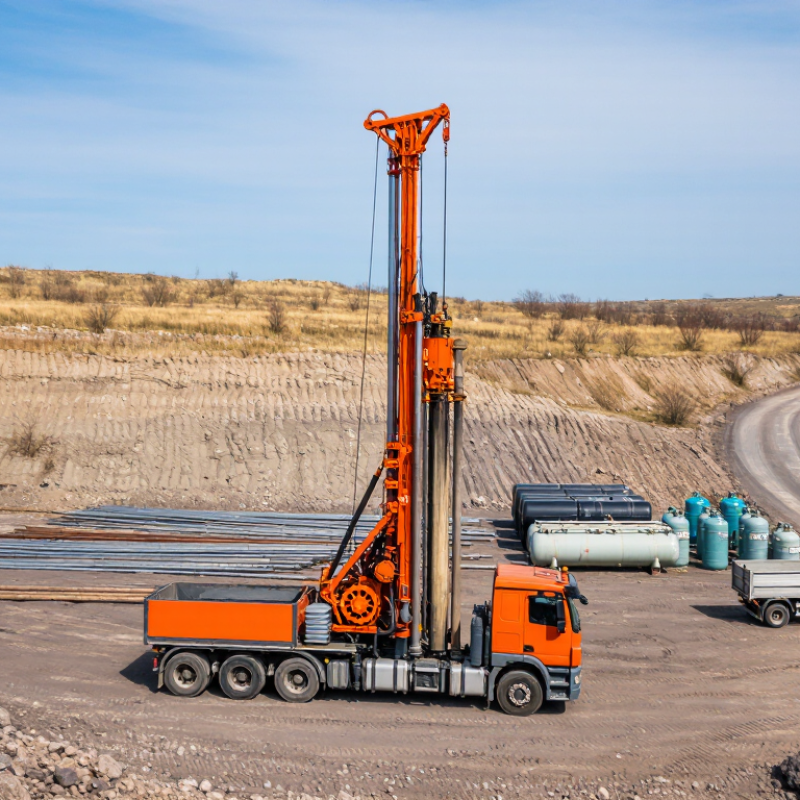
Reverse Circulation Drilling: Match the Rig to Target Depth and Hole Size
Choosing a reverse circulation rig starts with the planned depth and finished hole diameter. A deeper hole needs enough rod capacity, pullback force, and air pressure to keep cuttings moving through the inner tube. A wider hole can demand more air volume and may slow sample return if the system is undersized. Check the rig’s working limits against both measurements, not just its maximum drilling depth. That matters.
Match the compressor and rod setup to the ground, too. Fractured rock, wet intervals, and changing formations can affect circulation and sample quality. Ask for performance data at your expected hole size and depth, then compare it with the site’s geological information. In practice, the first depth estimate is often wrong. Leave a practical margin for deeper targets, but avoid choosing a much larger rig without a clear reason; transport, setup, and rod handling can become harder. A smaller hole may also reduce air demand, yet it must still meet the sampling and completion requirements. There is no perfect specification on paper. Review the plan with an experienced drilling supervisor before mobilizing.
How to Choose a Reverse Circulation Drilling Rig? — Match the Rig to Target Depth and Hole Size
| Rig Capacity Class | Indicative Target Depth | Common Hole Diameter | Key Setup Considerations | Best Suited For |
| Compact / shallow RC rig | Up to approximately 150 m | About 4.5–5.5 in (114–140 mm) | Prioritize a compact footprint, easy transport, and sufficient air capacity for the selected pipe and bit. | Shallow exploration, restricted-access sites, and programs where lighter equipment is advantageous. |
| Standard exploration rig | Approximately 150–300 m | About 5–6 in (127–152 mm) | Check that the rig, compressor, and RC pipe are rated for the planned depth and hole diameter in the expected ground conditions. | General mineral exploration and routine drilling programs with moderate depth targets. |
| Deep exploration rig | Approximately 300–500 m | About 5.5–6.5 in (140–165 mm) | Confirm available pullback, mast capacity, pipe handling, and air delivery; deeper holes may require a higher-capacity system. | Deeper targets where maintaining sample return and drilling performance is important. |
| High-capacity RC rig | More than approximately 500 m, subject to equipment specifications | Often about 5.5–6.5 in (140–165 mm); verify the planned bit size | Use the rig and support equipment’s documented operating limits. Consider ground conditions, water, hole stability, and the required air system. | Very deep exploration targets requiring a purpose-selected rig and carefully matched support equipment. |
Note: Depth and diameter ranges are indicative planning guides, not standardized rig ratings. Actual capacity varies with rig configuration, RC pipe, compressor performance, bit design, geology, water conditions, and operating practice. Confirm the complete system’s specifications with the equipment supplier before selection.
Air-Compression Capacity: Compare 350–500 psi and 1,000–1,500 cfm Benchmarks
When comparing reverse circulation rigs, treat 350–500 psi and 1,000–1,500 cfm as paired operating benchmarks, not interchangeable figures. Pressure helps drive the air column; volume carries cuttings upward through the return path. A rig may reach the stated pressure yet fall short on flow once hoses, elevation, and leakage are considered. That matters. Ask for delivered airflow at the intended working pressure, not only the compressor’s headline rating.
Check the compressor curve against the planned hole diameter, depth, and local altitude. Then confirm the available air at the drill, where restrictions and worn connections can reduce performance. The U.S. Department of Energy’s Improving Compressed Air System Performance: A Sourcebook for Industry reports that each 2 psi increase in discharge pressure can raise compressor energy use by about 1% at full load.
Extra pressure is not free.
Compare the cost of producing it with the actual drilling requirement. For a 350–500 psi, 1,000–1,500 cfm setup, request test records showing pressure and flow under load, plus fuel use and temperature. A short field trial can reveal what a specification sheet misses: a pressure dip when the bit meets harder rock, or slow chip return in a long run. I would still verify the numbers against the hole plan; ideal conditions rarely last all shift.
Rig Power and Pullback: Check Capacity Against Rod-String Weight and Ground Conditions
When selecting a reverse circulation drilling rig, compare pullback capacity with the full suspended load, not just the rods. A 5-inch steel tube with 3/8-inch walls weighs about 12 lb per foot. A 300-foot string therefore weighs roughly 3,600 lb before adding couplings, the hammer, bit, or fluid. Small details matter. Include downhole friction and the actual mast position, then check the rig’s rated pullback under those operating conditions. Do not treat the headline rating as usable capacity in every setup.
Ground conditions change the demand. FHWA’s Soils and Foundations Reference Manual (NHI-06-088, 2006) gives typical soil unit weights broadly around 90–140 lb/ft³, depending on material and condition. That range is not a pullback calculation, but it signals why the same string can behave differently in loose sand, dense gravel, or sticky clay. Torque and engine power must also sustain rotation and circulation while the rig pulls; a rig that can lift the string may still struggle to drill efficiently. Keep a practical reserve for changing friction and unexpected sticking. Field estimates miss things. Recheck the load assumptions against the planned hole depth, tooling, and ground investigation.
Sample Quality: Assess Whether the System Supports Consistent 1 m Sample Intervals
When choosing a reverse circulation drilling rig, check how it collects and separates samples at each one-metre interval. The sample path should move cuttings from the inner tube to the cyclone and splitter with minimal loss or mixing. Ask how the crew marks depth changes and clears material between bags. Small gaps matter. So does carry-over from the previous interval.
The one-metre label can look reassuring. It is not proof. Request a demonstration using the planned drilling setup, including the splitter and sample bags. Look for steady sample flow, secure connections, and a splitter that divides material consistently. Wet or clay-rich cuttings may behave differently from dry rock, so ask how the system handles them. Compare duplicate portions where practical, and record any interval with poor recovery or unusual moisture. These checks do not guarantee perfect samples; geology and operating conditions still affect results. I would also ask who checks the interval labels during a shift. It is a small detail, but fatigue and hurried bag changes can create avoidable uncertainty.
Mobility and Safety: Evaluate Site Access, Setup Requirements, and Applicable Standards
A reverse circulation drilling rig must fit the site, not just the drilling plan. Before transport, measure gate widths, turning space, overhead clearance, and the route’s load-bearing capacity. Soft ground can appear firm until a heavy carrier crosses it. A narrow entrance may require temporary fencing or a revised delivery plan. Check whether support vehicles, water tanks, and sample-handling areas can reach the work zone without blocking emergency access.
Setup needs room for leveling, mast movement, and safe access around the rig. Confirm the ground is stable, then use suitable mats or other support if conditions require them. Keep workers clear of suspended loads and moving components. Mark exclusion zones where hoses, rotating parts, or falling material create hazards. Small details matter. A poorly placed spoil pile can obstruct walkways or hide a trip hazard. Dust and noise controls should also match nearby workers and receptors.
Review the rig’s operating manual and applicable local requirements before mobilization. Standards may cover lifting equipment, guarding, noise, emissions, or worker protection, and requirements vary by location. Record inspections, operator qualifications, and site-specific controls. A checklist helps, but it cannot replace a field assessment. I have seen access plans change after rain; weather assumptions deserve a second look. If the route or setup area remains uncertain, reassess before the rig arrives.