

Our Blog
Check out our innovative pump solutions and industry insights to see what's new in the pumping industry. Stay up to date with the latest trends and news in the world of pumping technology by following our pumping technology blog.
- Home
- Blog
How to Choose a Fuel Pump Motor Commutator in 2026?
In 2026, selecting a Fuel Pump Motor Commutator is not simply a matter of matching its outside diameter. A dependable choice must suit the motor’s voltage, current, speed, brush material, and operating temperature. Small differences matter. A segment count that looks close may still produce poor brush contact, excess sparking, or rapid wear. Check the commutator’s diameter, shaft fit, segment geometry, copper quality, and mica undercut against the motor’s drawings or verified sample. Then confirm the supplier’s dimensional tolerances and inspection records.
Motor-drive author Austin Hughes provides useful context for evaluating how a motor’s electrical and mechanical requirements work together. A practical paraphrase of that engineering perspective is: “Match the commutator to the motor’s real duty, not just its nominal dimensions.” This is a paraphrase, not a verbatim quotation. For fuel-pump applications, ask how the part performs under repeated starts, vibration, and heat inside the pump assembly. Request evidence from relevant endurance and electrical tests, rather than relying on a polished product sheet. Traceable materials and consistent production batches matter, too. A low price can be tempting. It is not proof of value. The awkward part is that a commutator may pass a quick visual check and still fail early in service. This guide outlines the specifications, supplier questions, and test data worth reviewing before you choose. It also leaves room for a sensible caution: no single material or dimension is best for every motor.
Understanding the Role of a Commutator in a Fuel Pump Motor
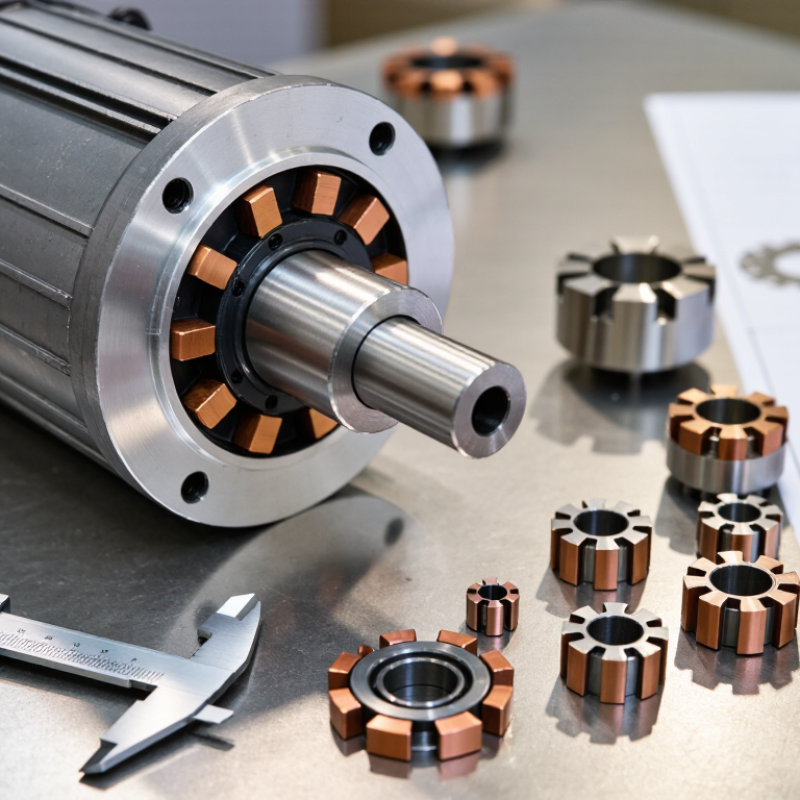
A commutator transfers current to a fuel pump motor’s rotating armature through contact with carbon brushes. Its copper segments switch current as the rotor turns, producing continuous rotation.
Worn segments, poor brush contact, or high resistance can cause sparking, heat, uneven torque, and a pump that struggles to maintain flow. Small parts matter here.
When choosing one, match the original diameter, segment count, shaft fit, and electrical rating. Check surface finish and segment spacing, too; rough edges can accelerate brush wear. Material and construction must tolerate vibration, heat, and repeated starts.
Avoid treating a larger commutator as automatically better. Compare its dimensions and operating limits with the motor specification, then inspect for discoloration or uneven wear after testing.
There is a judgment call: supplier data may not fully reflect real pump conditions. Recheck fit and current draw in the intended assembly.
Identifying the Motor’s Electrical and Operating Requirements
A fuel-pump commutator must match the motor’s actual electrical load, not just its nominal voltage. The U.S. DRIVE Electrical and Electronics Technical Team Roadmap (2020) describes both 12-volt and 48-volt vehicle electrical architectures. These are system-level values, not pump ratings. Check the vehicle’s wiring diagram and measure voltage at the motor during startup and steady operation. Small voltage drops matter.
Record peak current, operating current, motor speed, and duty cycle. Include the hardest conditions: a cold start, a hot fuel tank, and sustained high demand. Then compare those requirements with the commutator’s diameter, bar count, copper condition, and brush contact area. A mismatch can raise resistance or create uneven brush wear. Look closely for heat discoloration and rough edges. Details matter.
The roadmap’s voltage classes provide useful context, but they cannot replace pump-specific test data. That distinction is easy to miss. Confirm the commutator against the motor manufacturer’s dimensional and electrical specifications, then validate it under representative load and temperature. A tidy datasheet may still leave gaps; real operating measurements deserve a second look.
How to Choose a Fuel Pump Motor Commutator in 2026? - Identifying the Motor’s Electrical and Operating Requirements
| Selection dimension | Information to identify | Commutator considerations | Recommended verification |
|---|---|---|---|
| Electrical supply | Nominal and operating voltage, including the minimum and maximum voltage seen during cranking, charging, and transients. | Check the motor’s voltage and speed range. The commutator must maintain reliable brush contact across the specified operating conditions. | Use the vehicle or equipment electrical specification and confirm the motor’s voltage limits under load. |
| Current and load | Running current, startup or stall current, and the pump’s load over its intended pressure and flow range. | Segment connections and conductor cross-sections must suit the winding current and thermal duty. A commutator alone cannot compensate for an undersized winding or brush system. | Measure current with the pump operating at defined voltage, pressure, and temperature; assess short-duration startup conditions separately. |
| Speed and commutation | Operating speed range, direction of rotation, winding configuration, and the original commutator segment count and layout. | Match the commutator’s segment arrangement and electrical connections to the armature winding. Incorrect indexing or segment count can cause poor commutation and excessive sparking. | Compare the armature drawing or a verified sample; check brush position, segment indexing, and rotation direction after assembly. |
| Duty cycle and service life | Continuous or intermittent operation, starts per hour, expected operating hours, and any frequent cycling. | Consider segment wear, brush contact stability, and heat generation over the full duty cycle. Required life depends on the complete motor and pump system. | Review the duty profile and validate with endurance testing that represents the actual start-stop and load conditions. |
| Temperature and cooling | Ambient and fuel temperatures, heat transferred from the motor, and available cooling through the motor housing or surrounding fluid. | Confirm that the commutator insulation system, conductor joints, and brush materials are suitable for the motor’s measured thermal limits. | Measure temperatures during worst-case operation and check the component suppliers’ documented temperature ratings. |
| Fuel and chemical exposure | Fuel type, additives, vapor exposure, and whether the motor operates immersed in or isolated from fuel. | Check compatibility of insulation, bonding materials, and other non-metallic components with the actual fuel and exposure conditions. Copper grade alone does not establish system compatibility. | Request documented material compatibility and conduct testing with the specified fuel or an agreed test fluid. |
| Mechanical fit and runout | Commutator outside diameter, length, shaft or hub dimensions, mounting method, and available brush-holder clearance. | Match the original interface and specified tolerances. Excessive eccentricity or surface irregularity can produce uneven brush wear and unstable contact. | Measure the original part and drawing datums; inspect concentricity, surface finish, and assembled brush tracking. |
| Brush and maintenance match | Brush material, dimensions, spring force, contact area, and any specified surface preparation or maintenance limits. | Select the commutator and brush as a compatible contact system. Brush grade, commutator surface, current density, and operating conditions affect wear and sparking. | Confirm compatibility with the motor design data; inspect contact pattern, brush wear, and sparking during a controlled test. |
Note: Commutator dimensions, material specifications, tolerances, and acceptance limits are design-specific. Use the motor drawing and validated operating requirements rather than treating any single set of values as universal.
Comparing Commutator Materials, Segments, and Design Features
Choosing a fuel pump motor commutator starts with the motor’s electrical load and operating environment. Copper segments conduct current efficiently, but the copper grade and surface finish affect wear and heat behavior. The segment material must also work with the selected brushes. A mismatch can cause uneven contact, excess sparking, or premature wear. Small details matter. Check the specified current, temperature range, and duty cycle rather than choosing by material name alone. If the pump design places the motor in fuel, confirm that insulation and joining materials are suitable for that environment.
Segment count and geometry shape current distribution and smooth rotation. More segments are not automatically better; the right number depends on armature size, winding layout, and speed. Inspect segment spacing, mica insulation, and the commutator’s diameter and runout. Even a slight wobble can create inconsistent brush pressure. Design features such as balanced connections, secure segment bonds, and appropriate mica undercut support reliable contact over time. I would compare drawings and test data, not just a catalog description. Bench results may still miss real operating conditions, so that judgment deserves a second look. A careful fit check helps catch problems before installation.
How to Choose a Fuel Pump Motor Commutator in 2026?
Comparing representative copper segment materials by electrical conductivity
Conductivity is shown as a percentage of the International Annealed Copper Standard (IACS) at 20°C. Values are approximate reference figures and can vary by grade and material condition. For a fuel pump motor, also assess wear resistance, mechanical strength, thermal behavior, and compatibility with the brush and manufacturing process.
Assessing Durability Through Quality Checks and Performance Tests
A fuel-pump commutator should be judged by measured wear, not appearance alone. Inspect copper bars under magnification for pitting, uneven color, raised edges, and debris packed between segments. Check runout and bar-to-bar resistance against the motor maker’s limits; a polished surface can still hide poor insulation or heat damage. Small details matter.
Test the assembled motor under realistic voltage, fuel temperature, and load. ISO 16750-2:2012 specifies a 9–16 V operating range for 12-volt vehicle electrical equipment, a useful window for checking starting and steady operation. Record current, speed, temperature, and noise at several points within that range. ISO 16750-3:2023 covers mechanical-load testing, including vibration and shock, which can expose loose connections or accelerated brush wear. Repeat the test after vibration exposure. Compare results.
A bench test is not the whole story. Fuel flow, contamination, and prolonged heat can change contact behavior in service, so document the test conditions and inspect the commutator afterward. If current rises while speed falls, investigate contact resistance, brush pressure, and bearing drag before accepting the part. There is a judgment call here: one short test may miss gradual wear. Keep the data, including disappointing results.
Selecting a Supplier and Confirming 2026 Compliance Requirements
Selecting a supplier for a fuel pump motor commutator takes more than comparing unit prices. Check whether the supplier can hold consistent segment dimensions, bar alignment, and mica undercut across production batches. Ask for inspection records and sample measurements, not just a specification sheet. A small burr can affect brush contact. Ask for evidence.
Discuss the operating conditions, including temperature, vibration, duty cycle, and exposure to the surrounding fuel-system environment. Then confirm which 2026 requirements apply to your destination markets and customer specifications. Requirements can differ by region and product application, so request current material declarations, traceability records, and relevant test reports with revision dates. I would not treat an old certificate as proof of current compliance. There is no single checklist for every market, and I may be overcautious here. Still, verifying one detail twice is better than discovering a document gap after qualification. Include change-notification terms in the purchase agreement, especially for material or process changes.