
Our Blog
Check out our innovative pump solutions and industry insights to see what's new in the pumping industry. Stay up to date with the latest trends and news in the world of pumping technology by following our pumping technology blog.
- Home
- Blog
2026 How to Choose the Best Submersible Well Pump for Your Needs?
Choosing the right submersible well pump is crucial for your water needs. A submersible well pump draws water from underground sources. It is important to assess your needs carefully before making a decision.
Start by considering the water depth. How deep is your well? The submersible well pump must reach the water level efficiently. Also, think about the flow rate. This depends on how much water you need daily. A higher demand requires a more powerful pump.
Materials are another consideration. A stainless steel or thermoplastic pump might offer better durability. Reflect on your budget too. Often, the most expensive options are not the best fit. Take your time with this decision. An ill-chosen submersible well pump could lead to performance issues. Don't rush; understand your situation better.
Understanding Submersible Well Pumps: An Overview
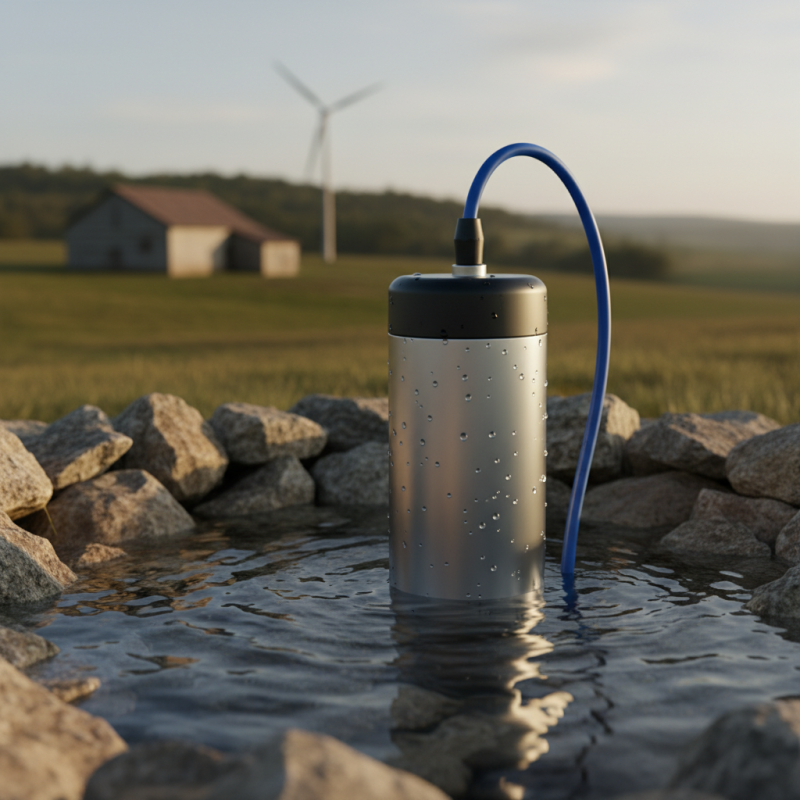
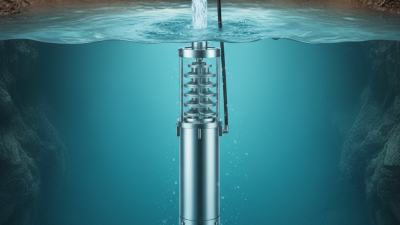
Submersible well pumps are vital for many households and agricultural applications. They are placed underwater to pull water from deep wells. According to industry reports, they can reach depths of over 100 feet, making them efficient for various settings. These pumps are typically powered by electricity and boast a motor that is sealed to prevent water damage.
Choosing the right model involves understanding your specific needs. Required flow rate, well depth, and water quality are significant factors. The wrong pump can lead to inefficiencies. For example, a pump not suited for the necessary depth may overheat or fail. An estimated 20% of pumps are incorrectly sized, leading to costly repairs. Regular checks can identify performance issues early, but many users overlook this maintenance.
While submersible pumps offer many advantages, they can also present challenges. Installation depth makes troubleshooting difficult for some homeowners. Proper placement is crucial; an incorrectly installed pump can lead to decreased efficiency. The decision-making process requires careful thought and preparation to ensure the selected pump meets long-term needs.
Key Factors to Consider When Choosing a Submersible Well Pump
When selecting a submersible well pump, several key factors demand your attention. The well depth is crucial. A pump must reach the water source effortlessly. Typically, deeper wells require more powerful pumps. Consider the water yield; this refers to the volume of water the well can produce. A pump needs to match or exceed this output to ensure efficient water delivery.
Motor power is another significant aspect. It influences the pump's ability to lift water to the surface. Higher horsepower does mean more energy consumption too. Assess your energy costs before making a decision. Also, the material of the pump is important for durability. Stainless steel models resist corrosion better than plastic. However, they can be heavier and pricier.
Don't overlook installation requirements. A complicated setup may lead to issues down the line. Consider your plumbing system layout carefully. Moreover, check if replacement parts are readily available. This can be a lifesaver when maintenance is needed. Make a list, weigh your options, and reflect on what truly meets your unique needs.
2026 Submersible Well Pump Efficiency Comparison
This chart compares the efficiency of various submersible well pumps based on their flow rates and power consumption. Higher efficiency ratings indicate better performance for your well water needs.
Types of Submersible Well Pumps and Their Applications
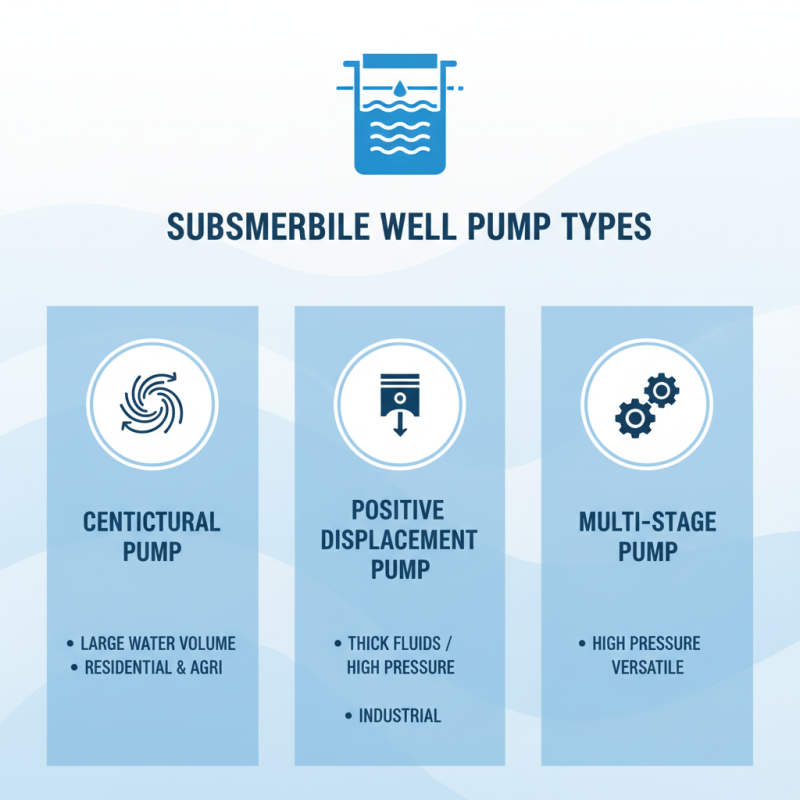
When choosing a submersible well pump, it's important to understand the types available. There are primarily three types: centrifugal, positive displacement, and multi-stage pumps. Each type has its unique applications. Centrifugal pumps are ideal for large volumes of water. They work well for residential and agricultural needs. Positive displacement pumps, on the other hand, excel in handling thick fluids and can generate high pressure. They are commonly used in industrial applications. Multi-stage pumps combine features of both. They are perfect for high-pressure requirements.
Tips: Consider the depth of your well. A pump must be powerful enough to reach the surface. Don't overlook the water temperature, either. Some pumps may not operate efficiently in extreme conditions.
Choosing the right submersible well pump isn't just about picking the first option. You may need to reflect on your actual water needs. For instance, how often do you access your water supply? What is the flow rate required? These questions can guide your choice. Always consult a professional if unsure. Sometimes, calculations might not add up, and that’s okay. Adjustments can always be made.
Evaluating Pump Specifications: Power, Flow Rate, and Depth
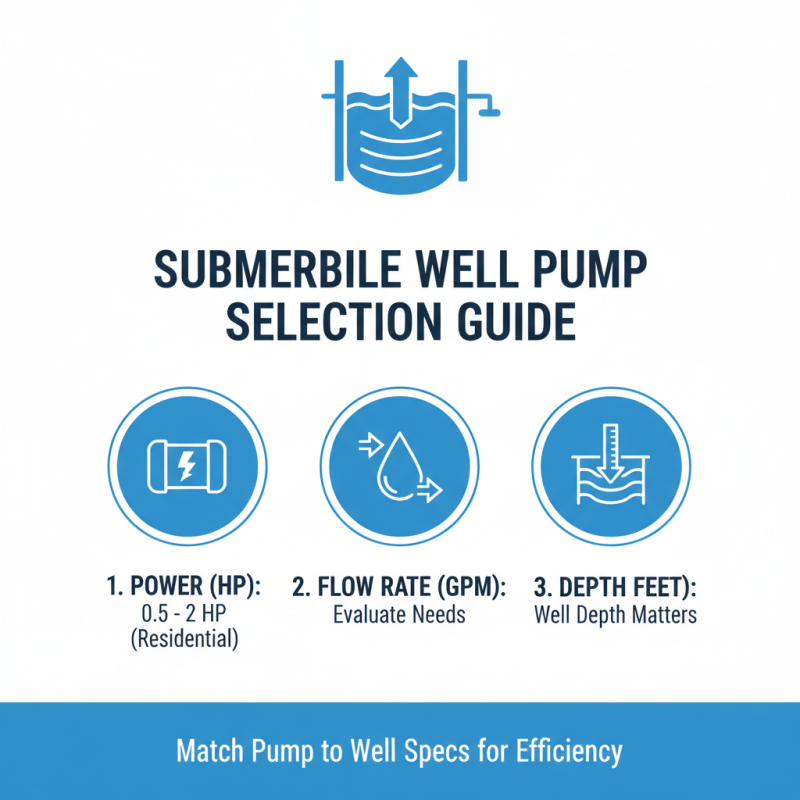
Choosing the right submersible well pump involves evaluating specific specifications carefully. Power, flow rate, and depth are vital factors. Most residential submersible pumps range from 0.5 to 2 HP. Selecting a pump with adequate horsepower ensures efficient operation. An underpowered pump can lead to insufficient water supply.
Flow rate is another critical aspect. It’s measured in gallons per minute (GPM). A typical submersible pump may deliver between 10 to 30 GPM. If your household demands exceed this range, you’ll face challenges. Accurate calculations can help prevent low water pressure.
Depth matters significantly as well. Residential wells often reach depths of 100 to 400 feet. Pumps require different designs based on depth. A pump positioned too high won’t function properly. It's crucial to assess your well depth accurately before purchase. You could miss vital performance indicators otherwise. Pump specifications and the specific well conditions must align for optimal functionality.
Maintenance Tips for Optimal Performance of Your Submersible Well Pump
Maintaining your submersible well pump is crucial for efficiency. Start with regular inspections. Check for unusual noises or vibrations. These can indicate underlying issues. Often, early detection saves time and money.
Change the pump’s oil at recommended intervals. Contaminated oil can hinder performance. It’s a simple task that pays off. Ensure all electrical connections are secure. Loose wires can lead to significant problems.
Clean the screen filter occasionally. A clogged filter affects water flow. This is often overlooked. Don’t ignore the power supply, either. Fluctuations can cause malfunctions.
Scheduled maintenance checks can prevent unexpected breakdowns. Think of it as providing routine care for a vital piece of equipment.
Related Posts
-
Top 10 Small Submersible Pumps for Your Home Needs?
-
Exploring the Benefits and Applications of 2 Submersible Pumps in Modern Water Management
-
Understanding the Innovations of Pump Manufacturers in Modern Industrial Applications
-

Maximizing Efficiency: How Submersible Pumps Revolutionize Water Management in Agriculture
-
2025 How to Choose the Best Submersible Well Pump for Your Water Needs
-
What is a Submersible Well Pump and How Does It Work?