
Our Blog
Check out our innovative pump solutions and industry insights to see what's new in the pumping industry. Stay up to date with the latest trends and news in the world of pumping technology by following our pumping technology blog.
- Home
- Blog
Why Choose a Well Water Pump for Your Home Water Supply Needs?
In many rural areas, families rely on a well water pump for their daily water supply. A report from the National Ground Water Association highlights that around 15 million households in the U.S. depend on private wells. This statistic underscores the importance of having a reliable pump system at home.
Investing in a well water pump can significantly reduce water expenses. With the average municipal water cost exceeding $4 per 1,000 gallons, well water is often a more economical choice. However, the initial setup and maintenance can be a concern for many homeowners. A report by the Environmental Protection Agency notes that improper maintenance can lead to contamination risks.
Choosing the right well water pump requires research and understanding. Not every pump fits every need. Many homeowners find themselves overwhelmed by options. Some users may regret their choices if the pump fails to meet their needs. Reflecting on these details can lead to better decisions. Ultimately, a well water pump can be a valuable asset when chosen wisely.
Benefits of Using a Well Water Pump for Sustainable Home Water Supply
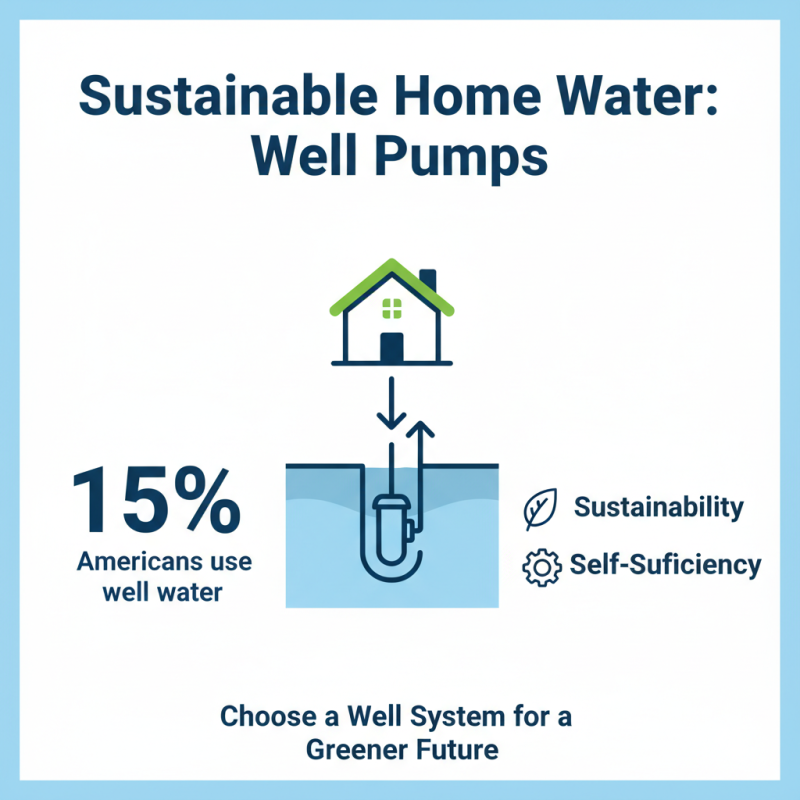
Choosing a well water pump for your home can be a sustainable solution. Many homeowners are now turning to well systems for their water supply. Approximately 15% of Americans rely on well water sources. This trend reflects a growing awareness of sustainability and self-sufficiency.
A well water pump provides numerous benefits. It taps into underground aquifers, offering a natural water source. According to a report from the National Ground Water Association, well water is one of the purest sources available. Unlike municipal systems, it does not rely on chemicals for treatment. This can enhance the overall quality of water used in households. Moreover, maintaining a well system can be more cost-effective over time, especially in rural areas where public water may be costly or unavailable.
However, there are challenges to consider. Regular maintenance of the pump is essential to ensure efficiency. Without proper upkeep, pumps can fail. Water quality testing should also be a routine. Contaminants can enter well water unexpectedly. Awareness of these potential issues is crucial for any homeowner.
Key Factors to Consider When Choosing a Well Water Pump for Your Home
Choosing a well water pump is essential for reliable home water supply. Water quality is a primary concern. A pump that can handle sediment and minerals is vital. Testing your well water before making a decision helps. Clear water might mean one type of pump. Turbid water calls for a different approach.
Consider the pump type. Submersible pumps work well in deep wells. Jet pumps are great for shallower sources. Think about your household needs. How much water do you use daily? If your family is large, a robust pump is crucial. Smaller families might manage with less capacity.
Energy efficiency is another crucial factor. An efficient pump saves money over time. Evaluate installation costs, too. Ensure proper installation to avoid issues. Some people overlook this step, leading to problems later. Reflect on the size of your well. A mismatched pump can create inefficiencies. Choose wisely to ensure a consistent water supply.
Why Choose a Well Water Pump for Your Home Water Supply Needs?
This bar chart illustrates key factors to consider when choosing a well water pump for home use, including flow rate, total head, pump efficiency, power consumption, and noise level. These attributes are essential for ensuring that your well water pump meets your household water supply needs effectively.
Comparative Analysis: Well Water Pumps vs. Municipal Water Supply Systems
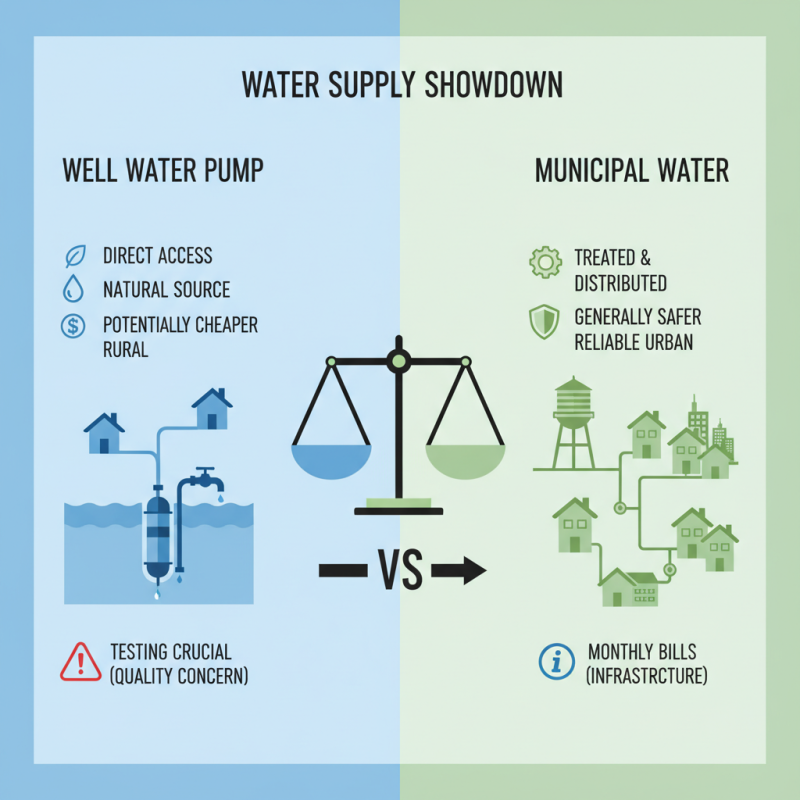
When comparing well water pumps to municipal water supply systems, several factors come into play. Well water pumps provide direct access to a natural water source. They can supply fresh water directly from the ground. This can be more cost-effective in rural areas. However, groundwater quality can be a concern. Testing is essential to ensure safety.
On the other hand, municipal water supply systems are often treated and regulated. They provide consistent pressure and quality control. Yet, they may come with higher monthly bills. The reliance on city infrastructure means users are vulnerable to supply interruptions.
It's interesting to note that some homeowners face challenges with both systems. Well water can sometimes be hard to manage. Issues like pump failure or low yield can arise. Municipal systems, while convenient, may have issues with contaminants or outages. Balancing these options requires careful thought and consideration of one’s specific needs.
Cost Efficiency: Long-term Savings of Well Water Pump Systems
A well water pump can be a smart choice for home water supply. One of the biggest factors to consider is cost efficiency. Well water systems often require a lower upfront investment compared to city water connections. This leads to significant savings over time. With a well, you can avoid monthly water bills. The cost of maintenance is usually lower too.
Tips to keep in mind: Regularly check your pump for leaks. Minor repairs can prevent costly damage. Also, consider water testing. Testing ensures your water is safe to drink. It prevents health risks from contaminated water.
However, there's a drawback. Not all homes have easy access to a well. If your property lacks space, drilling a well can be complicated. It might also require permits, which can take time. These hurdles can challenge the decision. Assess your situation carefully. Cost savings are appealing, but practicality is crucial.
Maintenance and Longevity: Ensuring Optimal Performance of Your Pump
Maintaining a well water pump is crucial for ensuring its longevity and optimal performance. Regular inspections are necessary. Check for any leaks or unusual noises. Sometimes, a simple tightening of connections can prevent a major issue. Monitoring the pressure gauge can also reveal problems. A steady drop might indicate wear or blockage.
Fluid levels should be checked monthly. Insufficient water can cause the pump to run dry. This situation can lead to damage. Furthermore, cleaning the filter every few months ensures smooth operation. A dirty filter restricts flow and puts stress on the system.
Remember to assess the electrical components as well. Wiring issues can lead to failures, risking your water supply. When was the last time you inspected these components? Ignoring them may lead to costly repairs or even pump replacement. It's essential to reflect on your maintenance routine and identify areas for improvement.
Why Choose a Well Water Pump for Your Home Water Supply Needs? - Maintenance and Longevity: Ensuring Optimal Performance of Your Pump
| Feature | Description | Maintenance Tips | Expected Lifespan |
|---|---|---|---|
| Pump Type | Submersible & Jet Pumps | Regular inspections, clean filters | 10-15 years |
| Power Source | Electric, Solar, or Wind | Check wiring, battery conditions | 15-20 years (Solar) |
| Water Quality | Clean, Non-corrosive | Regular water testing, install filters | N/A |
| Pump Size | Based on household needs | Ensure proper sizing, replace if necessary | N/A |
| Installation | Professional recommended | Follow manufacturer instructions | N/A |
Related Posts
-
2025 Top 10 Deep Well Water Pumps: Ultimate Guide for Efficient Water Supply
-
Top Water Pumps to Consider in 2025 for Your Home and Garden Needs
-
Exploring the Efficiency of Submersible Water Pumps: A Comprehensive Guide for Homeowners
-

Maximizing Efficiency: How Submersible Pumps Revolutionize Water Management in Agriculture
-
2025 Top 5 Well Pumps for Efficient Water Supply Solutions
-
Top 10 Tips for Choosing the Best Small Submersible Pump for Your Needs