

loading

Our Blog

Check out our innovative pump solutions and industry insights to see what's new in the pumping industry. Stay up to date with the latest trends and news in the world of pumping technology by following our pumping technology blog.

China Top 10 Stainless Steel Stamping Manufacturers?

Choosing a reliable Stainless Steel Stamping manufacturer requires more than comparing factory photos or production claims. This guide examines ten leading Chinese suppliers through practical, measurable criteria. These include material knowledge, tooling capability, dimensional control, surface finish, production capacity, and quality management.

The review considers manufacturers serving industries such as automotive, medical equipment, electronics, construction, and industrial machinery. Attention is given to stainless steel grades, including 304 and 316, because each grade behaves differently during forming. Sheet thickness also matters. A supplier producing small electrical contacts may not suit a deep-drawn enclosure. Details matter.

We also look for evidence of engineering experience, inspection procedures, traceability, and communication quality. Useful signs include coordinate measuring machines, progressive stamping presses, documented first-article inspections, and clear tolerance discussions. Certifications can support credibility, but they should not replace direct technical verification. No list is perfect. Supplier data can change, and published capabilities may not reflect current production conditions.

For buyers, the goal is not simply to find the largest factory. It is to identify a partner that understands tooling wear, springback, burr control, corrosion resistance, and consistent batch production. Requesting samples, drawings, inspection reports, and realistic quotations can reveal important differences. A careful supplier should explain limitations instead of promising everything. That matters.

This overview is designed to support informed comparison. It combines industry-focused research with practical purchasing considerations, while recognizing that final suitability depends on your drawings, volumes, tolerances, and delivery requirements.
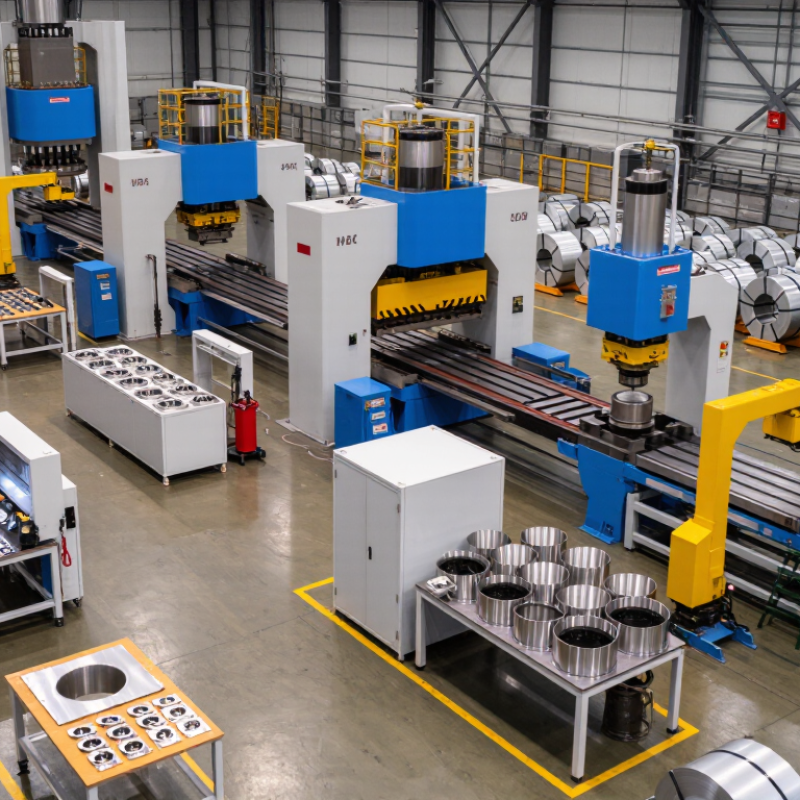
China Top 10 Stainless Steel Stamping Manufacturers?

What Is Stainless Steel Stamping?

Stainless steel stamping is a cold-forming process that shapes flat metal sheet with a press and custom-built dies. The machine applies controlled force to cut, bend, draw, or emboss the material. Common parts include brackets, housings, clips, covers, and precision washers. Stainless steel is strong, corrosion resistant, and suitable for demanding environments. However, it is not effortless to form. Its strength can increase during deformation, which may cause cracking or excessive tool wear.

In practical production, engineers check the grade, thickness, grain direction, and required surface finish before designing the die. Grades such as 304 and 316 behave differently during forming. Die clearance must be carefully matched to the sheet. Poor clearance can leave sharp burrs or distorted edges. Progressive dies support high-volume work, while single-operation dies may suit prototypes or smaller batches. Deep drawing requires controlled lubrication and carefully planned forming stages. Otherwise, wrinkles or splits can appear around the walls.

Reliable manufacturers usually verify dimensions with gauges, coordinate measuring equipment, and sample inspections. They also review springback after bending, because the finished angle may shift slightly. A polished drawing does not guarantee a stable production process. Design changes, material variation, and maintenance can still affect results. This is where technical communication matters. Clear tolerances, inspection records, and realistic production trials help reduce avoidable problems when comparing stainless steel stamping manufacturers in China.

Stainless steel stamping is a cold-forming process that uses dies and presses to cut, bend, draw, or shape stainless steel sheet. The chart compares representative minimum tensile-strength values for commonly stamped stainless steel grades and tempers. Values are based on ASTM A240 and ASTM A666 requirements; actual performance depends on thickness, temper, grain direction, and processing conditions.

How to Evaluate Chinese Stainless Steel Stamping Manufacturers

China Top 10 Stainless Steel Stamping Manufacturers?

Choosing a stainless steel stamping manufacturer requires more than comparing prices. Review its experience with your material grade, part geometry, thickness, and required tolerance. Ask for sample parts, inspection records, and tool maintenance details. A reliable factory should explain its stamping process clearly, from coil preparation to deburring and final inspection. Check whether operators use calibrated gauges and whether inspection results are traceable to each production batch.

Tips: Request a small trial order. Measure hole positions, edge condition, flatness, and surface marks. Ask how rejected parts are isolated. Also confirm production capacity, lead times, packaging methods, and change-control procedures. Clear answers usually reveal stronger process control.

Communication deserves careful attention. Technical drawings should include tolerances, finish requirements, material certificates, and packaging expectations. A capable supplier will question unclear dimensions instead of guessing. It should also discuss progressive dies, secondary operations, and realistic production limits. Very low quotes can hide weak tooling or excessive scrap. However, expensive equipment does not guarantee consistent quality. That is an important limitation. Factory visits, video audits, and independent inspections can improve confidence, but none replaces actual batch data. Evaluate corrective-action reports, response speed, and the manufacturer’s willingness to acknowledge mistakes. Perfect suppliers do not exist; dependable suppliers make problems visible and fix them systematically.

China’s Top 10 Stainless Steel Stamping Manufacturers

China’s Top 10 Stainless Steel Stamping Manufacturers should be assessed by capability, not online visibility. A credible ranking examines press tonnage, die accuracy, material traceability, surface control, and delivery records. It also checks experience with 304, 316L, and precipitation-hardening stainless steels. These grades behave differently during forming. Small errors can create springback, cracks, or uneven edges.

The International Stainless Steel Forum reported global stainless crude steel production of about 62.2 million tonnes in 2024.

China produced roughly two-thirds of the world’s total, showing the scale of its manufacturing base.

However, large output does not guarantee precise stamping. Strong candidates should provide inspection plans, dimensional reports, corrosion-related testing, and documented process controls. ISO 9001 certification helps, while IATF 16949 may matter for automotive components. A ranking remains imperfect without verified customer audits and recent production evidence.

Tips:

Ask each manufacturer for a sample inspection report and tooling-maintenance record. Confirm the actual material certificate, thickness tolerance, burr limit, and annual capacity. Check whether engineers use progressive, deep-drawing, or compound dies. Request a small pilot run before mass production. This step often reveals weaknesses that brochures hide. Evaluate communication, too. A technically capable factory may still lose control when specifications change.

Key Services, Materials, and Production Capabilities

China’s top stainless steel stamping manufacturers are often judged by more than production volume. Their key services include blanking, piercing, bending, deep drawing, and progressive die stamping.

Experienced teams can support prototypes, small batches, and stable mass production.

Tooling quality matters.

Common materials include 301, 304, 316L, and 430 stainless steel.

Each grade offers different strength, corrosion resistance, and forming behavior. A capable supplier checks hardness, thickness, grain direction, and surface finish before production.

Some projects require brushed, polished, passivated, or electropolished surfaces.

Material certificates and traceable inspection records improve reliability.

Production capability should cover CNC machining, laser cutting, automated presses, welding, and assembly.

Press capacity, die accuracy, and line automation affect consistency. For example, a thin 304 bracket may need careful control around sharp corners. Small burrs can still cause assembly problems.

Manufacturers should inspect dimensions with calipers, gauges, CMM equipment, and visual checks.

Quality is not perfect by default. Even experienced factories may face springback, scratches, or tool wear.

Clear drawings, trial samples, and realistic tolerances reduce these risks. Ask about monthly capacity, lead times, corrective actions, and packaging methods before selecting a supplier.

How to Select the Right Manufacturer for Your Project

China Top 10 Stainless Steel Stamping Manufacturers: How to Select the Right Manufacturer for Your Project

Choosing among China’s top stainless steel stamping manufacturers requires more than comparing prices. Start with your part drawings, material grade, thickness, annual volume, and required tolerances. A capable manufacturer should explain press tonnage, die structure, surface protection, and secondary operations clearly. Ask for samples made from the same stainless steel grade, not similar stock.

Inspect their quality system and production evidence. Useful records include incoming material reports, first-article inspection data, dimensional reports, and corrective-action records. Confirm whether their equipment can maintain your critical tolerances during extended production. A factory may produce an excellent sample, yet struggle after several thousand cycles. That gap matters.

Tooling ownership and maintenance terms deserve careful review. Clarify lead times, die-repair costs, packaging methods, and shipping responsibilities before signing. A low quotation can hide expensive tooling changes later. Visit the facility if possible, or request a live video audit showing presses, inspection equipment, and storage areas. Watch how workers handle finished parts; scratches often begin there.

Experience should support evidence, not replace it. Ask for projects with comparable geometry, volume, and surface requirements. Communication is also a technical issue. Misunderstood bend radii or burr limits can create rework. No supplier is perfect. Even a strong evaluation can miss something, especially when drawings lack functional details. Leave room for pilot production, measured feedback, and controlled improvements before full-scale manufacturing.

China Top 10 Stainless Steel Stamping Manufacturers? - How to Select the Right Manufacturer for Your Project
Rank Selection Dimension Verifiable Requirement Practical Benchmark Evidence to Request Project Risk Controlled
1 Material Traceability The supplier should identify stainless steel grade, heat number, thickness, finish, and supplier source for each production lot. Material certificates should conform to the specified grade, such as ASTM A240/A240M for stainless steel plate and sheet where applicable. Mill test certificate, incoming inspection record, lot-control procedure, and sample traceability report. Incorrect alloy, mixed lots, corrosion, and inconsistent mechanical properties.
2 Press and Tooling Capability Available presses, dies, feeders, and forming methods must match the material thickness, part geometry, tolerance, and production volume. The equipment list should show suitable tonnage, bed size, stroke, speed, and progressive or compound-die capability for the target part. Equipment list, press specifications, tooling photographs, die-maintenance records, and sample parts. Cracking, springback, premature die wear, and unstable production output.
3 Dimensional Control Critical dimensions and geometric tolerances must be measured using calibrated instruments and documented inspection plans. Use a control plan with defined sampling frequency, measurement method, nominal value, tolerance, and reaction plan for out-of-specification results. First Article Inspection report, control plan, gauge list, calibration certificates, and capability study. Fit problems, assembly interference, leakage, and customer rejection.
4 Quality Management System A documented quality system should control purchasing, production, inspection, nonconformities, corrective actions, and document retention. ISO 9001 certification is a useful baseline; IATF 16949 may be required for automotive supply chains. Valid certificate, certification scope, latest audit result, corrective-action records, and quality manual index. Uncontrolled processes, recurring defects, and weak corrective action.
5 Surface Finish and Corrosion Protection The supplier must control scratching, burrs, discoloration, contamination, passivation, cleaning, and any required secondary finish. Surface requirements should be defined by measurable finish specifications, approved visual standards, and applicable passivation or cleaning procedures. Surface standard, approved samples, passivation records, cleanliness test results, and packaging specification. Cosmetic defects, corrosion, contamination, and premature field failure.
6 Process Capability and SPC Critical characteristics should be monitored through statistical process control rather than final inspection alone. For stable, normally distributed critical dimensions, many projects use Cpk ≥ 1.33 as an internal target; the customer specification takes priority. Control charts, capability studies, process-risk analysis, and documented reaction plans. Process drift, excessive variation, and hidden production instability.
7 Prototype and Tooling Development The manufacturer should be able to review drawings, identify forming risks, design or manage dies, and validate samples before mass production. A clear design-review process should cover material flow, bend radius, burr direction, springback, datum strategy, and tool-maintenance planning. Design-for-manufacturing review, tooling schedule, trial reports, sample approval records, and change-control procedure. Late tooling changes, prototype delays, and repeated sampling cycles.
8 Compliance and Environmental Controls Products and processes should meet the destination market’s substance, safety, environmental, and waste-management requirements. Where applicable, verify RoHS Directive 2011/65/EU, REACH Regulation (EC) No. 1907/2006, and ISO 14001 environmental-management certification. Material declaration, restricted-substance statement, environmental certificate, chemical inventory, and waste records. Import restrictions, regulatory non-compliance, and customer approval delays.
9 Capacity, Lead Time, and Delivery Reliability Production planning should demonstrate sufficient machine availability, labor coverage, raw-material supply, and backup capacity. Evaluate quoted tooling time, sampling time, mass-production lead time, minimum order quantity, and historical on-time-delivery performance. Capacity-loading report, production schedule, on-time-delivery data, inventory policy, and business-continuity plan. Missed launch dates, supply interruptions, and expedited freight costs.
10 Commercial Transparency and After-Sales Support The quotation should clearly separate material, tooling, processing, finishing, packaging, freight, inspection, and engineering costs. The supplier should provide a defined response time for quality issues, engineering changes, corrective actions, and replacement or rework decisions. Itemized quotation, payment terms, warranty terms, escalation contacts, corrective-action template, and change-order policy. Unexpected costs, communication gaps, unresolved defects, and ownership disputes.
Evaluation note: Apply these criteria to comparable supplier quotations, audits, samples, and documented production records. Applicable standards and acceptance levels should always be confirmed against the project drawing, contract, and destination-market requirements.