

loading

Our Blog

Check out our innovative pump solutions and industry insights to see what's new in the pumping industry. Stay up to date with the latest trends and news in the world of pumping technology by following our pumping technology blog.

China Top 10 Canned Motor Pump Manufacturers

China’s industrial scale makes reliable fluid handling more than a procurement detail. It affects uptime, maintenance planning, and process safety. The National Bureau of Statistics reported that value added in China’s manufacturing sector grew 6.1% in 2024. Its annual communiqué also recorded 5.8% growth across industrial enterprises above designated size. These figures provide useful context, though they do not measure pump demand directly.

Electricity use tells another part of the story. The International Energy Agency’s Electricity 2024 report said China’s electricity demand rose by about 6.7% in 2023. Chemical plants, power facilities, and other continuous-process operations need equipment suited to demanding service conditions. A Canned Motor Pump can help contain fluids within a sealed assembly, reducing the need for a conventional shaft seal. That matters. But pump selection still depends on fluid properties, temperature, pressure, and operating history.

This overview of China’s top 10 Canned Motor Pump manufacturers offers a starting point for comparing suppliers. It considers product range, engineering capability, application experience, and available technical documentation. Buyers should verify certifications, material compatibility, service coverage, and performance data directly with each manufacturer. A ranking cannot replace a site-specific review. Not every pump suits every process, and published company information may not reveal the full picture. That limitation is worth keeping in mind.
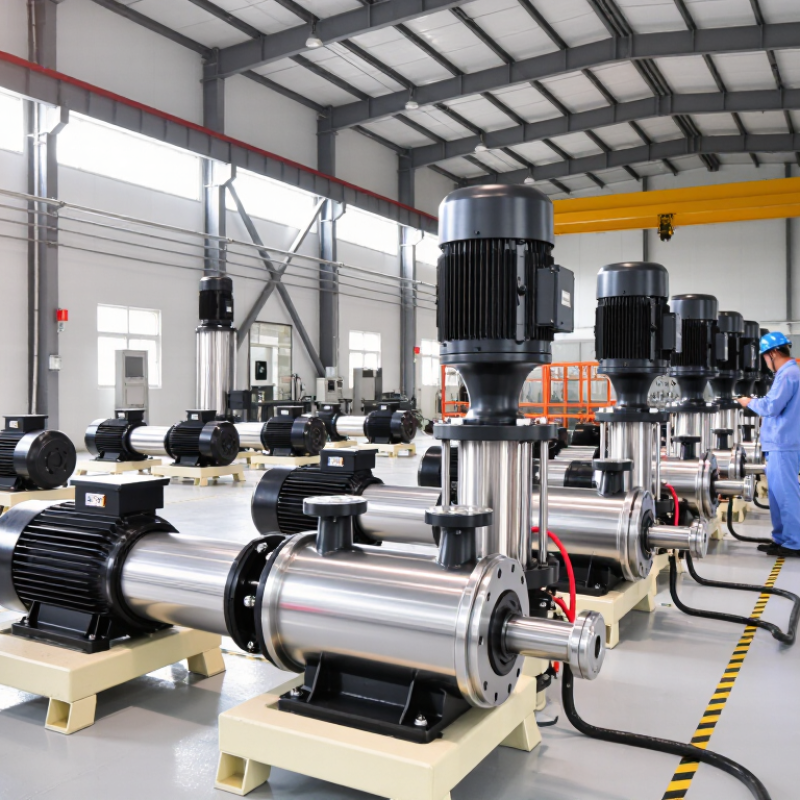
China Top 10 Canned Motor Pump Manufacturers

What Canned Motor Pumps Are and How They Work

A canned motor pump is a close-coupled pump and electric motor in one sealed assembly. The rotor sits inside the pumped-fluid space, while the stator remains outside a thin containment shell. That shell separates the motor windings from the process liquid without a conventional rotating shaft seal.

No exposed rotating shaft. This arrangement can reduce leakage paths and the need for seal maintenance, but it does not make every installation maintenance-free.

During operation, the stator’s magnetic field turns the rotor and impeller. The pumped liquid often circulates through internal passages to cool the motor and lubricate its bearings. It carries heat away and supports smooth rotation.

Fluid cleanliness matters. Particles, vapor, or dry running can damage bearings or cause overheating, depending on the pump design. Operators should check flow, temperature, and inlet conditions against the manufacturer’s specifications.

Material compatibility also deserves careful review; a fluid that seems harmless may still affect internal components over time. These pumps are often chosen for contained processes, yet correct sizing and operating conditions remain essential.

A quiet-running unit can still be under stress.

China’s Canned Motor Pump Industry: Products and Applications

China’s canned motor pump industry supplies sealed pumping equipment for processes where leakage control matters. The motor and pump share a compact casing, eliminating the conventional shaft seal. This design can reduce leakage paths and routine seal maintenance. It is not a universal replacement for standard pumps.

Common products handle clean liquids in chemical processing, refrigeration, heating systems, and industrial circulation. Depending on materials and configuration, units may transfer heat-transfer fluids or selected process chemicals. Buyers should check liquid temperature, viscosity, corrosion risk, and required flow and pressure. Small details matter. A pump suitable for one fluid may perform poorly with another. Product data sheets and application review help narrow the choice, though real operating conditions can still reveal surprises.

Tips: Confirm fluid compatibility and suction conditions before selection. Ask for performance curves at the actual duty point. Check maintenance access, too; compact equipment can be awkward to service.

How to Evaluate Canned Motor Pump Manufacturers

Evaluating canned motor pump manufacturers starts with the duty conditions, not a glossy catalogue. Share the liquid’s temperature, viscosity, solids content, operating pressure, and required flow. Then check whether the proposed materials suit that service. A pump handling hot, corrosive liquid needs different construction from one moving clean water. Small details matter.

Ask how each unit is tested. Request performance curves, pressure-test records, vibration limits, and documentation showing material traceability. For a canned motor design, examine the containment shell and the separation between the pumped liquid and stator. Ask what happens if the shell is damaged. Good answers should be specific, not merely reassuring. Look for evidence from applications with similar operating conditions, and confirm that replacement parts and technical support are realistically available.

Factory capability matters, but so does communication. Can engineers review your operating data and explain the assumptions behind their selection? Compare efficiency, service intervals, delivery times, and commissioning support—not just purchase price. A neat test report is useful. It is not the whole story. One weakness in this approach: supplier references may not match your exact fluid or site conditions, so verify critical claims with your own project requirements.

Profiles of Ten Leading Canned Motor Pump Manufacturers in China

China’s canned motor pump sector serves chemical processing, petrochemicals, power generation, and other demanding industries. These ten manufacturer profiles focus on practical differences: process-fluid compatibility, pressure and temperature limits, motor cooling, and factory testing. A well-designed unit has no dynamic shaft seal; its containment and cooling paths still need careful inspection. Small details matter.

The U.S. Department of Energy’s Improving Pumping System Performance sourcebook reports that pumping systems use nearly 20% of the world’s electrical energy, and can account for 25–50% of electricity use in some industrial plants. The International Energy Agency has also estimated that motor-driven systems consume about 46% of global electricity. These figures make efficiency data worth checking, not merely quoting. Ask manufacturers for test conditions, efficiency curves, material specifications, and evidence that tests match the intended duty point.

The profiles compare ten Chinese suppliers by engineering focus, production capability, quality controls, and service support, rather than promotional claims. Some emphasize compact installations; others build for corrosive fluids or higher operating pressures. Public performance data is uneven, which makes direct ranking difficult. That is a real limitation, and buyers should verify comparable test results before deciding.

China Top 10 Canned Motor Pump Manufacturers - Profiles of Ten Leading Canned Motor Pump Manufacturers in China

Note: Company names, brands, rankings, and company-specific performance data are omitted. The entries below are anonymized examples of common supplier and application profiles in the canned motor pump market; they should not be interpreted as verified profiles of ten named manufacturers.

No. Anonymized Supplier Profile Typical Application Common Pump Configuration Key Selection Considerations
1 Process-industry supplier profile Chemical process circulation and transfer Horizontal centrifugal canned motor pump Fluid compatibility, temperature, pressure, and containment requirements
2 Petrochemical-service supplier profile Hydrocarbon and process-fluid handling Sealless centrifugal design, selected for the process duty Hazardous-area requirements, vapor pressure, and applicable project specifications
3 Refrigeration-system supplier profile Refrigerant circulation in industrial cooling systems Pump configuration designed for the specified refrigerant and operating conditions Refrigerant compatibility, operating temperature, and system pressure
4 Industrial heat-transfer supplier profile Heat-transfer fluid circulation Canned motor centrifugal pump selected for the fluid and temperature range Thermal limits, viscosity, materials, and required duty point
5 Water-system supplier profile Industrial water circulation and transfer Horizontal or vertical arrangement, depending on installation Flow, head, water quality, installation space, and maintenance access
6 Pharmaceutical and fine-chemical supplier profile Transfer of process liquids where leakage control is important Sealless pump with wetted materials matched to the process Cleanability, material compatibility, documentation, and process requirements
7 Metallurgical-industry supplier profile Cooling and circulation duties in industrial plants Robust centrifugal configuration suited to the specified service Temperature, solids content, corrosion conditions, and continuous-duty needs
8 Power and energy-sector supplier profile Auxiliary process-fluid circulation Canned motor pump configured to the project duty and site conditions Reliability requirements, operating envelope, testing, and service support
9 Equipment and system-integration supplier profile Packaged skids and engineered process systems Pump supplied as part of an integrated system or package Interface dimensions, controls, operating data, and package responsibilities
10 Custom-engineered pump supplier profile Special-duty applications requiring project-specific selection Configuration determined by the required flow, head, fluid, and site conditions Verified performance curve, material specification, inspection, and delivery scope

For procurement, confirm each supplier’s current product range, technical documentation, applicable standards, certifications, and project-specific performance data directly before making a selection.

Comparing Manufacturers by Technology, Certifications, and Services

A comparison of China’s top 10 canned motor pump manufacturers should look beyond headline flow rates. Review each manufacturer’s pump design, motor cooling method, bearing arrangement, and materials. These details affect heat management, wear, and suitability for continuous operation. Ask for performance curves at your actual operating point, not only maximum ratings. A clear test report is more useful than a polished brochure.

Certifications can help buyers assess quality systems and product conformity, but check their scope, validity, and issuing body. A certificate may cover a factory or management system rather than a specific pump model. Numbers need context. Compare service support too: commissioning guidance, spare-parts availability, technical response times, and warranty terms. Some suppliers publish strong specifications but provide limited documentation; that gap deserves a closer look. No comparison is perfect without matching the pump to the process.

Tips: Share fluid properties, temperature, pressure, and duty cycle before requesting quotations. Ask how the supplier verifies performance and handles seal-free pump troubleshooting. Compare like with like, and record unanswered questions rather than guessing.