

Our Blog
Check out our innovative pump solutions and industry insights to see what's new in the pumping industry. Stay up to date with the latest trends and news in the world of pumping technology by following our pumping technology blog.
- Home
- Blog
China Best Sinker EDM Machining Manufacturer?
Choosing China’s best Sinker Edm Machining manufacturer takes more than comparing machine prices. Buyers need evidence of stable tolerances, repeatable finishes, and dependable delivery. A tiny electrode can shape a deep rib or sharp internal corner, but poor flushing may leave recast material or uneven surfaces. Details matter.
Grand View Research’s electrical discharge machining market analysis provides useful context on market segments and applications. It does not rank individual Chinese suppliers, and market estimates depend on how researchers define the sector. Treat market figures as context, not proof of a factory’s capability. Ask for inspection records, sample parts, electrode strategies, and documented process controls. Useful evidence beats polished claims.
Measurement matters. Engineer and physicist Lord Kelvin wrote, “When you can measure what you are speaking about, and express it in numbers, you know something about it.” The principle applies directly to Sinker Edm Machining, though Kelvin was not an EDM specialist. Request measurable details: cavity dimensions, surface-finish results, material certificates, and inspection methods. Then compare like with like. A supplier may show a flawless sample, yet struggle with repeat production. That gap deserves scrutiny. This guide examines how to assess Chinese manufacturers through technical evidence, communication, and realistic production requirements—not unsupported “best” claims.
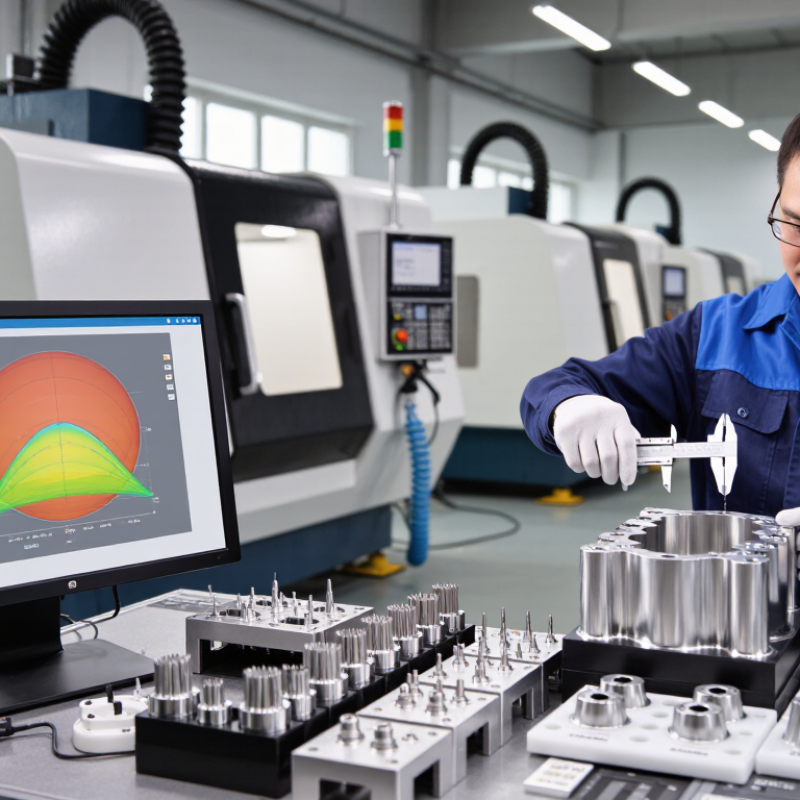
What Is Sinker EDM Machining?
Sinker EDM machining shapes conductive materials through controlled electrical discharges. A shaped electrode, often made from graphite or copper, moves toward the workpiece inside dielectric fluid. Tiny sparks remove material without direct cutting contact. No cutting edge. The method is useful for deep cavities, sharp internal corners, and hardened tool steels that can challenge conventional milling. The electrode’s shape is transferred into the part, so its design and wear matter. In practice, a fine cavity may need several electrodes or finishing passes.
MarketsandMarkets’ EDM market report estimated the global market at about US$5.6 billion in 2023, reflecting demand across precision manufacturing. That figure covers EDM as a whole, not sinker machines alone. Sinker EDM is not automatically faster or cheaper: machining time depends on material, cavity depth, surface-finish targets, and flushing conditions. Operators monitor electrode wear and debris in the fluid; poor flushing can leave rough spots or slow the cut. The process also leaves a recast layer, whose thickness depends on settings and may need inspection or removal. The trade-off is easy to underestimate. A smooth-looking cavity is not proof of a sound surface.
How Does the Sinker EDM Process Work?
China Best Sinker EDM Machining Manufacturer?
How Does the Sinker EDM Process Work?
Sinker EDM shapes conductive metal with controlled electrical sparks. A shaped copper or graphite electrode descends into the workpiece, separated by a small gap filled with dielectric fluid. Pulsed voltage creates sparks that melt and vaporize tiny amounts of metal. The electrode’s shape is gradually reproduced in the cavity. No cutting tool presses against the part. This makes the process useful for deep ribs, sharp internal corners, and hardened tool steel.
The machine controls electrode movement and spark energy while dielectric fluid cools the work zone and carries away debris. Flushing matters: trapped particles can cause unstable sparking, rough surfaces, or unwanted arcing. Electrode wear also changes the final cavity, so operators may compensate or use a finishing electrode. Grand View Research’s EDM market report estimated a 2023 market value of about USD 5.2 billion and projected 7.3% annual growth through 2030. That forecast signals broader demand, but it does not guarantee a particular shop’s accuracy or delivery. Process results still depend on setup and inspection.
Tips: Ask how the shop manages electrode wear, flushing, and cavity inspection. Share the steel grade and target surface finish. A small detail is easy to miss: request a first-article check before approving the full run.
| China Best Sinker EDM Machining Manufacturer? - How Does the Sinker EDM Process Work? | ||||
|---|---|---|---|---|
| Process Stage | What Happens | Key Inputs | Typical Checks | Purpose |
| 1. Part and electrode preparation | The workpiece and shaped electrode are cleaned, inspected, and prepared for setup. Electrode geometry is designed to account for the required cavity and expected electrode wear. | Conductive workpiece; copper or graphite electrode; drawing or 3D model | Workpiece material and dimensions; electrode condition; machining allowance | Prepare accurate, conductive components for controlled spark erosion. |
| 2. Workpiece setup | The workpiece is securely clamped in the tank or fixture. The machine establishes the work coordinate system and aligns the electrode with the intended cavity location. | Fixture; machine table; reference surfaces or probing system | Clamping stability; alignment; coordinate and zero-point verification | Maintain the correct position throughout machining. |
| 3. Electrode installation | The electrode is mounted in the holder and aligned with the machine spindle or ram. Electrode dimensions and orientation are checked against the machining program. | Electrode holder; electrode; machine setup data | Electrode runout, orientation, polarity, and tool offset | Ensure the electrode can reproduce the intended cavity shape. |
| 4. Dielectric fluid setup | The machining area is filled or flushed with dielectric fluid. Sinker EDM commonly uses hydrocarbon-based EDM oil; the fluid helps insulate the gap, cool the process, and carry away eroded particles. | Dielectric fluid; filtration and circulation system | Fluid level; cleanliness; filtration; flushing path | Support stable discharges and remove debris from the machining gap. |
| 5. Spark generation and material removal | The machine applies controlled voltage pulses across a small gap between the electrode and workpiece. Repeated electrical discharges generate localized heat, melting and vaporizing tiny portions of the workpiece without direct tool-to-part cutting contact. | Pulse parameters; electrode and workpiece; controlled spark gap | Discharge stability; servo movement; abnormal arcing or short circuits | Form the cavity by successive, controlled electrical discharges. |
| 6. Roughing and finishing | Roughing generally uses more aggressive settings to remove material efficiently. One or more finishing passes use gentler settings to improve surface finish and dimensional accuracy. | Roughing and finishing settings; electrode strategy; programmed depth | Cavity depth and shape; surface condition; electrode wear | Balance material removal rate, surface quality, and dimensional requirements. |
| 7. Flushing and debris removal | Fluid circulation or flushing helps move eroded particles out of the gap. The flushing method is selected to suit the cavity geometry and machining conditions. | Dielectric circulation; flushing ports or machine flushing functions | Debris accumulation; fluid flow; process stability | Reduce the risk of unstable discharges and improve machining consistency. |
| 8. Inspection and cleanup | After machining, the workpiece is removed, cleaned, and inspected. Measurement methods are selected according to the part geometry and drawing requirements. | Cleaning materials; dimensional inspection equipment; part drawing | Cavity dimensions; surface finish; edge condition; drawing tolerances | Confirm that the finished cavity meets specified requirements. |
Note: Sinker EDM parameters and achievable accuracy depend on the machine, electrode material and geometry, workpiece material, dielectric system, flushing conditions, and required surface finish. Final settings should be validated for the specific job.
What Capabilities Do Chinese Sinker EDM Manufacturers Offer?
Chinese sinker EDM manufacturers often handle custom cavities, mold inserts, and internal shapes that milling tools cannot reach. They use shaped copper or graphite electrodes to erode conductive metals, including hardened tool steel. Many shops can manage electrode design, CNC machining, EDM trials, and dimensional inspection in one workflow. This can reduce handoffs, though capabilities vary between factories.
For demanding parts, ask about minimum corner radius, surface finish, dimensional reporting, and electrode-wear control. A capable supplier should explain its inspection method and provide sample measurement records, not just promise “high precision.” Some shops also offer wire EDM, milling, grinding, and assembly support. Still, a factory may excel at large mold cavities but have less experience with tiny, deep features. Check a relevant sample. Better yet, send a drawing and request a manufacturability review before production.
Tips: Provide material grade, target tolerances, cavity depth, and finish requirements. Ask how the shop removes debris from narrow pockets. Confirm the sample matches your actual geometry. Small detail, big difference.
How to Evaluate a Sinker EDM Manufacturer in China
China Best Sinker EDM Machining Manufacturer?
How to Evaluate a Sinker EDM Manufacturer in China
Choosing a sinker EDM manufacturer takes more than comparing hourly rates. Start with your part drawing, material, target tolerance, and surface-finish requirements. Ask how the shop controls electrode wear and flushing during deep or narrow cavities. These details affect accuracy. A polished website cannot show them.
Request a sample report from a comparable job. Check whether it lists cavity dimensions, electrode material, inspection equipment, and measured results. If possible, send a representative workpiece or request a trial cut. Look closely at corner radii, surface texture, and any recast layer. A clear report matters. So does a clear answer when a result falls outside tolerance.
Review the manufacturer’s process, not just its machines. Ask who programs the job, how operators verify setup, and how inspection records are retained. Confirm expected lead times, revision handling, packaging, and communication hours before placing an order. A video call from the workshop can help you see the actual equipment and inspection area. Still, one visit or sample cannot guarantee every future run. Start with a manageable order, compare the delivered part against agreed criteria, and note what needs improvement. That conversation often reveals more than a sales presentation.
Which Industries Use Sinker EDM Machining?
Sinker EDM machining is used where a tool must create deep, narrow cavities or sharp internal corners that conventional cutters struggle to reach. In automotive plants, it produces injection-mold and die-casting tooling for repeatable parts. Tool-and-die workshops also use it for ribs, slots, and complex cavity details. The electrode follows the cavity shape, while dielectric fluid flushes away eroded metal. It works without direct cutting force. That matters when machining hardened steel, though electrode wear still requires attention.
Aerospace manufacturers use sinker EDM for intricate features in heat-resistant components and precision tooling. Medical-device production also relies on finely machined molds and small metal components. Fortune Business Insights’ 2024 medical-device market report valued the global market at about US$536 billion in 2023, reflecting the scale of this manufacturing sector. This figure is not an EDM market estimate. Boeing’s 2024 Commercial Market Outlook projected 43,975 new aircraft deliveries through 2043, another indicator of long-term demand for aerospace production capacity. Reports describe market growth, not EDM use directly. In practice, the process suits jobs where geometry and material hardness outweigh speed; it may be excessive for simple, open shapes.
Which Industries Use Sinker EDM Machining?
Examples of sinker EDM applications across industries. Bar values count the application examples listed below; they do not represent market share or usage frequency.
- Tool & die: injection molds, die-casting dies, stamping dies, and extrusion dies.
- Aerospace: turbine-component features, fuel-system components, and precision tooling.
- Automotive: injection molds, stamping dies, and die-casting dies.
- Medical: surgical-instrument features and tooling for medical components.
- Electronics: connector molds and semiconductor lead-frame tooling.