

Our Blog
Check out our innovative pump solutions and industry insights to see what's new in the pumping industry. Stay up to date with the latest trends and news in the world of pumping technology by following our pumping technology blog.
- Home
- Blog
What Is the Best Gummy Making Machine in China?
Choosing the best Gummy Making Machine in China requires more than comparing prices or polished factory videos. A reliable decision begins with the gummy itself. Is it soft, firm, sugar-coated, vitamin-fortified, or shaped for children? Each product needs different heating, depositing, cooling, and demolding settings. A machine that performs well for pectin gummies may struggle with gelatin formulas. Small details matter. A sticky mold can slow an entire production line.
Richard W. Hartel, a respected confectionery scientist and author, has said, “Confectionery is a science, but it is also an art.” That observation fits gummy production closely. Temperature control, viscosity, cooking time, and cooling speed require technical knowledge. Yet texture and appearance still depend on practical judgment. Experienced manufacturers should demonstrate these differences using real samples, not only specifications. Ask for batch records, sanitation procedures, electrical standards, spare-parts support, and operator training. Visit the factory if possible. Look closely at welds, piping, control panels, and cleaning access.
The “best” Gummy Making Machine is not always the largest model. It should match your recipe, output target, floor space, labor capacity, and quality system. A compact line may be wiser for a new brand. Maybe. However, future expansion should not be ignored. Some buyers focus heavily on initial cost and later discover expensive upgrades. That is an uncomfortable lesson. This guide examines Chinese equipment suppliers through production performance, engineering experience, documentation, after-sales service, and proven customer use. Claims still require verification. A confident brochure is not evidence. Reliable results come from transparent testing, measurable standards, and careful questions.
What Is a Gummy Making Machine and How Does It Work?
What Is the Best Gummy Making Machine in China?
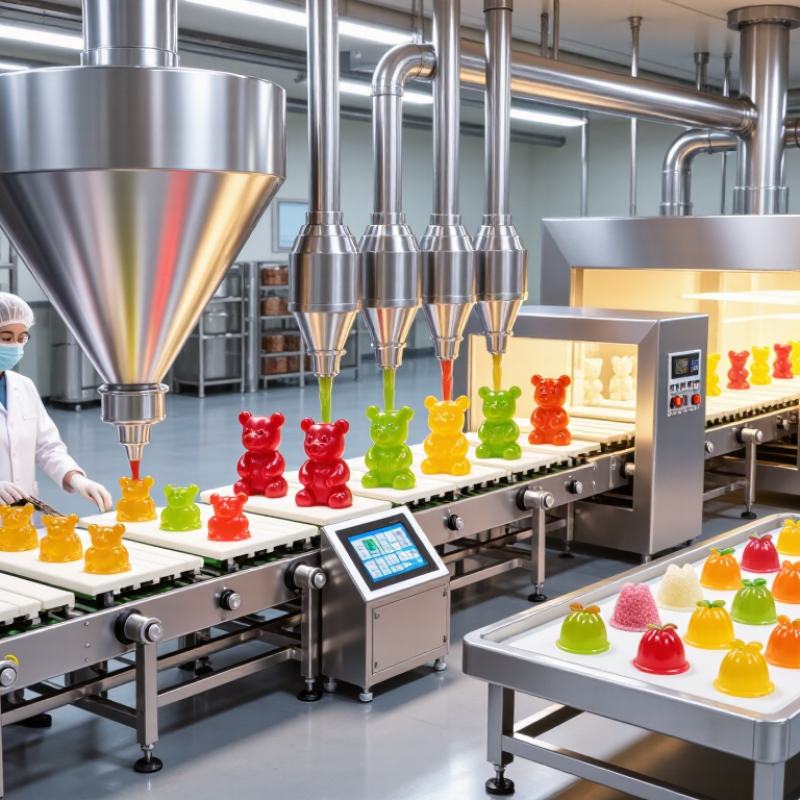
A gummy making machine is an integrated system for producing consistent, soft confectionery pieces. It usually combines cooking, mixing, depositing, cooling, and demolding functions. The process begins when sugar, syrup, water, gelatin, pectin, and flavoring enter a heated mixing tank. Controlled heat dissolves the ingredients and helps create the desired texture. Sensors monitor temperature and mixing speed during this stage. Small changes can affect the final chew.
After cooking, the syrup moves through a depositor. This unit places accurate amounts into starch molds or reusable silicone molds. Cooling tunnels then reduce the product temperature and stabilize its shape. A good system should provide even filling, simple cleaning, and adjustable production speed. These details matter on a busy factory floor.
The best gummy making machine in China depends on product type, output, and available space. A practical evaluation should examine heating accuracy, depositing tolerance, cooling performance, and maintenance access. Ask for test samples using your own recipe. A machine may perform well with one formula but struggle with another. Experienced operators also inspect seals, pumps, and control panels before purchase. I would not judge equipment by speed alone. Faster output can create uneven pieces, wasted syrup, or difficult cleaning. That limitation matters. Reliable technical support and clear operating instructions are equally important for stable daily production.
What Is the Best Gummy Making Machine in China?
A gummy making machine typically combines cooking, mixing, depositing, cooling, demolding, and packaging processes. The best configuration depends on production capacity, temperature control, dosing accuracy, cooling performance, and the recipe used.
How it works: Gelatin is hydrated and maintained at approximately 60°C. The sugar or glucose syrup is cooked to around 118°C to achieve the required solids content, then blended with gelatin, flavors, colors, and active ingredients. The gummy mixture is deposited at approximately 78°C into starch or silicone molds and cooled in a controlled tunnel near 14°C before demolding and packaging.
These temperatures are representative food-processing benchmarks; the exact settings depend on the gelatin type, pectin formulation, solids content, gummy shape, and cooling-system design.
Which Features Matter When Choosing a Gummy Machine in China?
Choosing the best gummy making machine in China starts with product consistency, not advertised output. In trial production, I watch each deposit land in the mold cavity. A few grams of variation can change texture, weight, and packaging performance. Look for servo-driven depositing, stable temperature control, and a mixer that prevents uneven color or ingredient distribution. Short trial runs reveal more than a polished brochure. They expose dripping nozzles, slow heating, and difficult changeovers. This is where buyer experience matters.
The machine should match your recipe and daily capacity. Ask whether it handles pectin, gelatin, sugar-free, or high-viscosity formulas without excessive shear. Confirm that heating zones, holding tanks, and cooling tunnels maintain repeatable temperatures. A touchscreen is useful, but clear alarms and manual controls matter when sensors fail. I prefer stainless-steel contact surfaces, accessible pipes, tool-free cleaning points, and documented sanitation procedures. Small dead corners become expensive maintenance problems.
For Chinese suppliers, request material certificates, electrical diagrams, factory acceptance testing, and sample data from your formula. Check whether the controls support your voltage, language, and production records. Spare parts availability and technician response times deserve equal attention. Remote support sounds convenient, yet a video call cannot repair every fault. Budget for installation, operator training, mold changes, and realistic commissioning time. I have seen buyers focus too heavily on speed and regret the decision after the first difficult cleaning cycle. Stable performance under actual conditions matters more.
What Types of Gummy Making Machines Are Available?
What Is the Best Gummy Making Machine in China?
What Types of Gummy Making Machines Are Available?
Gummy making machines in China generally fall into several practical categories. Depositing machines pump heated gummy syrup into silicone or metal molds. They suit bears, rings, bottles, and customized shapes. A starch mogul system presses syrup into starch trays. It handles large production volumes but requires more floor space and careful starch control. Rope extruders create long gummy ropes for cutting or twisting. They work well for simple shapes and layered products.
Small manufacturers often choose a compact depositing machine. It may include a cooking tank, depositor, cooling tunnel, and demolding unit. This setup can fit a modest workshop. Larger factories may prefer a continuous production line with automatic weighing, oiling, and packaging connections. Pectin-based gummies can need different heating and dosing settings than gelatin-based products. The machine must match the recipe, not just the target output.
Look closely at temperature accuracy, nozzle control, mold changes, and cleaning access. A five-degree error can affect texture. Narrow pipes can trap syrup. That matters. Food-contact parts should use suitable materials, and suppliers should provide clear technical records and testing support. Production data is more useful than impressive speed claims. No machine is perfect. I would test several batches before purchasing, because sample results can hide problems during longer operation.
What Is the Best Gummy Making Machine in China? - What Types of Gummy Making Machines Are Available?
| Machine Type | Basic Working Principle | Typical Production Scale | Common Product Forms | Key Advantages | Main Limitations | Best Suited For | Important Selection Factors |
|---|---|---|---|---|---|---|---|
| Manual or Semi-Automatic Gummy Depositor | Deposits a prepared gummy mixture into molds through a manually loaded or partly automated dispensing system. | Small batch Usually suitable for product development, testing, and low-volume production. | Simple shapes, seasonal designs, functional gummies, and small custom batches. | Lower initial investment, easier recipe testing, compact footprint, and relatively simple operation. | Lower output, greater operator involvement, and less consistent weight or depositing speed than fully automatic systems. | Start-ups, laboratories, bakeries, and small confectionery workshops. | Mold compatibility, dosing accuracy, heating control, cleaning access, and operator safety. |
| Automatic Starchless Gummy Depositing Machine | Heated gummy mass is deposited directly into reusable silicone, metal, or polymer molds without starch molding. | Medium to large scale Designed for continuous or semi-continuous production. | Standard gummies, vitamin gummies, pectin gummies, gelatin gummies, and multi-color products. | Cleaner production area, reduced starch handling, faster mold changeover, and good control of piece weight. | Requires accurate temperature management and compatible molds; sticky formulations may need careful process tuning. | Manufacturers seeking flexible, hygienic, and efficient gummy production. | Depositing precision, nozzle configuration, mold format, heating zones, and recipe viscosity range. |
| Starch Mogul Gummy Production Line | Deposits the cooked gummy mass into starch-filled trays, where the starch supports the shape during setting and drying. | Large scale Commonly used for high-volume confectionery production. | Gelatin gummies, fruit snacks, foam gummies, filled gummies, and complex three-dimensional shapes. | High throughput, broad mold-shape flexibility, and established suitability for mass production. | Larger footprint, starch handling and recovery requirements, more cleaning work, and longer process management. | Large confectionery factories with stable, high-volume demand. | Tray capacity, starch conditioning, drying rooms, line speed, mold design, and sanitation procedures. |
| Gummy Cooking and Depositing Line | Combines ingredient preparation, cooking, mixing, temperature control, and depositing into one coordinated production system. | Medium to large scale Suitable for repeatable commercial production. | Gelatin, pectin, starch-based, sugar-free, and functional gummies, depending on the configuration. | Improved process consistency, reduced manual transfer, better batch traceability, and efficient integration. | Higher investment, more complex commissioning, and greater dependence on correct recipe and process settings. | Factories that require repeatable output and integrated process control. | Cooking capacity, mixing uniformity, holding temperature, automation level, CIP design, and control system. |
| Multi-Color and Multi-Flavor Gummy Machine | Uses multiple ingredient streams or depositing heads to place different colors or flavors in one piece or in separate zones. | Medium to large scale Output depends on the number of depositing heads and mold layout. | Layered gummies, striped gummies, dual-color pieces, and center-filled or combination products. | Creates visual variety, supports product differentiation, and can combine several formulations in one product. | More demanding synchronization, recipe separation, cleaning, and changeover procedures. | Brands and contract manufacturers offering premium or highly customized gummy products. | Number of channels, filling accuracy, cross-contamination control, color separation, and changeover time. |
| Center-Filled Gummy Machine | Deposits an outer gummy layer and a liquid, gel, or soft center filling through coordinated nozzles. | Medium to large scale Typically used when specialized filling control is required. | Liquid-filled, gel-filled, syrup-filled, and flavored center-filled gummies. | Enables premium textures, differentiated flavors, and higher-value product designs. | More complex setup, stricter viscosity requirements, and increased cleaning and maintenance needs. | Producers targeting filled confectionery or innovative functional gummy products. | Filling viscosity, shell-to-center ratio, nozzle alignment, sealing quality, and temperature control. |
| Gummy Sugar-Coating or Oil-Coating System | Applies sugar, acidulated sugar, oil, or another finishing layer after the gummies have set. | Small to large scale Can be installed as a standalone unit or connected to a production line. | Sugar-coated gummies, sour gummies, glossy gummies, and non-sticky finished pieces. | Improves appearance, flavor impact, mouthfeel, and resistance to surface sticking. | Adds an extra process stage and requires controlled coating quantity, drying, and product handling. | Manufacturers needing sour, sweet, glossy, or anti-sticking finishes. | Coating uniformity, drum or conveyor design, drying conditions, product temperature, and dust control. |
| Gummy Drying, Cooling, and Conditioning Equipment | Controls temperature, humidity, airflow, and residence time to stabilize texture and reduce surface moisture. | All production scales Capacity should match the depositing and packaging rate. | Gelatin gummies, pectin gummies, sugar-free gummies, and coated products. | Helps achieve consistent texture, shelf stability, handling strength, and reduced product deformation. | Requires careful humidity management and adequate space; drying time varies by recipe and piece size. | Any producer requiring consistent texture and reliable downstream packaging. | Airflow uniformity, humidity range, temperature stability, tray capacity, energy use, and cleaning access. |
| Integrated Gummy Production and Packaging Line | Connects cooking, depositing, setting, finishing, inspection, weighing, and packaging with coordinated controls. | Large scale Best for continuous commercial production and high utilization. | Retail bags, jars, pouches, individually wrapped gummies, and mixed-format products. | High automation, reduced manual handling, improved production records, and consistent packaging performance. | Highest investment and commissioning requirements; changes in product format may require additional tooling. | Established manufacturers with high demand and multiple automated process stages. | Line balance, format changeover, inspection systems, packaging speed, data recording, and after-sales support. |
Note: Actual capacity, product weight, heating requirements, and automation level vary according to recipe, mold size, gummy formulation, production layout, and selected configuration. The most suitable machine is determined by target output, product type, available space, hygiene requirements, and budget.
How to Compare Chinese Gummy Machine Manufacturers
Choosing the best gummy making machine in China requires more than comparing prices. Manufacturer capability matters more.
Grand View Research reported that the global gummy market reached about US$19.1 billion in 2023, with strong growth expected through 2030. This demand increases pressure on production speed, dosing accuracy, and sanitation. When comparing Chinese manufacturers, request verified output data, not only catalogue figures. Check gummy weight variation, heating stability, depositor accuracy, mold-change time, and actual hourly capacity. A machine rated at 6,000 pieces per hour may perform lower with complex shapes or sticky formulas.
Factory experience is also important. Ask for videos of factory acceptance tests, customer references, electrical schematics, and maintenance records. Confirm whether technicians can support installation remotely or on-site. Review material certificates for product-contact parts, cleaning procedures, and documentation for applicable food-safety requirements. Certifications alone are not enough.
Tips: Compare total ownership cost. Include molds, spare pumps, training, shipping, installation, energy use, and downtime. Request a sample trial using your real formula. It may expose problems early. I would also inspect welds, cable protection, and control-panel language during a live factory visit. These small details are easy to ignore, yet they often decide long-term reliability. Grand View Research and IMARC Group publish different market estimates, reminding buyers to question sales claims and verify every technical number.
How to Select the Best Machine for Your Production Needs
What Is the Best Gummy Making Machine in China?
Selecting the best machine starts with your production target, not the supplier’s advertised speed. Grand View Research estimates the global gummy market will grow at a 12.6% CAGR from 2024 to 2030. Demand is rising, but every factory has different batch sizes, recipes, and labor limits. A machine producing 100 kilograms per hour may be unsuitable for small seasonal orders. Check deposit weight, mould cavities, cooling time, cooking capacity, and changeover speed. Ask for a factory acceptance test using your actual formula. A video is not enough.
Tips: Request production samples, utility requirements, cleaning procedures, and spare-parts lead times. Confirm whether product-contact surfaces use food-grade stainless steel. Ask how temperature and weight are recorded. These records support quality control and improve traceability. PMMI industry reports continue to highlight automation, digital monitoring, and flexible packaging as major equipment priorities. Therefore, choose controls that operators can understand, adjust, and maintain.
A practical comparison should include total ownership cost. Calculate energy use, staffing, maintenance, mould replacement, and rejected batches. Some machines look inexpensive until heating recovery becomes slow. I have found that suppliers sometimes quote ideal output, not stable output. That difference matters. Review installation support, operator training, electrical compatibility, and documentation for your destination market. Sanitary design also deserves attention, especially around pumps, hoses, and corners where syrup can remain. Do not overlook trial cleaning. A machine that runs well but cleans poorly may create daily production problems.