

Our Blog
Check out our innovative pump solutions and industry insights to see what's new in the pumping industry. Stay up to date with the latest trends and news in the world of pumping technology by following our pumping technology blog.
- Home
- Blog
Why Choose a Micro Drill Hard Coating Machine?
Why Choose a Micro-Drill Hard Coating Machine? The answer begins at the cutting edge. A micro-drill may be thinner than a sewing needle, yet it must resist heat, friction, and repeated contact with tough materials. A carefully selected hard coating can reduce wear and help maintain hole quality. But the coating is only part of the equation. The machine must deliver consistent deposition, controlled temperatures, and even coverage across tiny flutes and sharp cutting edges. Small variations matter. A coating that is too thick may blunt the drill; uneven coverage can create weak spots.
A Micro-Drill Hard Coating Machine is designed to manage these demands with precise process controls, stable vacuum conditions, and suitable fixture rotation. These details can support longer tool life and more predictable production, though results depend on drill geometry, coating choice, and operating conditions. As no source was provided for a verifiable industry quotation, the following is an illustrative statement, not a real-person attribution: fictional coating engineer Dr. Mira Chen says, “At micro scale, consistency is not a luxury; it is part of the cutting geometry.” That principle is useful, but it deserves scrutiny. Buyers should compare coating uniformity, process repeatability, maintenance needs, and evidence from comparable tools—not rely on impressive specifications alone. A careful evaluation starts with the workpiece, the drill diameter, and the expected production volume. The right machine is the one that fits the process.
What Is a Micro Drill Hard Coating Machine?
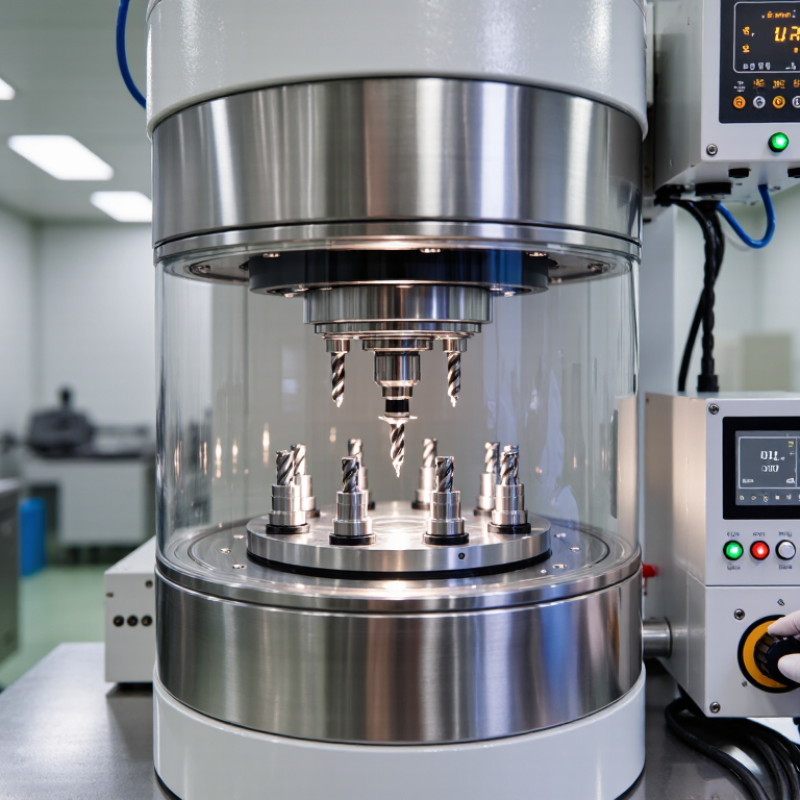
A micro drill hard coating machine is equipment used to deposit a thin, wear-resistant layer onto small cutting tools. Many systems use physical vapor deposition, or PVD, inside a vacuum chamber. The chamber, gas controls, power supply, and rotating fixtures work together to form a consistent film. Some machines also provide controlled heating and process monitoring.
The coating may help a drill resist abrasion, heat, and material buildup during cutting. Common coating families include titanium nitride and aluminum-rich nitride compounds, but the right choice depends on the workpiece, cutting speed, coolant, and tool geometry. A coating cannot fix poor sharpening or an unstable spindle. It is not magic. On a very small drill, even a thin layer can affect edge dimensions, so coating thickness and fixture placement deserve careful attention.
When evaluating a machine, ask how evenly it coats tools of different diameters and how repeatable its process settings are. Ask for trial data on tools similar to yours, not only a polished demonstration. Small details matter. Cleaning and handling before coating also affect results, though they are easy to overlook. Test coated drills under real operating conditions, then inspect wear and hole quality; one trial may reveal useful flaws rather than a perfect answer.
Why Choose a Micro Drill Hard Coating Machine?
Typical thickness ranges for selected hard coatings used on cutting tools
Hard coating machines apply thin films that can improve tool wear and heat resistance. The ranges shown are general examples, not specifications; actual coating thickness depends on the coating process, tool geometry, and application.
How Does the Coating Process Work?
A micro-drill hard-coating machine deposits a thin protective film onto a very small cutting edge. The process starts with careful cleaning: oil or dust can weaken adhesion. Operators load the drills into a vacuum chamber, where fixtures rotate them for more even exposure. The chamber is evacuated, then plasma removes residual contaminants from the tool surface.
During deposition, a target material is vaporized or sputtered into charged particles. These particles travel through the chamber and bond to the drill. Heat, gas flow, rotation, and deposition time all affect the final layer. Small tools need close control. A slight buildup can alter the cutting edge or finished hole size.
Thickness matters. ASM Handbook, Volume 5A, Surface Engineering, describes hard PVD films in the micrometre range; cutting-tool coatings commonly measure about 1–5 μm. That is thin, but not negligible on a micro drill. After coating, technicians can inspect film thickness, adhesion, drill diameter, and edge condition. A useful check is cutting a test hole in the intended material. Even then, results may differ across batches. Process data helps explain the difference, but it does not replace inspection.
Which Benefits Do Hard Coatings Provide?
Hard coatings help micro drills resist abrasion, heat, and built-up material at the cutting edge. That matters when a drill only a fraction of a millimetre wide enters stainless steel: small wear can quickly distort the hole or break the tool. A review of PVD cutting-tool coatings in Surface and Coatings Technology reports TiAlN hardness values commonly around 30–35 GPa. This is a material-property range, not a guaranteed increase in tool life.
A suitable coating can lower friction and slow flank wear, helping keep hole diameter and surface finish more consistent over repeated cycles. It may also let a shop run longer between tool changes. Less downtime. But coating choice depends on the workpiece, cutting speed, coolant, and drill geometry; a hard coating alone cannot fix poor runout or chip evacuation. A micro-drill coating machine matters because controlled, uniform deposition helps avoid excessive buildup at the point and cutting lips. Too much coating can blunt a tiny edge. That trade-off is easy to underestimate. For a practical evaluation, compare coated and uncoated drills under the same feed, speed, and material, then record tool life, hole quality, and breakage—not just the coating’s hardness.
Why Choose a Micro Drill Hard Coating Machine? - Which Benefits Do Hard Coatings Provide?
| Coating or Process Factor | Typical Characteristics | Potential Benefit for Micro Drilling | Selection Consideration |
|---|---|---|---|
| Titanium nitride (TiN) | Typical hardness is approximately 2,000–2,500 HV; commonly applied as a PVD coating. | Can reduce friction and abrasive wear compared with an uncoated tool in suitable applications. | A general-purpose option for compatible work materials and operating conditions; performance depends on the tool, substrate, and cutting parameters. |
| Titanium carbonitride (TiCN) | Typical hardness is approximately 2,500–3,000 HV. Its properties vary with coating composition and process. | Can provide increased wear resistance in applications where abrasion is a significant concern. | Confirm compatibility with the work material and cutting temperature; coating hardness alone does not determine tool life. |
| Titanium aluminum nitride (TiAlN / AlTiN) | Typical hardness is approximately 3,000–3,500 HV. Many formulations are selected for elevated-temperature cutting applications. | Can help resist wear and oxidation at higher cutting temperatures, depending on the coating formulation and application. | Often considered for demanding machining conditions. Use application testing to verify results on small-diameter drills. |
| Aluminum chromium nitride (AlCrN) | Typical hardness is approximately 3,000–3,500 HV, with composition-dependent oxidation and wear behavior. | May improve resistance to abrasive and heat-related wear in suitable cutting applications. | Check the coating supplier’s process data and confirm that the coating suits the workpiece and cutting environment. |
| PVD coating thickness | Many cutting-tool PVD coatings are approximately 1–5 μm thick; actual values depend on the coating and process. | A controlled, thin coating can add a wear-resistant surface while limiting changes to a micro drill’s geometry. | For a 0.5 mm drill, a 2 μm coating on each side adds about 4 μm to the coated diameter. Tight tolerances may require dimensional checks. |
| Coating uniformity and fixturing | Coverage depends on part positioning, rotation, chamber loading, and line-of-sight effects in the coating process. | Consistent coverage can help reduce tool-to-tool variation across a batch. | Look for appropriate small-tool fixtures and a repeatable loading procedure; inspect critical cutting edges and flute areas. |
| Surface preparation and cleaning | Cleaning and preparation are important process steps before coating; contamination can interfere with coating adhesion. | Good preparation supports reliable coating adhesion and consistent tool performance. | Confirm that the machine workflow includes suitable cleaning, handling, and preparation procedures for delicate drills. |
| Process temperature | PVD coating temperatures vary by process and coating, commonly falling within roughly 200–500°C. | A suitable process can apply a hard coating while maintaining the tool’s required properties. | Check the actual temperature profile against the drill substrate, prior heat treatment, and dimensional requirements. |
| Batch capacity and repeatability | Capacity depends on chamber size, fixture design, tool geometry, and the selected coating cycle. | A purpose-configured system can support repeatable coating of small tools across production batches. | Compare usable fixture capacity—not just chamber volume—and verify repeatability with representative drills. |
Note: Hardness and process ranges are typical reference values, not guaranteed specifications. Results vary with coating composition, deposition conditions, measurement method, tool geometry, work material, and cutting parameters. Validate coating selection and tool life through application-specific testing.
Where Are Coated Micro Drills Used?
Coated micro drills are used wherever small holes must be produced repeatedly with controlled wear and clean edges. In printed circuit board fabrication, they pass through copper layers and glass-reinforced laminate to create holes for electrical connections. A shop may drill thousands of closely spaced holes, so reduced friction and wear can help maintain consistent performance. Yet laminate varies, and heat or poor chip removal can still damage the hole wall. Tiny margins.
These drills also make precision holes in small metal components, including parts made from stainless steel or titanium. Some medical instruments use narrow channels or assembly features that require careful drilling, while watch and electronics components may need holes only fractions of a millimeter wide. The right coating depends on the workpiece, cutting speed, coolant, and drill geometry. For very small diameters, even a thin coating can affect cutting behavior. A coating cannot correct spindle runout or unstable fixturing. In practice, results may be less tidy than a tool specification suggests, so operators still check hole size, burrs, and tool wear during production.
What Factors Matter When Choosing a Machine?
Why Choose a Micro Drill Hard Coating Machine?
Choosing a machine starts with the drills you actually make. Check their diameter, flute length, substrate, and expected coating type. Tiny tools leave little room for uneven coverage, so ask how the machine controls coating thickness and repeatability. Small details matter. Confirm that fixtures hold drills securely without masking critical cutting edges. Ask for sample results using tools similar to yours, not just a broad specification sheet.
Consider process capacity, setup time, and operating costs together. A chamber that handles your usual batch size may be more useful than one with impressive maximum capacity. Review cycle times, maintenance needs, operator training, and the availability of process data. If the system uses vacuum technology, verify that its controls and monitoring suit the coating process you need. Check the evidence. A sales claim is not a substitute for measured results, and coating performance may vary with tool geometry and preparation.
Tips: Bring representative drills and a written list of coating requirements to a machine evaluation. Compare coating uniformity, edge condition, and repeatability across several samples. Ask what happens when a batch falls outside tolerance. One point is easy to overlook: the best machine on paper may not fit your workflow. Define your must-haves before comparing options.