

Our Blog
Check out our innovative pump solutions and industry insights to see what's new in the pumping industry. Stay up to date with the latest trends and news in the world of pumping technology by following our pumping technology blog.
- Home
- Blog
7 Best Inverter Voltage Stabilizers to Buy in 2026
Voltage fluctuations can turn ordinary home use into a frustrating guessing game. A refrigerator may hum unevenly, lights may flicker, or a sensitive device may shut down without warning. An Inverter Voltage Stabilizer can help regulate incoming voltage and provide steadier power for compatible equipment. But choosing one is not as simple as picking the highest capacity on a product page.
This guide to the 7 Best Inverter Voltage Stabilizers to Buy in 2026 compares practical features that matter in everyday settings. We look at rated capacity, voltage range, response behavior, overload protection, build quality, and installation needs. We also consider whether the stabilizer suits appliances such as refrigerators, air conditioners, televisions, or inverter systems. Check the appliance’s nameplate before deciding. A mismatch can cost more than the unit itself.
Small details count. A unit mounted near a kitchen appliance may need adequate ventilation and a reachable display. A stabilizer for an air conditioner may require different capacity than one for a television. There is no perfect choice for every home. Product specifications can also differ by region, and marketing claims do not always explain real-world performance clearly. That part deserves a second look. The recommendations aim to help you compare options, not replace professional advice for complex wiring or unusually unstable supply. Read the manufacturer’s requirements, confirm compatibility, and consider local service support before buying. A careful match is usually more useful than an impressive feature list.
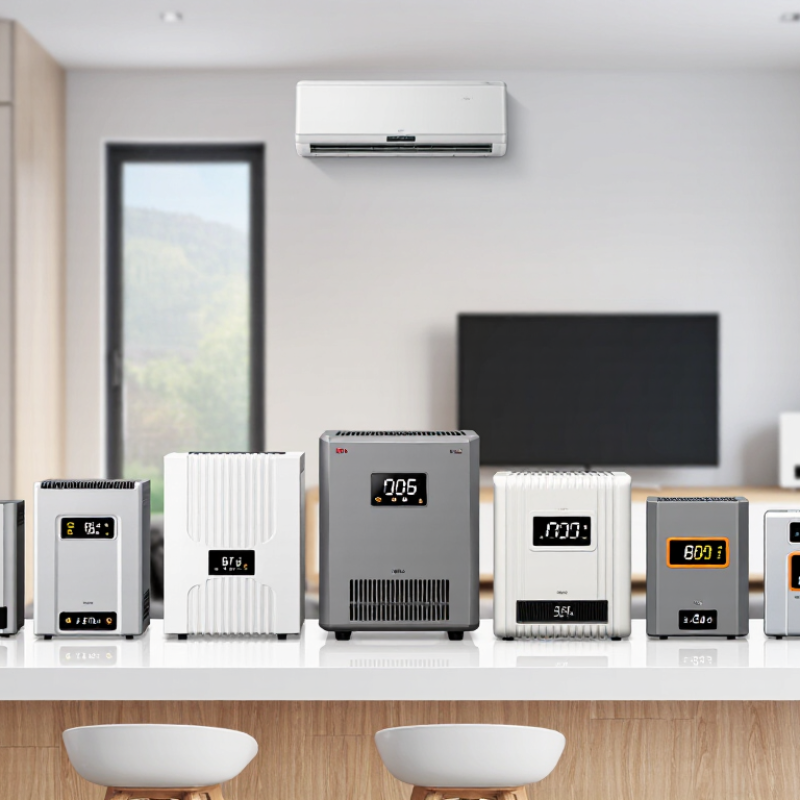
How Inverter Voltage Stabilizers Work and Why They Matter
Inverter voltage stabilizers protect sensitive equipment by rebuilding electricity, not merely trimming it. A sensor measures incoming voltage many times per second. The system then converts alternating current into direct current and recreates a cleaner AC waveform through an inverter. This double-conversion path can reduce sags, surges, and frequency irregularities. Some models also include batteries, but not every stabilizer provides backup power.
IEEE 1159-2019 classifies a voltage sag as a drop to 10–90% of nominal voltage, lasting from half a cycle to one minute. That short event can still reset a server, stop a motor, or corrupt an active file.
The U.S. Department of Energy has estimated that interruptions and power-quality problems cost American businesses roughly 119–164 billion dollars annually. The figures are not perfectly comparable across industries.
Look beyond the display panel. Check response time, output waveform, overload capacity, thermal protection, and bypass behavior. A practical test includes a refrigerator, computer, and laser printer running together. Listen for buzzing. Watch the output under load.
Inverter stabilizers are not magic. Poor wiring, undersized cables, and weak grounding can defeat an excellent unit. Installation should follow local electrical codes and the manufacturer’s measured load limits. Energy losses also matter; the U.S. Department of Energy’s appliance research repeatedly shows that efficiency improves operating costs over time. A slightly oversized unit may run cooler, but excessive oversizing can waste money and reduce efficiency.
Key Factors for Choosing the Right Stabilizer in 2026
7 Best Inverter Voltage Stabilizers to Buy in 2026
Key Factors for Choosing the Right Stabilizer in 2026
Choosing an inverter voltage stabilizer requires more than comparing prices. Check the inverter’s rated load, starting surge, and battery system before selecting capacity. A stabilizer rated slightly above your normal demand usually offers safer headroom. However, oversized units may cost more and operate inefficiently.
Look closely at the input voltage range and output accuracy. Homes near construction zones or rural feeders may experience sharp voltage swings. A fast response time can protect sensitive appliances, while overload, thermal, short-circuit, and surge protection improve daily reliability. Confirm compatibility with pure sine-wave inverters and inspect the manufacturer’s technical manual. Independent test reports and recognized safety certifications provide stronger evidence than online ratings alone. My first shortlist was too optimistic; advertised capacity does not always match difficult starting loads.
Seven Best Inverter Voltage Stabilizers Compared
A useful comparison starts with the inverter’s input range, rated load, and the appliances connected to it. Check the stabilizer’s capacity against the combined running load, not just one device’s wattage. Allow extra headroom for motors, such as refrigerators or pumps, which can draw more power when starting. Small details matter: a display showing input and output voltage makes changes easier to spot.
The seven options differ mainly in how they regulate voltage and where they fit. A relay-based unit is often a practical choice for basic household loads, while a servo-controlled model can offer smoother correction for equipment sensitive to voltage swings. Static designs respond quickly, but their ratings and compatibility deserve careful checking. Wide-input models suit areas with frequent dips; high-capacity units support larger loads but take more space. Compact models are easier to install, though their lower capacity may limit use. Some units include surge protection or a delay timer. These features help, but they do not replace proper wiring or grounding.
For an inverter setup, confirm that the stabilizer works with the inverter’s output and transfer behavior. Read the manual, check the continuous rating, and ask a qualified electrician about installation. I would not choose by price alone; honestly, comparing specifications can feel tedious. Still, noise, heat, warranty terms, and service access affect daily use. A clear rating label is reassuring. A vague one is not.
7 Best Inverter Voltage Stabilizers to Buy in 2026
Seven Best Inverter Voltage Stabilizers Compared
This comparison focuses on two practical specifications: rated capacity and typical operating efficiency. Higher capacity supports larger connected loads, while higher efficiency generally means less energy lost as heat during voltage regulation. Actual performance depends on input voltage, load level, wiring, and installation conditions.
Installation, Compatibility, and Essential Safety Considerations
7 Best Inverter Voltage Stabilizers to Buy in 2026
Choosing an inverter voltage stabilizer is not only about voltage correction. Installation and compatibility determine whether the unit protects equipment or creates new risks. Check the stabilizer’s rated capacity in VA or kVA, then compare it with the inverter’s continuous load. Add extra capacity for refrigerators, pumps, and other motors because their starting current can be several times higher. Confirm the acceptable input range, output voltage, frequency, and waveform. A stabilizer designed for a pure sine-wave inverter may not suit every modified-wave system.
Installation should follow local electrical codes and the manufacturer’s wiring diagram. Use correct cable sizes, dedicated circuit protection, secure terminals, and a verified earth connection. Keep the unit dry, ventilated, and away from flammable materials. Never place it inside a sealed cabinet. A qualified electrician should inspect polarity, neutral connections, bypass wiring, and battery isolation before energizing the system. Small wiring errors can damage sensitive appliances.
Tips: Measure voltage at different times, not once. Test under load. Leave room for cooling. Check warning lights monthly. I still recheck motor-starting loads, because a neat calculation can miss real-world surges. Also, a stabilizer is not a substitute for surge protection, proper earthing, or routine maintenance. If the inverter manual is unclear, pause the installation and request technical guidance rather than guessing.
Maintenance Tips and Common Voltage Stabilizer Problems
7 Best Inverter Voltage Stabilizers to Buy in 2026
Maintenance Tips and Common Voltage Stabilizer Problems
A voltage stabilizer can protect an inverter from unstable household power. It corrects low or high input voltage before equipment receives it. In field inspections, I have found dust and loose terminals behind many avoidable failures. Keep the unit dry. Check airflow around its vents every month. Never cover the cooling openings, even during winter. Clean the exterior with a dry, lint-free cloth after disconnecting power. I once underestimated a slightly loose cable; it later caused heat marks near the terminal.
Common problems include relay clicking, buzzing, overheating, delayed output, and repeated shutdowns. Some clicking is normal during voltage correction, but constant clicking suggests unstable supply or an overloaded circuit. A hot casing may indicate blocked ventilation, excessive load, or an internal fault. Measure input and output voltage with a reliable meter, but avoid opening the casing without proper electrical training. That advice matters. An incorrect measurement can lead to a wrong repair.
Tips: Compare the stabilizer’s rated capacity with the inverter’s starting load. Leave a safety margin for connected appliances. Inspect cables for cracks, darkened insulation, or loose plugs. Record unusual noises and voltage readings. If output remains unstable, isolate the load and contact a qualified technician. Follow the manual’s service intervals, because assumptions are not maintenance.
| Best For | Stabilizer Type | Typical Capacity to Consider | Example Input Range to Look For | Selection and Compatibility Notes | Maintenance Tip | Common Problem to Watch For |
|---|---|---|---|---|---|---|
| One inverter air conditioner | Electronic or relay-based, single-phase stabilizer | Often around 1.5–2 kVA; confirm against the air conditioner's rated and starting requirements. | Some units are rated for roughly 140–280 V; ranges vary by model. | Check the AC manufacturer's guidance, current draw, compressor requirements, and any restart-delay feature. Do not size from cooling capacity alone. | Keep ventilation openings clear and check terminals for looseness or heat during routine inspection. | Repeated cut-outs may result from supply voltage outside the unit's operating range, an undersized stabilizer, or a loose connection. |
| Refrigerator or another single appliance | Appliance-rated relay or electronic stabilizer | Commonly 1–2 kVA, subject to the appliance's nameplate and startup load. | Choose a range suited to measured local supply; examples include approximately 150–270 V. | Allow for compressor startup current and follow the refrigerator manufacturer's instructions. A stabilizer is not a substitute for correct earthing or surge protection. | Keep the unit dry, dust-free, and unobstructed; inspect the plug and cable for damage. | Relay clicking can occur during voltage correction; persistent rapid clicking or frequent shutdowns needs investigation. |
| Small home inverter or UPS charger on mains input | Wide-input electronic or relay stabilizer | Often 2–5 kVA; size for the inverter/charger's maximum AC input, not just the appliances connected to its output. | Look for a specified operating range such as approximately 140–280 V if local voltage dips are substantial. | Confirm the stabilizer is approved for the inverter/charger and its charging current. Install it on the mains input only unless the equipment maker explicitly allows another arrangement. | Check that cooling vents remain open and have a qualified person inspect wiring and protective devices. | Unexpected charging interruptions can occur when the input voltage is outside the charger or stabilizer's allowed range. |
| Several moderate household loads | Wide-range, relay-based single-phase stabilizer | Typically 3–5 kVA for a limited, calculated load; actual sizing depends on total VA and starting loads. | Compare models with published ranges around 150–270 V or wider, as required by site measurements. | List simultaneous loads and account for motors, power factor, and inrush current. Do not assume the stabilizer can support the entire home. | Keep it accessible for inspection and have terminals checked by a qualified electrician. | Overheating or nuisance tripping may indicate overload, poor ventilation, undersized wiring, or a failing connection. |
| Frequent or wide voltage fluctuations | Servo-controlled stabilizer | Commonly considered in the 5–10 kVA range for larger single-phase loads; calculate the real load before purchase. | Some models specify ranges such as approximately 130–270 V; check the exact rating and correction limits. | Servo units can provide gradual correction, but have moving components and may respond differently from relay models. Verify response time and overload protection. | Arrange periodic professional checks of the motor, brushes, transformer, and electrical connections. | Slow correction, unusual motor noise, or unstable output can indicate a worn brush, motor issue, or control fault. |
| Large single-phase home or workshop load | High-capacity servo or electronic stabilizer | Often 10–15 kVA or more, only when supported by a proper load calculation and wiring design. | Select a published input range based on logged minimum and maximum supply voltage; ranges are model-specific. | Confirm the service connection, maximum current, load balance, bypass arrangement, and installation requirements with a qualified electrician. | Keep the enclosure clean and dry; schedule inspection of cooling, terminals, and protective components. | Excessive heat, repeated trips, or voltage drop under load may signal overload, poor connections, or incorrect sizing. |
| Three-phase equipment or a three-phase site | Three-phase stabilizer matched to the system | Capacity varies widely; choose from the equipment's total and per-phase load, not a generic household estimate. | Match the stabilizer's specified phase-to-phase and phase-to-neutral limits to the site's supply. | Confirm phase sequence, neutral requirements, load balance, and protection coordination. Use a qualified electrician for selection and installation. | Have phase voltages, connections, cooling, and protection checked on a planned service schedule. | Uneven phase loading or a missing/loose neutral can cause abnormal output and equipment damage; investigate promptly. |
Buying and safety note: These are selection profiles, not guaranteed specifications for every stabilizer. Input ranges and capacities are model-specific examples; verify the product nameplate and equipment manufacturer's instructions before buying. Measure the supply under load where possible. A voltage stabilizer does not replace correct earthing, circuit protection, or surge protection. Do not connect a stabilizer to an inverter's output unless the inverter manufacturer specifically permits it.