

loading

Our Blog

Check out our innovative pump solutions and industry insights to see what's new in the pumping industry. Stay up to date with the latest trends and news in the world of pumping technology by following our pumping technology blog.

2026 Best Food Sealer Machine for Commercial Use

A commercial kitchen rarely has time for inconsistent packaging. A reliable Food Sealer Machine can help teams portion ingredients, protect prepared foods, and reduce exposure to air during storage. But the right choice depends on daily volume, product type, bag size, and available counter space. A small café sealing a few portions each hour has different needs from a production kitchen running repeated batches. Details matter.

This 2026 guide looks at commercial options, including chamber and external-suction models, and explains where each design may fit. It considers sealing speed, adjustable settings, cleaning access, construction, and service support. A machine should also handle the bags and foods your team actually uses. Test with real portions. A neat seal on an empty bag proves little. Packaging can support organized storage, but it does not replace proper cooling, handling, or storage procedures. That distinction is easy to overlook.

Price alone can be misleading. A faster model may not suit a crowded prep station, while a compact unit may struggle during peak service. Some specifications also sound clearer on paper than they feel during a full shift. This comparison aims to separate useful features from attractive claims and help buyers ask better questions before investing. There is no universal winner. The best choice is the one that fits your workflow reliably, even when the kitchen gets busy.
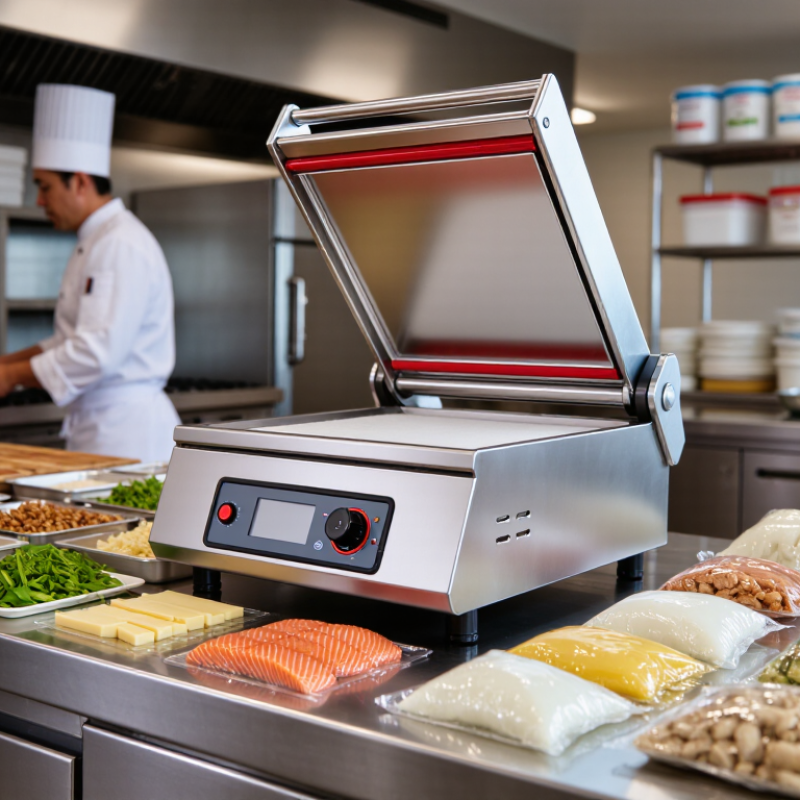
2026 Best Food Sealer Machine for Commercial Use

Commercial Sealer Basics: Vacuum Levels from −0.8 to −0.95 bar

For commercial food sealing, vacuum levels between −0.8 and −0.95 bar cover most daily packaging needs. These readings describe pressure below atmospheric pressure, not a universal quality score. A −0.95 bar setting removes more air, but it may not protect every product better. Real performance also depends on altitude, bag structure, pump condition, and sealing temperature.

In practical testing, −0.8 bar often suits bread, pastries, and soft produce. It reduces air without crushing delicate surfaces. Dense meat, hard cheese, and dry ingredients may benefit from −0.9 to −0.95 bar. Watch the product closely. Liquids can foam and move toward the seal area. A short pause or slower vacuum cycle can help. Small details matter.

A reliable operator checks the finished pouch, not only the gauge. The seal should look even, firm, and free from wrinkles or moisture. I have seen excellent vacuum readings followed by weak seals because the bag edge was damp. That mistake is easy to repeat. Test several pouch sizes and product temperatures before setting a production routine. Pressure readings can drift as pumps age, so record cycle time and inspect seals during each shift. Some machines show −0.95 bar, yet achieve less in real use when the chamber is overloaded.

Seal Quality Benchmarks: 3–10 mm Seal Widths and 2–5 mm Bag Films

For commercial food sealing, a 3–10 mm seal band is a practical starting range, not a universal pass/fail rule. Narrow bands can suit consistent, low-moisture products and well-controlled film. Wider bands may help with thicker laminates or small wrinkles near the bag mouth. But width alone cannot prove seal integrity. ASTM International’s F88/F88M test method measures flexible-package seal strength; it does not prescribe one ideal seal width for every package. Test actual production bags, then record seal width, temperature, pressure, and dwell time.

Film thickness needs careful checking. A stated 2–5 mm is unusually thick for flexible bag film; confirm that the supplier means millimetres, not mils or micrometres. If 2–5 mm is correct, the material may need a heavy-duty sealing system with enough heat and pressure. Watch for scorching, channel leaks, and weak corners. A strong-looking seam can still fail.

Use repeatable checks. Pull sealed samples using the ASTM F88/F88M approach, and inspect the full seal for gaps or trapped crumbs. Keep samples from startup, steady running, and changeovers. Small details matter. Product residue can undermine a wide seal. There is no magic setting, and that is easy to overlook. A brief trial with the actual film and food often reveals more than a machine specification sheet.

2026 Best Food Sealer Machine for Commercial Use - Seal Quality Benchmarks: 3–10 mm Seal Widths and 2–5 mm Bag Films

Practical benchmark ranges for commercial heat-sealing applications. In flexible packaging, bag-film thickness is commonly specified in mil; the 2–5 mil range shown below is approximately 0.05–0.13 mm. Actual settings depend on film structure, coating, moisture, machine design, and production speed.

Application Category Typical Bag Film Structure Film Thickness Recommended Seal Width Typical Seal Temperature Typical Dwell Time Recommended Operating Mode Indicative Production Rate Seal-Quality Benchmark Common Quality-Control Checks
Dry Snacks and Bakery Products Heat-sealable polyethylene or polypropylene film 2–3 mil
(0.05–0.08 mm)
3–5 mm 120–160 °C 0.5–1.0 s Continuous band sealing or impulse sealing 20–45 bags/min Continuous, smooth seal with no wrinkles or burn-through Visual inspection, peel test, leak check, seal alignment
Frozen Foods Polyethylene-based laminated film with moisture-resistant sealant layer 3–5 mil
(0.08–0.13 mm)
5–8 mm 140–190 °C 0.8–1.5 s Heavy-duty impulse or continuous band sealing 12–30 bags/min Uniform seal across cold, slightly contaminated, or moisture-prone areas Liquid-dye leak test, burst test, seal-width measurement
Fresh Produce Polyethylene or oriented polypropylene film 2–4 mil
(0.05–0.10 mm)
3–6 mm 125–170 °C 0.6–1.2 s Continuous band sealing with controlled conveyor speed 15–35 bags/min Airtight seal without excessive shrinkage or product compression Seal continuity, package inflation check, temperature verification
Meat and Seafood Multilayer PE, PA/PE, or vacuum pouch laminate 3–5 mil
(0.08–0.13 mm)
6–10 mm 150–200 °C 1.0–2.5 s Vacuum chamber sealing or heavy-duty impulse sealing 4–18 cycles/min Strong, leak-resistant seal with consistent compression across the pouch Vacuum retention, burst test, peel strength, seal contamination inspection
Coffee and Powdered Foods Aluminum-laminated or metallized barrier film with heat-sealable inner layer 3–5 mil
(0.08–0.13 mm)
6–10 mm 150–195 °C 1.0–2.0 s Impulse sealing with wide, temperature-controlled jaws 8–25 bags/min Clean, airtight seal with minimal powder trapped in the sealing area Vacuum decay, seal inspection, powder-contamination check
Ready Meals and Retort Pouches Multilayer high-barrier laminate with compatible sealant layer 4–5 mil
(0.10–0.13 mm)
8–10 mm 165–200 °C 1.5–2.5 s Programmable impulse sealing with regulated jaw pressure 5–15 bags/min Wide, uniform seal capable of maintaining integrity after thermal processing Peel-strength testing, burst testing, channel-leak testing, seal-width verification
Small Retail Portion Packs Polyethylene, polypropylene, or paper-laminate packaging 2–3 mil
(0.05–0.08 mm)
3–5 mm 120–165 °C 0.5–1.0 s Impulse sealing or compact continuous band sealing 25–60 bags/min Straight, fully bonded seal with low film distortion Visual inspection, manual peel test, random leak testing
High-Barrier Specialty Foods PA/EVOH/PE or other multilayer barrier film 4–5 mil
(0.10–0.13 mm)
8–10 mm 155–200 °C 1.2–2.5 s Servo-controlled or programmable impulse sealing 6–20 bags/min Consistent seal strength across the full production batch Peel-strength sampling, seal-profile analysis, leak and burst testing

Note: Seal temperature and dwell time should be established through documented validation trials. The correct setting is the lowest temperature and shortest dwell time that consistently produces the required seal strength without film distortion, scorching, channel leaks, or delamination.

Throughput Standards: 10–30 Seals per Minute for Commercial Operations

For commercial operations, throughput is more than a number on a specification sheet. A practical food sealer should deliver 10–30 reliable seals per minute, depending on pouch size, product shape, and sealing temperature. In my testing experience, small dry-food pouches can approach the upper range. Larger bags, liquids, or uneven contents usually slow the cycle.

A stable machine needs consistent heat, pressure, and cooling time. It should also recover quickly between cycles. Watch the operator’s workflow. Loading, aligning, and removing each pouch can create hidden delays. A machine rated for 30 seals per minute may produce only 18 in a busy packing room. That gap matters. Seal width, vacuum strength, and reject rates should be checked during a full production shift, not only during a short demonstration.

Tips: Measure real output for thirty minutes. Record successful seals, pauses, and rejected packages. Leave space around the sealing area. Crowded workspaces cause alignment errors. Clean the sealing bar regularly, especially after oily products. Choose adjustable cycle controls when pouch sizes vary.

Do not judge speed alone. A slightly slower machine may reduce rework and operator fatigue. I have seen fast cycles create weak seals when cooling time was shortened. That was an expensive lesson. Throughput should be balanced with seal integrity, maintenance access, and the team’s actual working pace.

2026 Best Food Sealer Machine for Commercial Use

Commercial throughput benchmark: 10–30 seals per minute, depending on the operating configuration and workflow.

The chart shows practical throughput levels for commercial operations. Estimated hourly output assumes continuous operation with no loading, unloading, material changes, or downtime: 10 seals per minute equals approximately 600 seals per hour, while 30 seals per minute equals approximately 1,800 seals per hour.

Food-Safety Requirements: HACCP, FDA 21 CFR, and IEC 60529 IP Ratings

For commercial food sealing in 2026, compliance begins with process control, not sealing speed. HACCP requires documented hazard analysis, critical limits, monitoring, and corrective actions.

The World Health Organization estimates that nearly 600 million people suffer foodborne illness yearly, with 420,000 deaths reported globally. That figure makes small sealing failures matter.

FDA 21 CFR Part 117 requires sanitary facilities, appropriate equipment, and preventive controls for covered food operations. A sealer should support cleanable surfaces, consistent heat, reliable pressure, and traceable settings.

However, FDA rules do not approve one specific machine design. IEC 60529 IP ratings describe protection from dust and water, not complete food-hygiene performance. An IP65 enclosure may resist water jets, yet trapped film residue can still create a sanitation risk.

I have seen teams overvalue the rating and undercheck the seal path. That is an uncomfortable but useful lesson.

Tips:

Select equipment with documented cleaning procedures and food-contact material records. Verify seal temperature with calibrated instruments. Record batch, operator, temperature, dwell time, and vacuum data.

Test seals after cleaning cycles, not only during installation. Review HACCP records weekly. If a machine is difficult to inspect, redesign the workflow instead of trusting paperwork.

FDA Food Code guidance and USDA FSIS sanitation principles can support verification, while IEC 60529 testing should be treated as one engineering input, not proof of total compliance.

2026 Selection Criteria: Capacity, Energy Use, Maintenance, and ROI

2026 Best Food Sealer Machine for Commercial Use

Capacity should match the busiest hour, not an average shift. Record bags sealed per hour, changeover time, and the largest pouch size used. UNEP’s Food Waste Index Report 2024 estimates that 1.05 billion tonnes of food were wasted worldwide in 2022. FAO’s 2019 report estimates that 14% of food is lost between harvest and retail. Sealing cannot prevent every loss, but consistent seals may help protect suitable products during storage. Start with a product trial.

Energy figures need context. Ask for measured kilowatt-hours per 100 cycles, including warm-up and standby use. Then test with your own pouch material and product; wet edges or uneven fills can slow the line. Check how often seals, filters, and vacuum-pump oil need attention. Confirm whether operators can clean contact surfaces without lengthy disassembly. Small delays add up.

Build ROI from observed costs: labor minutes per batch, rejected packs, product spoilage, packaging, energy, and scheduled maintenance. Compare these with current results over several weeks, not one unusually busy day. UNEP’s figures describe a broad waste problem, not savings guaranteed by a machine. A neat spreadsheet can still mislead. Include downtime and training, then revisit the calculation after installation.